- 0086-571-85302990
- [email protected]





Marigold Extract
1. Introduction
Lutein — a naturally occurring carotenoid pigment found abundantly in marigold flowers (Tagetes erecta L.), dark leafy greens, and other brightly colored plants — has earned its nickname as the "eye vitamin" through decades of rigorous scientific research. As the primary carotenoid concentrated in the human macula (the central region of the retina responsible for sharp, detailed vision), lutein plays a critical role in filtering harmful blue light and protecting retinal cells from oxidative damage. With the global rise in screen time, aging populations, and growing awareness of preventive eye health, lutein extract has become one of the most commercially important and scientifically validated ingredients in the dietary supplement industry, with the global lutein market projected to exceed $500 million by 2030.
Hangzhou Greensky Biological Tech Co., Ltd — a professional natural plant extract manufacturer established in 2004 — offers premium marigold-derived lutein extract in both free form and esterified forms, with standardized lutein content from 5% to 90%, backed by ISO22000, BRCGS, Ecocert Organic, and SGS-GMP certifications.
2. What Is Lutein Extract?
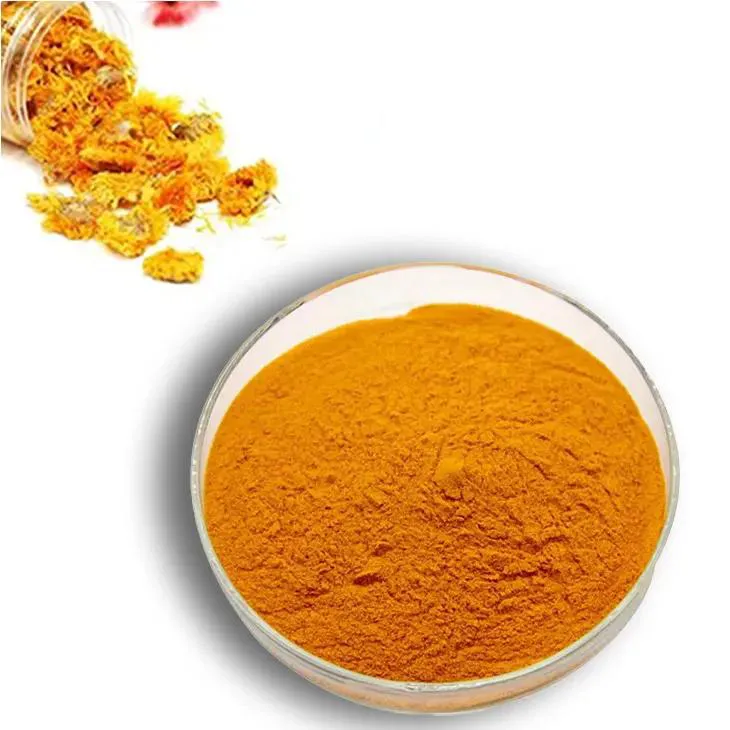
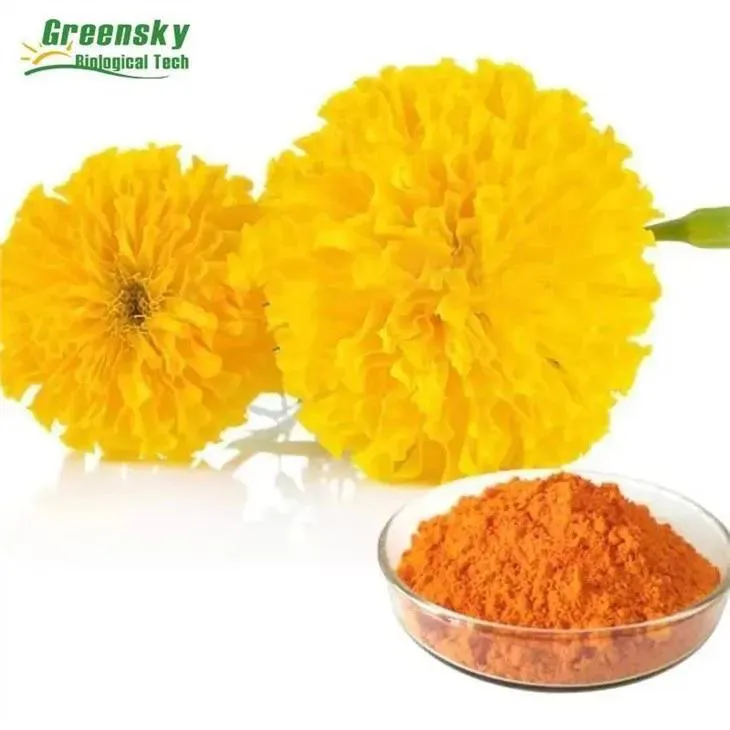
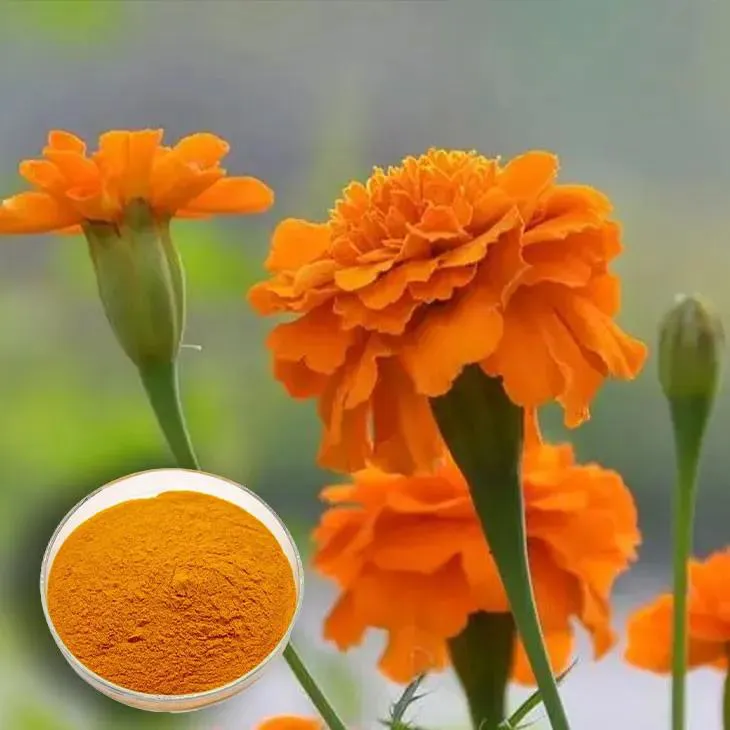
Lutein extract is a concentrated preparation derived primarily from the flowers of Tagetes erecta L. (Aztec/Mexican marigold), one of the richest natural sources of lutein and its isomer zeaxanthin. The extract concentrates these carotenoid pigments into a standardized preparation available as lutein esters (the natural form found in the flower) or free lutein (released through saponification).
2.1 Chemical & Botanical Information
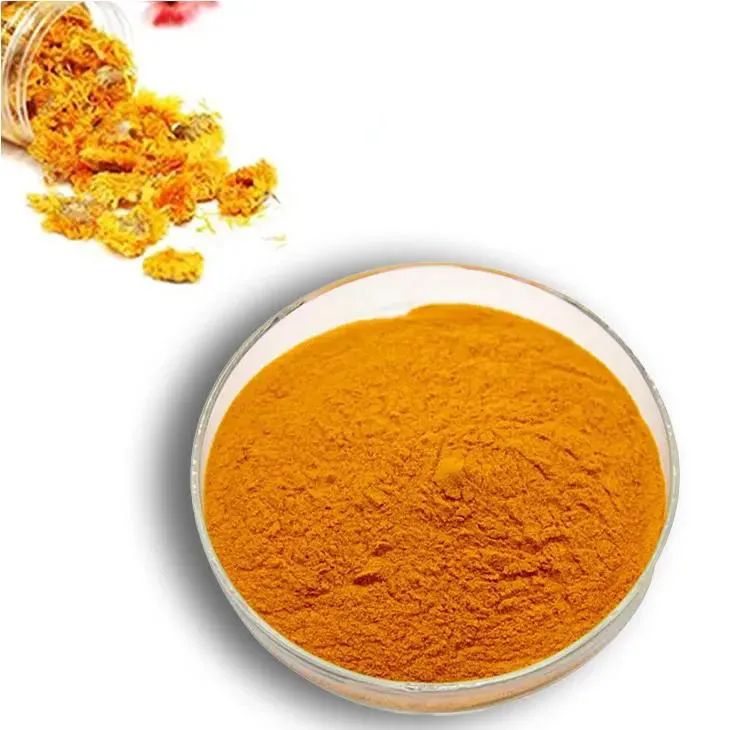
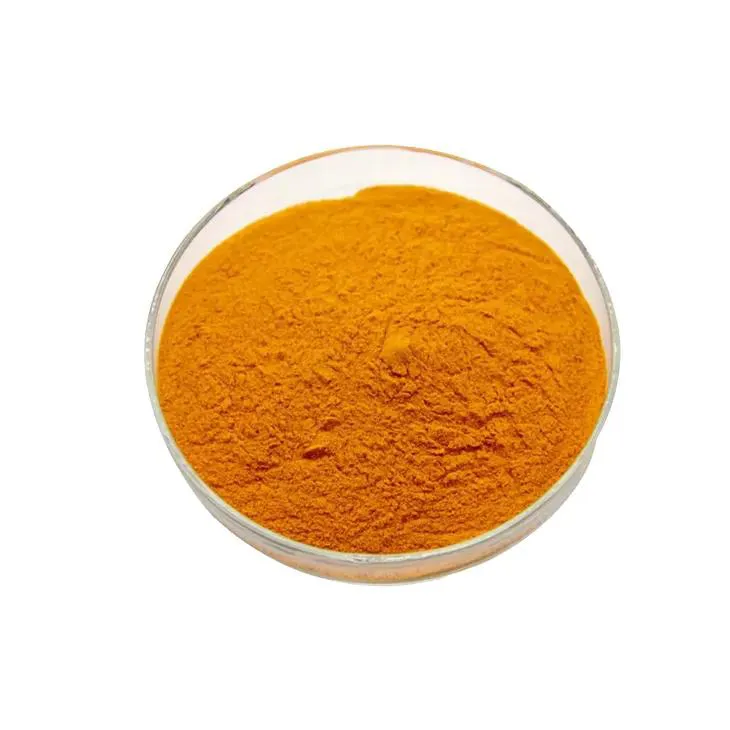
Item Details Chemical Name (3R,3'R,6'R)-β,ε-Carotene-3,3'-diol CAS Number 127-40-2 Molecular Formula C₄₀H₅₆O₂ Molecular Weight 568.87 g/mol Latin Name (Source) Tagetes erecta L. Family Asteraceae (Compositae) Common Names Lutein, Marigold Extract, Xanthophyll Source Plant Marigold flower (Tagetes erecta) Main Growing Regions China (Yunnan, Xinjiang), India, Mexico, Spain Extraction Part Flowers (petals) Appearance Orange-yellow to deep orange-red fine powder (free lutein) or dark red viscous oil/resin (lutein esters) Detection Wavelength 445–450 nm (characteristic carotenoid absorption)
2.2 Key Active Compounds
Compound Class Function Lutein (free form) Xanthophyll (oxygenated carotenoid) Primary macular pigment; blue light filter; antioxidant Lutein esters Fatty acid esters of lutein Natural form in marigold; converted to free lutein during digestion Zeaxanthin Xanthophyll isomer of lutein Concentrated in the central fovea; synergistic with lutein Meso-zeaxanthin Lutein isomer (formed in the retina) Converts from lutein in the macula; fills the central macular pigment gap β-Carotene Provitamin A carotenoid Minor component; vitamin A precursor Other carotenoids Minor xanthophylls Supporting antioxidant network
Lutein vs. Zeaxanthin — Why Both Matter:
Lutein and zeaxanthin are structural isomers — they share the same molecular formula but differ in the position of one double bond. This small structural difference leads to different distribution patterns in the retina:
Lutein is more abundant in the peripheral macula
Zeaxanthin is concentrated in the central fovea (the area of sharpest vision)
The ideal macular pigment composition contains both compounds in approximately a 10:2 to 5:1 ratio, which is why leading clinical studies (AREDS2) and premium supplement formulations include both.
2.3 Standard Specifications
Hangzhou Greensky Biological Tech Co., Ltd offers lutein in multiple forms and concentrations:
Parameter Lutein 5% (Beadlets) Lutein 10% (Beadlets) Lutein 20% (Powder/Oil) Lutein 80%+ (Free) Form Microencapsulated beadlets Microencapsulated beadlets Powder or oil suspension Free lutein powder Lutein Content ≥ 5% ≥ 10% ≥ 20% ≥ 80% Zeaxanthin ≤ 1% ≤ 2% ≤ 3% ≤ 5% Lutein:Zeaxanthin Ratio ≥ 5:1 ≥ 5:1 ≥ 5:1 Variable (5:1 to 10:1) Appearance Orange-yellow free-flowing beads Orange-yellow free-flowing beads Orange-red powder or oil Deep orange-red powder Particle Size 40–80 mesh (beadlets) 40–80 mesh (beadlets) 95% through 80 mesh Fine powder Solubility Dispersible in water (beadlets) Dispersible in water (beadlets) Oil-soluble (free form) Oil-soluble Stability High (microencapsulated) High (microencapsulated) Moderate (requires protection) Moderate (requires protection)
Note on Lutein Esters vs. Free Lutein:
Lutein esters are the natural form found in marigold flowers, where lutein molecules are bonded to fatty acids (palmitic, myristic, lauric). They are more stable during processing but must be hydrolyzed (saponified) during digestion to become bioavailable free lutein.
Free lutein is produced by alkaline hydrolysis (saponification) of the esters. It has higher bioavailability per milligram but is less stable during processing and requires protective packaging.
2.4 HPLC Analysis & Quality Control
Lutein is analyzed by HPLC with UV-Vis or PDA detection at 445–450 nm:
Parameter Specification Chromatographic Column C30 column (250 × 4.6mm, 5μm) preferred; C18 acceptable Mobile Phase Gradient: Methanol/water (92:8) + MTBE Detection Wavelength 445 nm Lutein Retention Time 18–22 min Zeaxanthin Retention Time 20–24 min Method Validation Linearity r² ≥ 0.999; Precision RSD ≤ 2.0%; Recovery 95–105%
Full Quality Panel:
Test Category Parameters Active Compounds Lutein by HPLC (445 nm); Zeaxanthin by HPLC; Lutein esters profile (optional) Microbiology Total plate count ≤ 10,000 CFU/g; Mold & yeast ≤ 500 CFU/g; E. coli/Salmonella/S. aureus negative Heavy Metals Pb ≤ 2.0 mg/kg; As ≤ 1.0 mg/kg; Hg ≤ 0.1 mg/kg; Cd ≤ 0.5 mg/kg (ICP-MS) Solvent Residues Compliant with USP <467> Heavy Metal Solvents Hexane, acetone, ethanol residues monitored
3. Core Benefits & Mechanisms of Action
3.1 Blue Light Filtering — The Primary Defense Mechanism
In our digital age, this is lutein's most commercially relevant benefit. The average person now spends 7–10 hours per day looking at screens — smartphones, computers, tablets, and TVs — all of which emit significant amounts of high-energy blue light (400–490 nm).
Mechanism: Lutein accumulates in the macula of the retina, where it acts as a natural blue light filter — absorbing and dissipating high-energy blue wavelengths before they can damage photoreceptor cells. Lutein specifically absorbs light in the 400–500 nm range, with peak absorption at approximately 445 nm.
The science: Blue light generates reactive oxygen species (ROS) in retinal cells through a process called photooxidation. Over time, this oxidative stress damages the retinal pigment epithelium (RPE) and photoreceptor cells, contributing to age-related macular degeneration (AMD) and digital eye strain. Lutein neutralizes these ROS and physically filters blue light, providing dual protection.
3.2 Macular Pigment Optical Density (MPOD) Enhancement
Lutein supplementation has been consistently shown to increase macular pigment optical density — a measurable indicator of macular health.
Mechanism: Dietary lutein is transported from the intestine to the retina via lipoproteins (primarily HDL and LDL), where it is selectively taken up by macular tissue and accumulated over time. Higher MPOD is associated with:
Improved visual performance (contrast sensitivity, glare recovery)
Reduced risk of age-related macular degeneration (AMD)
Better protection against photochemical retinal damage
Clinical Evidence: The landmark AREDS2 study (Age-Related Eye Disease Study 2), published in JAMA (2013), was a large-scale, randomized, double-blind clinical trial involving over 4,000 participants. It found that supplementation with 10 mg lutein + 2 mg zeaxanthin daily reduced the risk of progression to advanced AMD by approximately 25% compared to the original AREDS formulation (which contained beta-carotene). Importantly, the lutein/zeaxanthin combination was found to be safer than beta-carotene (which increased lung cancer risk in smokers).
3.3 Digital Eye Strain Relief
With billions of people spending hours daily on digital devices, computer vision syndrome (CVS) — characterized by eye fatigue, dryness, blurred vision, and headaches — has become a global health concern.
Mechanism: Lutein supplementation improves visual performance under conditions of glare and bright light exposure. It enhances contrast sensitivity and reduces photostress recovery time — the time it takes for vision to recover after exposure to bright light. These improvements directly address the visual demands of prolonged screen use.
Clinical Evidence: A randomized, double-blind, placebo-controlled study published in Nutrients (2019) found that supplementation with 10 mg lutein + 2 mg zeaxanthin daily for 6 months significantly improved visual performance (contrast sensitivity and glare disability) and reduced symptoms of visual fatigue in adults with high screen time exposure.
3.4 Antioxidant Protection of Retinal Cells
The retina is one of the most metabolically active tissues in the body and is constantly exposed to high levels of oxygen and light — a combination that generates substantial oxidative stress.
Mechanism: Lutein is a powerful singlet oxygen quencher and free radical scavenger. Its unique molecular structure — a long chain of conjugated double bonds with hydroxyl groups at each end — makes it particularly effective at neutralizing reactive oxygen species in the lipid-rich environment of retinal cell membranes.
Research Support: Studies published in Investigative Ophthalmology & Visual Science have demonstrated that lutein protects retinal pigment epithelial (RPE) cells from oxidative stress-induced apoptosis (programmed cell death), a key mechanism in the development of AMD.
3.5 Cognitive Health — The Emerging Connection
Emerging research suggests that lutein may also benefit brain health, not just eye health.
Mechanism: Lutein crosses the blood-brain barrier and accumulates in brain tissue, particularly in regions associated with learning and memory (hippocampus and frontal cortex). It protects neural tissue from oxidative stress and may support cognitive processing speed and memory function.
Clinical Evidence: A study published in Frontiers in Aging Neuroscience (2017) found that older adults with higher lutein levels in their retinas (a proxy for brain lutein levels) performed better on cognitive tasks, including verbal learning, processing speed, and complex attention.
4. Wide-Ranging Application Areas
4.1 Eye Health Dietary Supplements
This is the primary and largest application segment for lutein extract:
Standalone eye health formulas: 10–20 mg lutein + 2 mg zeaxanthin per serving (AREDS2-based dosing)
Comprehensive eye formulas: Combined with Bilberry Extract, Astaxanthin, omega-3 (DHA), vitamin A, zinc, and copper
Children's eye health: Gummy or chewable formats with 3–6 mg lutein (growing category as screen time among children increases)
Premium clinical-grade formulas: 20–40 mg lutein for therapeutic applications
Recommended Daily Intake:
General eye health: 6–10 mg/day
AREDS2-based formula: 10 mg lutein + 2 mg zeaxanthin/day
Digital eye strain support: 10–20 mg/day
AMD prevention/management: 10–20 mg/day (under healthcare professional guidance)
4.2 Functional Foods & Beverages
Lutein-fortified dairy products: Milk, yogurt with added eye health benefits
Functional beverages: Eye health drinks, especially targeting office workers and students
Gummy supplements: Growing category for both adults and children
Energy bars and snacks: Fortified with lutein beadlets for stability during processing
4.3 Infant Formula & Children's Nutrition
Lutein is naturally present in human breast milk and is increasingly added to infant formula to support visual development. The global infant nutrition market represents a significant and growing application for lutein esters and microencapsulated lutein.
4.4 Cosmetic & Personal Care
Anti-aging skincare: Lutein's antioxidant properties protect skin from UV-induced photoaging
Eye creams: Targeted formulations for the delicate periorbital area
"Beauty from within" supplements: Combined with collagen, hyaluronic acid, and other carotenoids
4.5 Animal Nutrition
Lutein is used as a feed additive in:
Poultry: Improves egg yolk color (natural golden-orange coloring) and skin pigmentation
Aquaculture: Enhances flesh coloration in salmon and ornamental fish
Pet food: Premium pet nutrition with added antioxidant support
5. How to Choose a High-Quality Lutein Extract
5.1 Source Verification — Marigold Is King
While lutein is present in many plants (spinach, kale, broccoli), marigold flowers (Tagetes erecta) are by far the most commercially viable source, containing 10–30 times more lutein than leafy greens. When sourcing:
Verify that the extract is derived from marigold flowers, not synthetic or fermentation-derived sources
Ask about the growing region — Yunnan (China) and India are major marigold cultivation areas with favorable climates
Ensure flowers are harvested at peak bloom when lutein content is highest and dried promptly after harvest
5.2 Free Lutein vs. Lutein Esters — Which Is Better?
Factor Lutein Esters Free Lutein Natural form ✓ (as found in marigold) ✗ (requires saponification) Stability Higher (ester bond protects) Lower (requires protective packaging) Bioavailability Good (converted during digestion) Higher (already in active form) Processing tolerance Better for heat processing Requires microencapsulation for stability Cost Lower Higher Best for Food fortification, animal nutrition, cost-sensitive supplements Premium supplements, clinical-grade formulas
Important research note: A study in the Journal of Lipid Research (2011) demonstrated that when matched for free lutein content, both lutein esters and free lutein produced equivalent increases in plasma lutein levels — meaning the body efficiently converts esters to free lutein during digestion. This means esters are not inferior, just different.
5.3 Form Selection for Your Application
Form Best For Stability Beadlets (5%, 10%) Tablets, capsules, gummies, food fortification Excellent (microencapsulated) Oil suspension (5%, 10%, 20%) Softgels, liquid supplements, oil-based formulations Good (requires light protection) Powder (20%) Capsules, blends Good (requires light/oxygen protection) Free lutein powder (80%+) Research, premium formulations Moderate (requires nitrogen-flushed packaging)
5.4 Stability & Shelf Life
Lutein is sensitive to light, oxygen, and heat. Proper handling is critical:
Condition Lutein Retention (12 months) Microencapsulated beadlets, 25°C, sealed ≥ 90% Oil suspension, 25°C, nitrogen-flushed, dark ≥ 85% Free lutein powder, 25°C, nitrogen-flushed, dark ≥ 80% Any form, exposed to light and air ≤ 50% (unacceptable)
Storage recommendations:
Temperature: Below 25°C
Packaging: Aluminum foil bags, nitrogen-flushed
Protection: From light, oxygen, and moisture
Shelf life: 24 months when stored properly
5.5 Third-Party Testing & Certifications
Always verify lutein content through independent testing. HPLC analysis at 445 nm is the standard method. Request:
Full COA with lutein and zeaxanthin content by HPLC
Third-party verification from accredited labs (SGS, Eurofins)
Heavy metals panel (ICP-MS)
Microbiological testing (AOAC methods)
Certifications: ISO22000, BRCGS, Non-GMO, Kosher, Halal
6. About Greensky Bio
As a professional natural plant extract manufacturer with over 20 years of experience (established in 2004), Hangzhou Greensky Biological Tech Co., Ltd is your trusted partner for marigold-derived lutein extract:
Full range of forms: Lutein esters (5%, 10%, 20% oil suspension), free lutein (5%, 10%, 20% beadlets; 80%+ powder)
Standardized quality: Every batch tested by HPLC at 445 nm for precise lutein and zeaxanthin content
Stable supply chain: Sourced from controlled marigold cultivation programs in optimal growing regions
Full certifications: ISO22000, BRCGS, Ecocert Organic, SGS-GMP, Kosher, Halal, Non-GMO
Flexible packaging: Free samples; 100g or 1kg foil bags; 25kg bulk cartons; custom packaging available
Technical support: HPLC analytical methods, stability data, formulation guidance, beadlet manufacturing
Global compliance: Heavy metals by ICP-MS, solvent residues per USP <467>, full microbial panel
7. Conclusion & Call to Action
Lutein extract from marigold represents one of the most scientifically validated, commercially proven, and consumer-demanded ingredients in the dietary supplement industry. With the AREDS2 study providing robust clinical evidence, the global rise in screen time driving demand for digital eye strain solutions, and an aging population increasing the need for macular health support, the market opportunity for lutein-based products continues to grow.
Whether you're formulating a premium eye health supplement, fortifying functional foods, or developing children's nutrition products, high-quality marigold-derived lutein extract is an essential ingredient backed by science and trusted by consumers worldwide.
Interested in Lutein Extract? Contact us today for:
Latest pricing across all forms (5%, 10%, 20%, 80%+)
Free samples for evaluation
Full COA, HPLC chromatograms, and third-party test reports
Technical support for form selection, stability optimization, and formulation guidance
Our expert team is ready to help you develop winning eye health products with premium, reliable, and cost-effective lutein extract.
Visit www.greenskybio.com or reach out directly to get started.
8. Frequently Asked Questions (FAQ)
Q1: What is the optimal daily dose of lutein for eye health?
The AREDS2 study used 10 mg lutein + 2 mg zeaxanthin daily, which has become the standard clinical dose. For general maintenance, 6–10 mg/day is sufficient. For therapeutic applications (digital eye strain, AMD prevention), 10–20 mg/day is commonly recommended. Always consult a healthcare professional for specific dosing advice.
Q2: How long does it take for lutein supplementation to show benefits?
Clinical studies suggest that it takes approximately 4–12 weeks of daily supplementation to significantly increase macular pigment optical density (MPOD). Most studies showing improvements in visual performance used intervention periods of 3–6 months. Lutein accumulates gradually in the macula, so consistent daily intake is important.
Q3: Can I get enough lutein from diet alone?
While dark leafy greens (spinach, kale, collard greens) are good dietary sources of lutein, the average dietary intake is only 1–2 mg/day — far below the 10 mg/day used in clinical studies. Achieving therapeutic levels through diet alone would require consuming very large quantities of these vegetables daily, making supplementation a practical and effective approach.
Q4: Is lutein safe for long-term use?
Yes. Lutein has an excellent safety profile. The FDA has granted lutein GRAS (Generally Recognized As Safe) status. No serious adverse effects have been reported in clinical studies, even at doses up to 20 mg/day for extended periods. Lutein is a naturally occurring carotenoid found in the human diet and in the body.
Q5: What's the difference between lutein and zeaxanthin? Do I need both?
Lutein and zeaxanthin are structural isomers that accumulate in different regions of the macula. Lutein is more abundant in the peripheral macula, while zeaxanthin concentrates in the central fovea. The AREDS2 study used both together (10:2 ratio) and found superior outcomes compared to formulations without zeaxanthin. For optimal eye health support, we recommend formulations containing both lutein and zeaxanthin.
| Specification Item | Description |
|---|---|
| Product Name | Marigold Extract |
| CAS Number | 127-40-2 |
| Appearance | Orange-yellow fine powder |
| Specification | 5%-90% Lutein |
| Form | Powder |
| Source | Extracted from the petals of the Marigold flower (Tagetes erecta) |
| Applications | Health supplements, food & beverage, cosmetics, pharmaceuticals |
| Storage Conditions | Stored in a cool, dry place, avoiding exposure to sunlight and moisture |
| Packaging | Safe and compliant with transport standards |
| Supply Capacity | Customized based on demand |
| Shipping | Express/Air/Sea |
| Delivery Time | Dependent on order volume and destination |
| Price | Based on specifications and demand |
| Minimum Order Quantity | Contact for quotation |