- 0086-571-85302990
- [email protected]




Ginseng Extract: Types, Ginsenoside Standards, and Sourcing Guide for B2B Buyers
2026-10-03
Meta Title: Ginseng Extract | Plant Extract Manufacturer | Greensky BioMeta Description: Premium Ginseng Extract standardized to ginsenosides from a trusted China manufacturer. Learn about Panax ginseng types, extraction methods, quality standards, and bulk sourcing.
: Types, Ginsenoside Standards, and Sourcing Guide for B2B Buyers
Ginseng has been revered for over 5,000 years in traditional Asian medicine as the premier adaptogenic herb. Today, is one of the most widely traded botanical extracts globally, with applications spanning dietary supplements, energy drinks, functional foods, and cosmetics. The global ginseng extract market is projected to exceed $12 billion by 2030, driven by growing consumer demand for natural energy, immune support, and cognitive health products.
As a professional plant extract manufacturer with over 20 years of expertise, Greensky Bio produces premium ginseng extracts standardized to specific ginsenoside profiles, serving buyers across Europe, the United States, South Korea, and Russia.
Types of Ginseng and Their Unique Profiles
Not all ginseng is the same. The species, growing region, processing method, and harvest age all significantly influence the ginsenoside profile and commercial value of the final extract.
Panax Ginseng (Asian/Korean Ginseng)
Panax ginseng C.A. Meyer, commonly known as Asian or Korean ginseng, is the most extensively studied species. It contains over 40 identified ginsenosides, with the major compounds being Rb1, Rg1, Rc, Rd, and Re. Korean Red Ginseng — steamed and dried Panax ginseng roots aged 4–6 years — is considered the gold standard due to its enriched profile of rare ginsenosides (Rg3, Rh2) formed during the steaming process.
Primary ginsenosides: Rb1, Rg1, Rc, Rd, Re
Key characteristics: Warming/adaptogenic properties, energy enhancement, immune modulation
Standardization: Typically 4%, 6%, 8%, or 10% total ginsenosides
Panax Quinquefolius (American Ginseng)
American ginseng has a different ginsenoside profile, with higher Rb1 content and a more cooling, calming adaptogenic effect. It is particularly valued in the North American and Asian markets for stress relief and blood sugar management applications.
Primary ginsenosides: Rb1, Re, Rd (higher Rb1-to-Rg1 ratio than Asian ginseng)
Key characteristics: Calming adaptogen, blood sugar support, immune function
Standardization: Typically 4%–7% total ginsenosides
Panax Notoginseng (Sanqi / Tianqi)
Panax notoginseng, known as Sanqi in Chinese medicine, is renowned for its cardiovascular benefits, particularly its ability to support healthy blood circulation and reduce inflammation. It is rich in ginsenosides Rg1, Rb1, and R1, with R1 being a unique marker compound not found in significant quantities in other Panax species.
Primary ginsenosides: Rg1, Rb1, R1
Key characteristics: Cardiovascular support, anti-inflammatory, circulation enhancement
Standardization: Typically 8%–15% total ginsenosides
Ginsenosides: The Active Markers
Ginsenosides (also called panaxosides) are triterpenoid saponins unique to Panax species and are the primary quality markers for ginseng extract. They are classified into three groups based on their aglycone structure:
Protopanaxadiol (PPD) type: Rb1, Rb2, Rc, Rd — associated with calming, neuroprotective, and anti-inflammatory effects.
Protopanaxatriol (PPT) type: Rg1, Re, Rf — associated with stimulating, energy-enhancing, and cognitive effects.
Oleanolic acid type: Ro — contributes to liver-protective and anti-inflammatory activity.
The ratio of PPD to PPT ginsenosides determines the "warming" versus "cooling" character of the extract and influences its optimal application. For energy supplements, a higher PPT ratio is preferred; for stress management, a higher PPD ratio is more suitable.
Extraction and Standardization Methods
Water Extraction and Concentration
Traditional water extraction at 80–95°C extracts water-soluble ginsenosides along with polysaccharides, amino acids, and other hydrophilic compounds. This produces a "full-spectrum" ginseng extract that retains the broad nutritional profile of the raw root but requires additional purification to achieve standardized ginsenoside concentrations.
Ethanol Extraction
Ethanol-water mixtures (50–70% ethanol) are the most common solvent system for ginseng extraction. Ethanol selectively dissolves ginsenosides more efficiently than water alone, producing extracts with higher ginsenoside concentrations in fewer processing steps. Greensky Bio's multi-functional extraction tanks enable precise control over ethanol concentration, temperature, and extraction time to optimize the target ginsenoside profile.
Enzyme-Assisted and Biotransformation Technologies
Advanced manufacturers use enzymatic hydrolysis or microbial biotransformation to convert major ginsenosides (Rb1, Rg1) into rare, high-value minor ginsenosides (Rg3, Rh2, C-K). These rare ginsenosides exhibit higher bioavailability and more potent pharmacological effects but are present in trace amounts in natural ginseng. Enzyme-assisted extraction can increase Rg3 content by 10–50 times compared to conventional methods.
Greensky Bio is actively developing enzyme-assisted extraction capabilities to offer rare-ginsenoside-enriched extracts for premium supplement and pharmaceutical applications.
Evidence-Based Health Benefits
Energy, Stamina, and Physical Performance
Ginseng's reputation as an energy-enhancing adaptogen is supported by clinical evidence. Ginsenosides Rg1 and Re stimulate the central nervous system, enhance ATP production in mitochondria, and reduce exercise-induced oxidative stress. A systematic review published in the Journal of the International Society of Sports Nutrition concluded that ginseng supplementation improves physical performance and reduces fatigue in both trained athletes and sedentary individuals.
Cognitive Function and Mental Clarity
Ginsenosides cross the blood-brain barrier and exert multiple neuroprotective effects:
Enhancing cholinergic neurotransmission (acetylcholine synthesis and release)
Reducing neuroinflammation through NF-κB pathway inhibition
Protecting against oxidative neuronal damage
Promoting neurogenesis in the hippocampus
Clinical studies have demonstrated improvements in working memory, reaction time, and mental fatigue scores with standardized ginseng extract supplementation.
Immune System Modulation
Ginseng polysaccharides and ginsenosides work synergistically to enhance immune function. They activate macrophages, natural killer (NK) cells, and dendritic cells, while also modulating the production of cytokines including IL-2, IL-12, and interferon-gamma. Large-scale epidemiological studies in South Korea have shown that regular ginseng consumers have significantly lower incidence rates of common illnesses.
Blood Sugar Management
American ginseng, in particular, has demonstrated clinically significant effects on postprandial blood glucose levels. Ginsenosides improve insulin sensitivity by activating AMPK signaling pathways and enhancing glucose uptake in skeletal muscle cells. This has positioned American ginseng extract as a key ingredient in metabolic health supplement formulations.
Quality Specifications for B2B Buyers
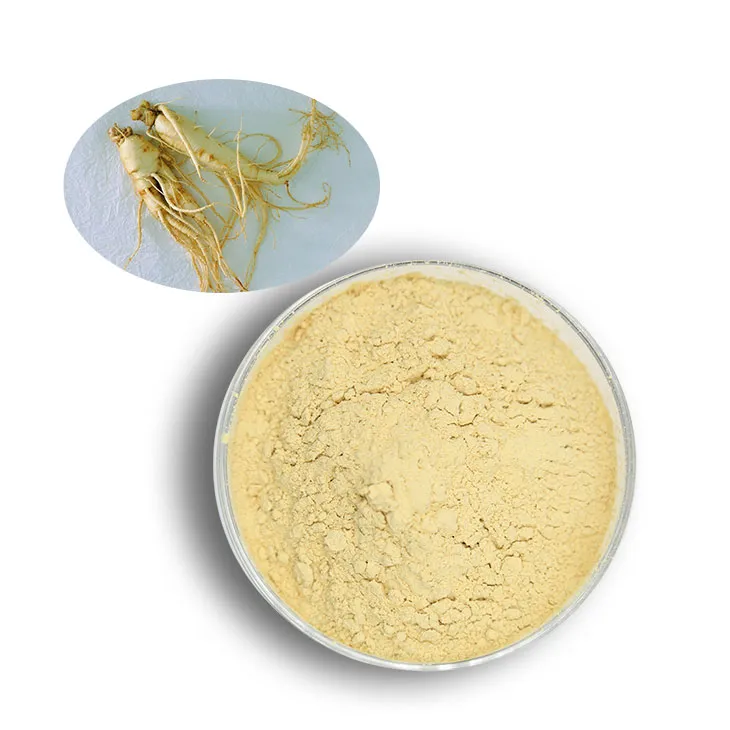
Parameter Specification Total ginsenosides 4%–15% (HPLC) Specific ginsenosides Rb1, Rg1, Re, Rd, R1 as specified Appearance Light yellow to brown fine powder Particle size 80–200 mesh (customizable) Moisture ≤5.0% Heavy metals Pb <2 ppm, Cd <1 ppm, As <1 ppm, Hg <0.1 ppm Pesticide residues EU/USP/ChP compliant Microbiological Total plate count <1,000 CFU/g; E. coli, Salmonella: negative
Greensky Bio's ginseng extracts undergo comprehensive testing in our independent laboratory, equipped with HPLC, GC, UV, and other analytical instruments. Every batch is accompanied by a detailed Certificate of Analysis (COA) with individual ginsenoside quantification.
Applications Across Industries
Dietary supplements: Capsules, tablets, and liquid extracts for energy, immunity, and cognitive health.
Energy drinks and functional beverages: Natural energy and adaptogenic ingredient.
Cosmetics: Anti-aging and skin-brightening formulations leveraging ginsenoside activity.
Traditional medicine preparations: Granules, powders, and decoction pieces for TCM and KCM markets.
Why Partner with Greensky Bio for Ginseng Extract
20+ years of extraction expertise: Deep knowledge of ginseng sourcing, extraction optimization, and ginsenoside standardization.
Advanced production infrastructure: Multi-functional extraction tanks, low-temperature concentrators, spray drying towers, and a 100,000-class clean area.
International certifications: ISO22000, BRCGS, Ecocert Organic Standard, and SGS-GMP — meeting the requirements of European, American, Korean, and Russian markets.
Custom ginsenoside profiles: We can standardize to specific ginsenoside ratios (Rb1/Rg1, total saponins, rare ginsenosides) per your formulation requirements.
Independent laboratory testing: In-house HPLC, GC, and UV capabilities ensure batch-by-batch quality verification.
Ready to source premium ginseng extract?
- ▶ Hesperidin
- ▶ Citrus Bioflavonoids
- ▶ Plant Extract
- ▶ lycopene
- ▶ Diosmin
- ▶ Grape seed extract
- ▶ Sea buckthorn Juice Powder
- ▶ Fruit Juice Powder
- ▶ Hops Extract
- ▶ Artichoke Extract
- ▶ Mushroom extract
- ▶ Astaxanthin
- ▶ Green Tea Extract
- ▶ Curcumin
- ▶ Horse Chestnut Extract
- ▶ Other Product
- ▶ Boswellia Serrata Extract
- ▶ Resveratrol
- ▶ Marigold Extract
- ▶ Grape Leaf Extract
- ▶ New Product
- ▶ Aminolevulinic acid
- ▶ Cranberry Extract
- ▶ Red Yeast Rice
- ▶ Red Wine Extract
- ▶ blog
-
Cactus Extract
2026-10-03
-
Passionflower Extract
2026-10-03
-
Liposomal NMN
2026-10-03
-
Resveratrol
2026-10-03
-
Bilberry Extract
2026-10-03
-
Acai Berry Extract
2026-10-03
-
Polygonum multiflorum extract
2026-10-03
-
Lycopene
2026-10-03
-
Lemon Extract
2026-10-03
-
Polygonum Cuspidatum Extract
2026-10-03