- 0086-571-85302990
- [email protected]




Where can I buy green tea extract for face formulations?
2026-08-19
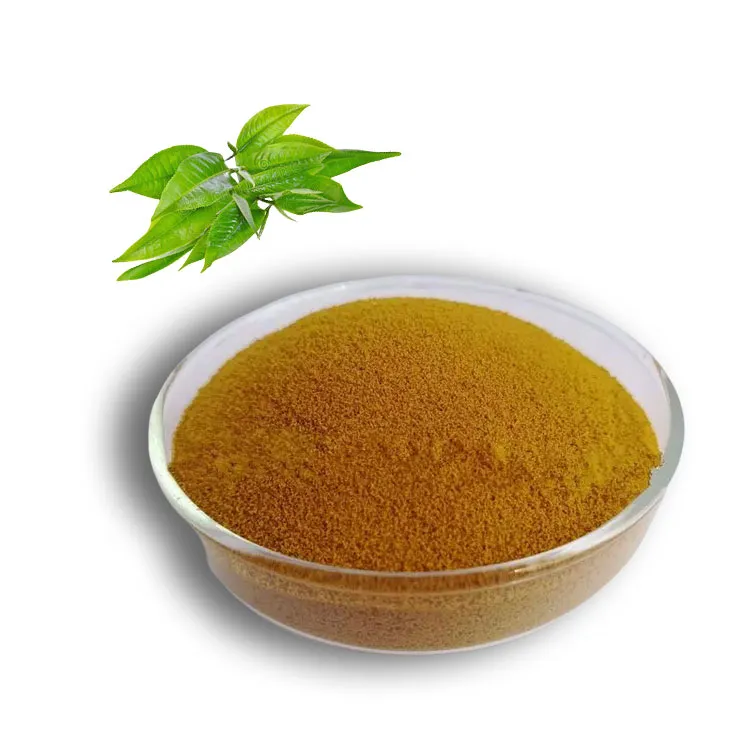
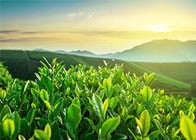
Green Tea Extract has earned a permanent place in face care. From lightweight serums and toners to creams, sheet masks, and eye gels, it is one of the most widely used botanical actives in modern skincare, and for good reason. Its catechins, especially EGCG, are well known for their antioxidant and soothing properties, which makes the ingredient attractive to formulators who want natural, plant-based solutions for their customers. Once you have decided to build a formula around it, the practical question becomes: where can I buy Green Tea Extract for face formulations? This guide explains what to look for, the sourcing options available, and how to choose a supplier you can trust.
Why formulators choose Green Tea Extract for face care
The value of green tea extract in face formulations comes mainly from its catechins, with epigallocatechin gallate (EGCG) being the most studied. When applied topically, these compounds help neutralize free radicals that would otherwise stress the skin, support the skin’s natural defenses against environmental damage, and help calm redness and irritation. EGCG has also been studied for its ability to support collagen and elastin, which is why it appears so often in anti-aging products. In addition, green tea extract is frequently used in products designed for oily or combination skin, because it can help regulate excess sebum.
Because of this range of benefits, green tea extract for face care is used at different levels depending on the format. A toner or mist typically carries a light concentration, a serum can carry a higher one, and a wash-off mask can go higher still since contact time is short. This flexibility is one reason the ingredient shows up across so many product categories, from brightening essences to soothing creams.
What to check before you buy green tea extract
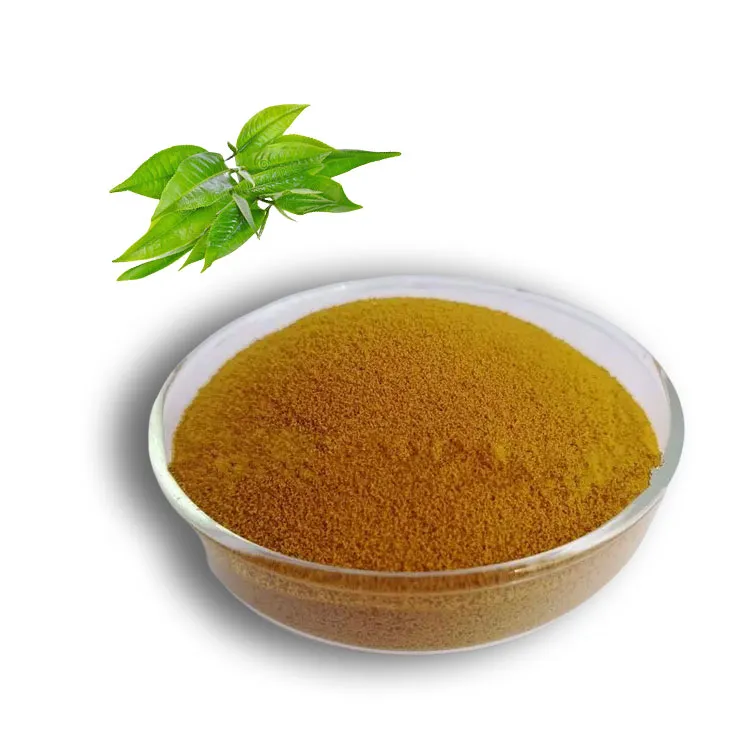
Before contacting suppliers, it helps to define the specification you actually need. The most important parameter for face care is EGCG content, not just total polyphenols, because EGCG is the compound responsible for most of the skin benefits. Standard water-soluble green tea extract powders typically fall in the 40–50% EGCG range, while high-purity grades can reach 90% or more. If you plan to use a high-purity grade, remember that the dosage in your formula should be much lower than with a standard extract.
Grade also matters. Cosmetic-grade green tea extract is held to stricter limits than food-grade material, including lower heavy metals, tighter microbial counts, and finer particle size. If a supplier cannot clearly tell you which grade they are quoting, that is a warning sign. You should also think about solubility: a standard water-soluble powder is the right choice for water-phase formulas such as serums and toners, while oil-soluble versions are available for anhydrous products like facial oils and balms. Finally, keep stability in mind. Catechins are sensitive to light, heat, oxygen, and high pH, so a responsible supplier will be able to discuss packaging and storage recommendations with you.
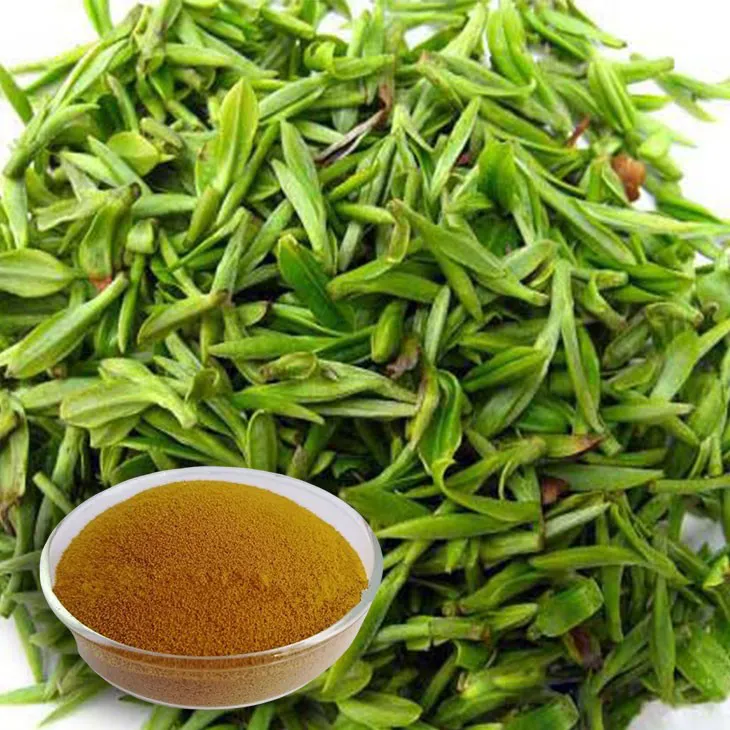
Where to buy green tea extract for face formulations
There are three main ways to source green tea extract for face care, and each has its own trade-offs.
Buying direct from a plant extract manufacturer. This is usually the best route for skincare brands and formulators who need consistent quality, full documentation, and competitive pricing. A manufacturer controls the entire process from raw leaf to finished powder, which means you can verify sourcing, request batch-to-batch testing, and get certificates of analysis for every lot. You also get direct access to technical support when you need help with formulation questions.
Using B2B marketplaces. Online trading platforms make it easy to compare many listings at once, but the quality of sellers varies widely. Some listings are manufacturers, while others are traders reselling material they did not produce. If you go this route, you will need to do extra due diligence on certifications, testing, and documentation before committing to a large order.
Working with a distributor or trading company. Distributors can be convenient, especially for small quantities or when you want to consolidate several ingredients in one order. The trade-off is that you pay a markup, and you are further removed from the actual production process, which can make traceability and quality control harder to verify.
For most face-care brands, buying direct from a manufacturer offers the best balance of quality, price, and control. If you are ready to start sourcing, here is where to buy green tea extract directly from a manufacturer that specializes in botanical ingredients.
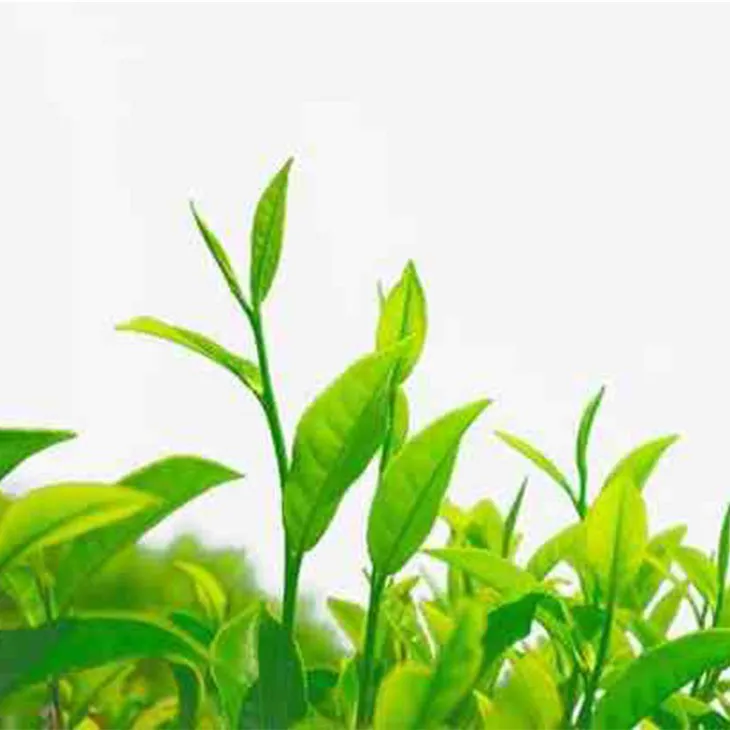
How to vet a green tea extract supplier
Once you have a shortlist of candidates, a few checks will tell you a lot about whether a supplier is worth working with.
Look at certifications. Recognized certifications such as ISO22000, BRCGS, HALAL, and Kosher show that a facility operates to international food-safety and quality standards. GMP certification is especially relevant if you are buying material for cosmetic or supplement use.
Ask about testing. A serious manufacturer maintains its own laboratory and can provide a certificate of analysis for each batch. Instruments such as HPLC and GC are the industry standard for verifying EGCG content and purity, so a supplier that can talk about these in detail is usually a good sign.
Request samples and documentation. Before you commit to a production order, ask for a sample and test it in your own formula. A reliable supplier will also provide the technical documents you need for regulatory submissions in your target markets.
Check production capacity and clean production. For face-care ingredients, you want a facility with clean production areas that meet food-grade requirements, plus the extraction and drying equipment needed to produce consistent powder at scale.
Buying direct from a manufacturer: the Greensky example
Hangzhou Greensky Biological Tech. Co., Ltd. is a professional manufacturer of natural plant extracts that has been operating since 2004, giving it more than 20 years of experience in identifying, researching, developing, and producing active botanical ingredients. The company operates with full vertical integration across five wholly-owned subsidiaries, covering research, development, production, and sales under one group. Its export business reached nearly 30 million US dollars in 2023, with main markets in Europe, the United States, South Korea, and Russia.
Greensky produces its extracts in a 100,000-class clean production area that meets food-grade requirements, supported by an independent laboratory equipped with HPLC, GC, and UV instruments. The production line includes multi-ton functional extraction tanks, high-efficiency low-temperature concentrators, a spray drying tower, and a vacuum drying box, which together allow the company to deliver consistent, high-quality powder at scale. Its certifications include ISO22000, BRCGS, Ecocert Organic Standard, SGS-GMP, ISO9001, HALAL, and Kosher, and it holds export food production enterprise registration for global regulatory submissions.
For formulators looking for a green tea extract manufacturer that can support face-care product development, Greensky offers green tea extract as part of a catalog of roughly 170 botanical products. The company’s green tea extract is a powerful antioxidant that has been extensively studied for its potential benefits, and the team can provide the technical documentation and batch testing that skincare brands need. You can review the product details on the green tea extract product page or reach out directly at [email protected].
Frequently asked questions
What EGCG content should I look for in green tea extract for face care? For most serums, toners, and creams, a standard water-soluble extract in the 40–50% EGCG range works well. If you choose a high-purity grade above 90%, reduce the usage level significantly, since it is far more concentrated.
What is the difference between food-grade and cosmetic-grade green tea extract? Cosmetic-grade material is held to stricter limits for heavy metals, microbial counts, and particle size, and it often has controlled color and odor. Always specify cosmetic-grade when requesting quotes for face-care formulas.
How much green tea extract should I use in a face serum? Effective levels typically fall between 0.5% and 5% for standard extract, with serums commonly using 2–5%. Start with a lower level, run stability testing, and adjust based on the color and performance of your formula.
Can I get samples before placing an order? Reputable manufacturers will provide samples so you can evaluate the powder in your own formula before committing to a production run. Testing a sample in your actual base is the best way to confirm color, solubility, and stability.
Do I need a large minimum order quantity? Minimums vary by supplier. A direct manufacturer can often accommodate smaller trial quantities and scale up as your product grows, which makes it easier for new brands to get started.
Final thoughts
Finding the right source for green tea extract for face formulations comes down to three things: knowing your specification, choosing a sourcing route that matches your needs, and verifying the supplier with samples and documentation. Buying direct from a manufacturer gives you the most control over quality, pricing, and traceability, and it puts you in direct contact with the people who actually produce the ingredient. With a clear spec and a reliable partner, you can build green tea extract into your face-care line with confidence.
- ▶ Hesperidin
- ▶ Citrus Bioflavonoids
- ▶ Plant Extract
- ▶ lycopene
- ▶ Diosmin
- ▶ Grape seed extract
- ▶ Sea buckthorn Juice Powder
- ▶ Fruit Juice Powder
- ▶ Hops Extract
- ▶ Artichoke Extract
- ▶ Mushroom extract
- ▶ Astaxanthin
- ▶ Green Tea Extract
- ▶ Curcumin
- ▶ Horse Chestnut Extract
- ▶ Other Product
- ▶ Boswellia Serrata Extract
- ▶ Resveratrol
- ▶ Marigold Extract
- ▶ Grape Leaf Extract
- ▶ New Product
- ▶ Aminolevulinic acid
- ▶ Cranberry Extract
- ▶ Red Yeast Rice
- ▶ Red Wine Extract
- ▶ blog
-
Lion's Mane Mushroom Extract
2026-08-19
-
Maitake Mushroom Extract
2026-08-19
-
Pomegranate Extract
2026-08-19
-
Sophora Japonica Flower Extract
2026-08-19
-
Golden Seal Extract
2026-08-19
-
Gamma-Aminobutyric Acid
2026-08-19
-
Green Tea Extract
2026-08-19
-
Berberis aristata Extract
2026-08-19
-
Senna Leaf Extract
2026-08-19
-
White Peony Extract
2026-08-19