- 0086-571-85302990
- [email protected]






Arjuna Bark Extract Complete Guide: Cardiovascular Benefits, Arjunic Acid & Supplier Guide
2026-07-22
Introduction
Terminalia arjuna, commonly known as Arjuna, is a towering tree native to the Indian subcontinent whose bark has been revered in Ayurvedic medicine for over 5,000 years as a premier cardiovascular tonic. Modern scientific research has begun to validate what traditional healers long knew: the bioactive compounds in Arjuna bark — particularly arjunic acid, arjunolic acid, and a suite of triterpenoid saponins and flavonoids — offer multi-target support for heart health, making this extract one of the most promising botanical ingredients in the cardiovascular supplement category.
Part 1: What Is Arjuna Bark Extract?
Botanical Overview
Parameter Detail Botanical Name Terminalia arjuna (Roxb. ex DC.) Wight & Arn. Family Combretaceae Common Names Arjuna, Kahu, Koha, 阿江榄仁 Part Used Bark Major Growing Regions India (Madhya Pradesh, Maharashtra, Tamil Nadu, Karnataka), Sri Lanka
Active Compounds
Arjuna bark contains a rich and diverse array of bioactive compounds:
Compound Class Specific Compounds Content Range Significance Triterpenoid Saponins Arjunic acid, Arjunolic acid, Arjunetin 1–5% Primary cardiovascular actives Flavonoids Arjunone, Luteolin, Quercetin Variable Antioxidant, anti-inflammatory Oligomeric Proanthocyanidins (OPCs) Catechin-based polymers Variable Potent antioxidants Minerals Calcium, Magnesium, Zinc Trace Cofactor support Glycosides Strong glycosides Trace Cardiotonic activity
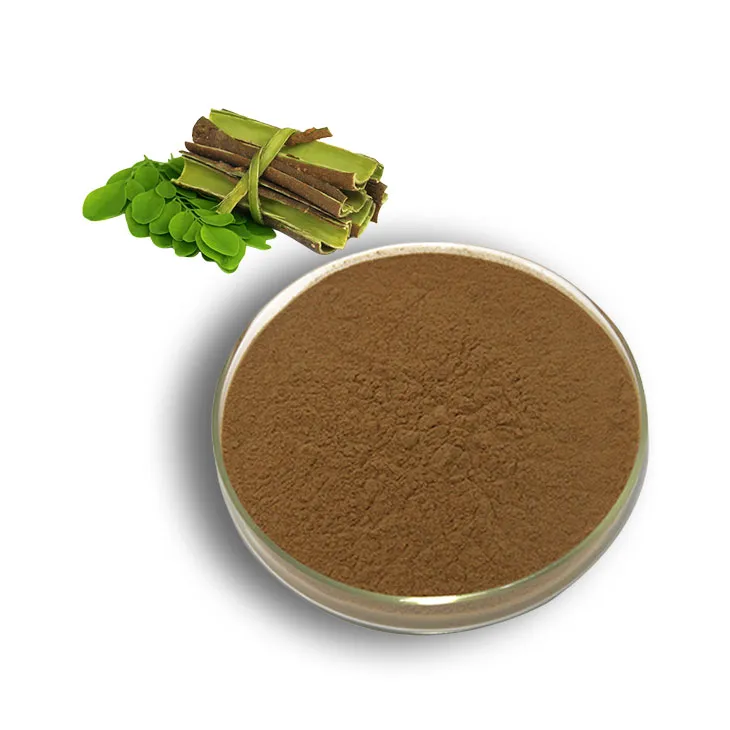
Arjunic acid is the most commonly used marker compound for standardization of Arjuna bark extract. It is a triterpenoid saponin with demonstrated cardiovascular protective effects including positive inotropic activity and lipid-lowering properties.
Standard Specifications We Offer
Specification Marker Compound Application Arjuna Bark Extract 1% Arjunic Acid ≥ 1.0% Arjunic Acid (HPLC) Standard cardiovascular supplements Arjuna Bark Extract 2% Arjunic Acid ≥ 2.0% Arjunic Acid (HPLC) Premium formulations Arjuna Bark Extract 4:1 4:1 DER, total saponins standardized Traditional formulations
Quality Specifications (1% Arjunic Acid)
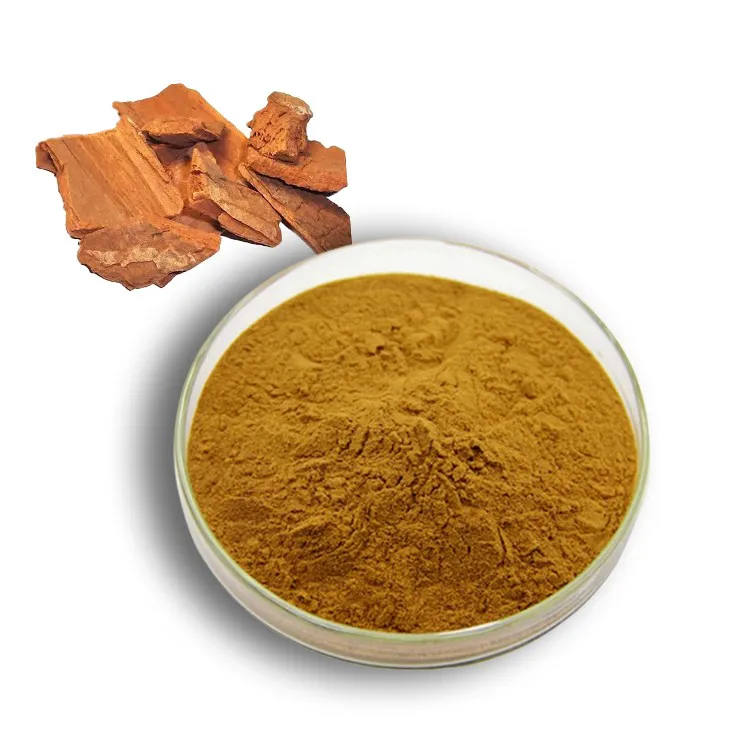
Parameter Specification Test Method Appearance Light brown to brown fine powder Visual Odor Characteristic aromatic odor Organoleptic Arjunic Acid ≥ 1.0% HPLC Total Triterpenoid Saponins ≥ 10% Spectrophotometric Flavonoids ≥ 2.0% Spectrophotometric Moisture ≤ 8.0% Loss on drying Ash ≤ 10.0% Incineration Particle Size 95% through 80 mesh Sieve analysis Heavy Metals Pb ≤ 2.0, As ≤ 1.0, Hg ≤ 0.1, Cd ≤ 0.5 mg/kg ICP-MS Solvent Residue Complies with USP <467> GC
Certificate of Analysis (COA)
Every shipment is accompanied by a comprehensive COA including arjunic acid quantification by HPLC, total saponin content, heavy metals, microbiological parameters, and solvent residue analysis. Third-party testing reports from internationally accredited laboratories (SGS, Eurofins, Intertek) are available upon request.
Part 2: Core Benefits & Mechanisms of Action
1. Cardioprotective Effects — The Hallmark Benefit
Arjuna bark's most well-documented benefit is its cardioprotective action. Multiple peer-reviewed studies have demonstrated its efficacy:
A randomized, double-blind, placebo-controlled clinical trial published in the Indian Journal of Pharmacology (Bharani et al., 2002) evaluated the effects of Terminalia arjuna bark extract in patients with stable angina. The study found that patients receiving Arjuna extract showed significant improvements in exercise tolerance and reduced frequency of anginal episodes compared to placebo.
Another study (Dwivedi & Jauhari, 1994, International Journal of Pharmacognosy) demonstrated that Arjuna bark extract exhibited cardiotonic effects comparable to digoxin in experimental models, with the added advantage of not inducing the arrhythmias commonly associated with digitalis glycosides.
Key mechanisms:
Positive inotropic effect — enhanced myocardial contractility without increasing oxygen demand
Membrane stabilization — protection of cardiac cell membranes from ischemic damage
Calcium channel modulation — regulated calcium influx in cardiac myocytes
2. Lipid-Lowering & Cholesterol Management
Research published in the Journal of the Association of Physicians of India (Gupta et al., 1998) investigated the lipid-lowering effects of Arjuna bark powder in hypercholesterolemic patients. The study reported significant reductions in total cholesterol, LDL cholesterol, and triglyceride levels, along with a favorable increase in HDL cholesterol.
The lipid-lowering mechanism involves multiple pathways:
HMG-CoA reductase inhibition — similar (though milder) to statin mechanism
Bile acid binding — increased cholesterol excretion through fecal elimination
Antioxidant protection of LDL — prevention of LDL oxidation, a key step in atherogenesis
3. Anti-Ischemic Activity
Ischemic heart disease remains the leading cause of mortality worldwide. Arjuna bark extract has demonstrated significant anti-ischemic properties in preclinical models. Research published in Molecular and Cellular Biochemistry (Gauthaman et al.) showed that Arjuna bark pretreatment reduced the severity of ischemia-reperfusion injury in animal models, as evidenced by:
Reduced myocardial infarct size
Lowered serum cardiac enzyme levels (CK-MB, LDH)
Improved cardiac output parameters
Enhanced antioxidant enzyme activity in cardiac tissue
The anti-ischemic effect is attributed to the triterpenoid saponin fraction, particularly arjunic acid and arjunolic acid, which appear to modulate the nitric oxide-cGMP pathway and reduce oxidative stress during ischemic events.
4. Antioxidant & Anti-Inflammatory Protection
The flavonoid and proanthocyanidin content of Arjuna bark provides substantial antioxidant capacity. Studies have shown that Arjuna bark extract scavenges superoxide radicals, hydroxyl radicals, and peroxynitrite — all implicated in the pathogenesis of cardiovascular disease.
The anti-inflammatory properties further support cardiovascular health by:
Reducing vascular inflammation — inhibition of NF-κB and downstream pro-inflammatory cytokines
Improving endothelial function — enhanced nitric oxide production and bioavailability
Protecting against atherosclerosis — reduced foam cell formation and plaque progression
5. Hepatoprotective Effects
Beyond cardiovascular applications, Arjuna bark has demonstrated hepatoprotective activity. Research published in the Journal of Ethnopharmacology showed that arjunolic acid protected against chemically-induced liver damage in animal models, likely through its membrane-stabilizing and antioxidant properties. This makes Arjuna bark extract a valuable ingredient in multi-target health formulations.
Part 3: Wide-Ranging Application Fields
Cardiovascular Health Supplements
The primary market for Arjuna bark extract is the cardiovascular health category:
Heart health capsules and tablets — standalone or combined with hawthorn, CoQ10, and garlic
Blood pressure support formulas — combined with hibiscus and olive leaf
Cholesterol management supplements — combined with red yeast rice and plant sterols
Post-cardiac event recovery formulas — used in rehabilitation support programs
Typical dosage in finished products: 250–500 mg per serving of standardized extract
Ayurvedic & Traditional Medicine Formulations
Arjuna bark is a cornerstone ingredient in classical Ayurvedic formulations:
Arjunarishta — traditional fermented cardiac tonic
Modern Ayurvedic capsules — standardized extracts in convenient dosage forms
Combination formulas — with Ashwagandha, Brahmi, and other adaptogens
Pharmaceutical Research
The pharmaceutical industry continues to investigate Arjuna bark for:
Adjunctive cardiac therapy — alongside conventional medications
Metabolic syndrome management — multi-target approach to cardiovascular risk factors
Natural statin alternatives — for patients seeking non-pharmaceutical options
Functional Foods & Beverages
Emerging applications include:
Heart-healthy beverages — teas and functional drinks with Arjuna bark extract
Fortified food products — cereals and nutrition bars with cardiovascular positioning
Part 4: Key Considerations When Choosing a Quality Arjuna Bark Extract
Standardization to Arjunic Acid
The most reliable quality marker for Arjuna bark extract is arjunic acid content, verified by HPLC. Many suppliers report only total saponin content, which is less specific and may not correlate with cardiovascular efficacy.
Quality Tier Arjunic Acid Recommended For Standard ≥ 1.0% General supplements, cost-effective formulations Premium ≥ 2.0% High-end cardiovascular products Research grade ≥ 5.0% Clinical studies, specialized applications
Extraction Process
Our Arjuna bark extract is produced using a carefully controlled hydro-ethanolic extraction process:
Parameter Condition Rationale Solvent Ethanol-water (60:40) Optimal solubilization of triterpenoid saponins Temperature 60–80°C Efficient extraction without thermal degradation Concentration Vacuum concentration at ≤ 60°C Preserves heat-sensitive compounds Drying Spray drying with maltodextrin carrier Produces free-flowing, stable powder
Sustainability & Ethical Sourcing
Terminalia arjuna is a slow-growing tree species, and sustainable bark harvesting is essential. We source from suppliers who practice:
Non-destructive bark harvesting — only outer bark is collected, allowing the tree to regenerate
Forest management certification — responsible forestry practices
Fair trade partnerships — supporting local communities in India
Third-Party Testing & Certifications
We provide:
Full COA with HPLC-confirmed arjunic acid content
Heavy metals, microbiological, and solvent residue testing
Third-party reports from SGS, Eurofins, or Intertek
Available certifications: ISO 22000, HACCP, Kosher, Halal, Non-GMO, Organic (optional)
Part 5: About Us
As a supplier specializing in botanical extracts for the health and nutrition industry, we offer Arjuna Bark Extract with these advantages:
Verified arjunic acid content — every batch tested by HPLC, not just total saponins
Sustainable sourcing — ethically harvested from managed forests in India
Custom specifications — from 1% to 5% arjunic acid, tailored to your formulation needs
Technical support — our team provides formulation guidance, dosage recommendations, and regulatory documentation
Stable supply chain — reliable inventory and consistent quality year-round
Flexible packaging — 1 kg samples through 25 kg bulk drums, with private labeling available
Conclusion & Call to Action
Arjuna Bark Extract represents a rare botanical ingredient with centuries of traditional use and a growing body of modern scientific evidence supporting its cardiovascular benefits. From its cardiotonic and lipid-lowering properties to its anti-ischemic and antioxidant effects, Arjuna bark offers multi-target support for heart health — making it an ideal ingredient for the rapidly growing cardiovascular supplement category.
Interested in Arjuna Bark Extract? Contact us today for current pricing, free samples, and technical documentation. Our team is ready to help you develop or enhance your cardiovascular product line with a scientifically validated, sustainably sourced ingredient.
- ▶ Hesperidin
- ▶ Citrus Bioflavonoids
- ▶ Plant Extract
- ▶ lycopene
- ▶ Diosmin
- ▶ Grape seed extract
- ▶ Sea buckthorn Juice Powder
- ▶ Fruit Juice Powder
- ▶ Hops Extract
- ▶ Artichoke Extract
- ▶ Mushroom extract
- ▶ Astaxanthin
- ▶ Green Tea Extract
- ▶ Curcumin
- ▶ Horse Chestnut Extract
- ▶ Other Product
- ▶ Boswellia Serrata Extract
- ▶ Resveratrol
- ▶ Marigold Extract
- ▶ Grape Leaf Extract
- ▶ New Product
- ▶ Aminolevulinic acid
- ▶ Cranberry Extract
- ▶ Red Yeast Rice
- ▶ Red Wine Extract
- ▶ blog
-
Marigold Extract
2026-07-22
-
Maca Extract
2026-07-22
-
Cactus Extract
2026-07-22
-
Grape Seed Extract
2026-07-22
-
Tamarind extract powder
2026-07-22
-
Plantain extract
2026-07-22
-
Bamboo Leaf extract
2026-07-22
-
Oat Straw Extract Powder
2026-07-22
-
Cat Claw Extract
2026-07-22
-
Liposomal Berberine HCl
2026-07-22
