- 0086-571-85302990
- [email protected]






Nelumbo Nucifera Extract
2026-03-16
Nelumbo Nucifera Extract
Introduction
If you‘ve ever wandered through a tranquil garden pond, you’ve likely been captivated by the elegant lotus flower rising perfectly clean from murky waters. But this beautiful plant isn't just easy on the eyes—for centuries, it's been treasured across Asian cultures as both food and medicine. Today, modern science is catching up to what traditional healers have known all along: Nelumbo nucifera (sacred lotus) is packed with bioactive compounds that offer real, measurable health benefits.
Whether you're formulating a weight management supplement, developing anti-aging skincare, or researching natural anti-inflammatory ingredients, lotus extract deserves your attention. Let’s dive into everything you need to know about this remarkable botanical.

Part 1: What Exactly Is Nelumbo Nucifera Extract?
Let's start with the basics. Nelumbo nucifera, commonly known as sacred lotus, Indian lotus, or simply lotus, is an aquatic perennial plant native to Asia and Australia . It's easily recognized by its stunning large flowers and distinctive seed pods, but the real magic happens at the biochemical level.
Latin Name: Nelumbo nucifera Gaertn. (family Nelumbonaceae)
Plant Source: Aquatic herb native to China, India, Japan, and Southeast Asia. Major cultivation areas in China include Hubei, Jiangsu, Anhui, Jiangxi, Hunan, and Zhejiang provinces .
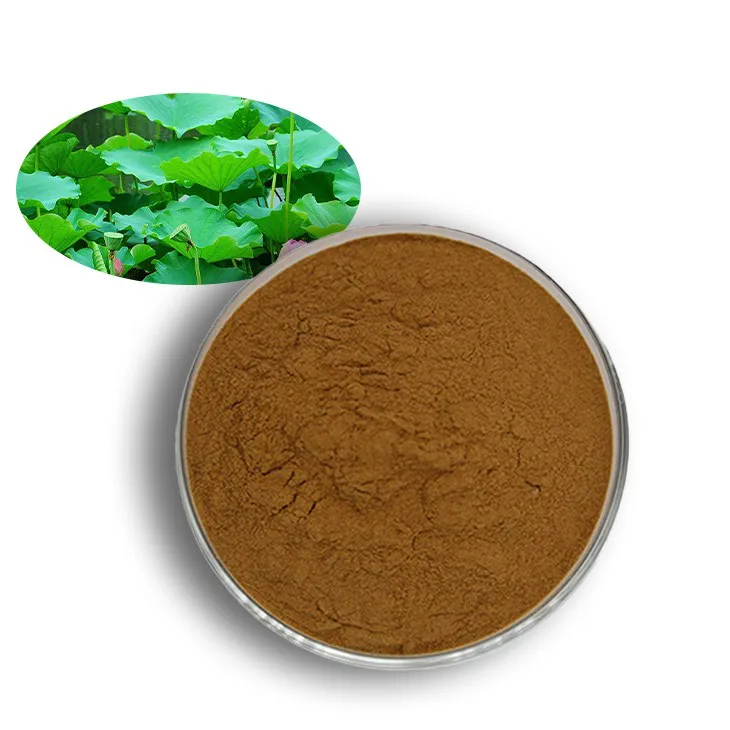
Extraction Part: The leaves are most commonly used for commercial extracts, though the seeds, embryos, stamens, and rhizomes also contain valuable compounds .
Key Active Components: This is where things get interesting. Lotus leaf extract contains a complex mixture of bioactive compounds:
l Alkaloids: Primarily nuciferine (the star compound), but also roemerine, norcoclaurine, and others
l Flavonoids: Quercetin, Quercetin-3-glucuronide, kaempferol, and various glycosides
l Other phenolics and polysaccharides
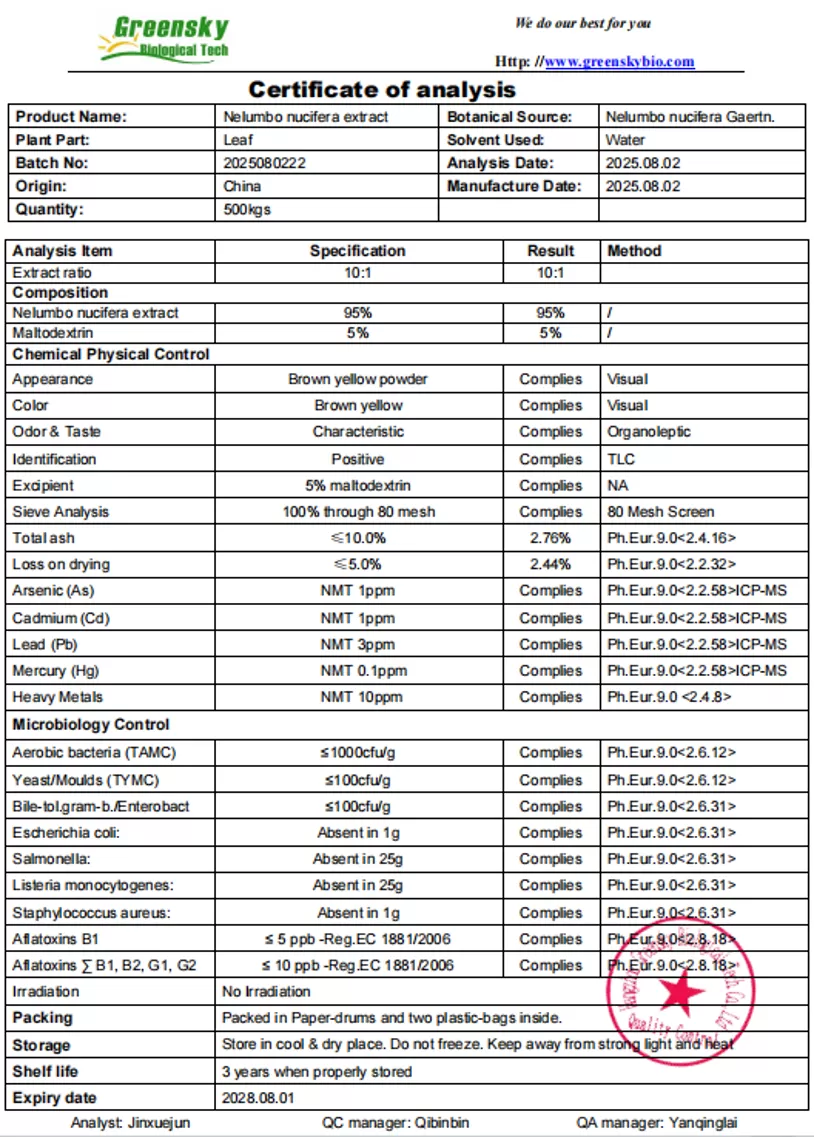
Our Testing & Quality Assurance
Every batch of our Nelumbo nucifera extract undergoes rigorous third-party testing. We provide Certificates of Analysis (COA) that verify:
l Active compound content via HPLC
l Heavy metal analysis (meets USP/EP standards)
l Microbial testing (total plate count, yeast/mold, pathogens)
l Residual solvent analysis (all batches are solvent-free or meet strict limits)
l Pesticide residue screening
We’re happy to share our latest COA with you—just ask.
Part 2: Core Benefits and Mechanisms of Action
This is where the science gets exciting. Over the past decade, researchers have published extensively on lotus extract's pharmacological effects. Here's what the evidence shows:
1. Weight Management and Lipid-Lowering Effects
This is probably the most well-documented benefit, and it's backed by human clinical trials.
How it works: Nuciferine, the primary alkaloid in lotus leaves, helps regulate lipid metabolism through multiple pathways. It activates AMP-activated protein kinase (AMPK), which essentially tells your body to start burning fat instead of storing it. It also inhibits adipogenesis—the process by which pre-fat cells mature into full-fledged fat-storing cells .
The evidence: A 12-week randomized double-blind trial published in 2022 looked at overweight participants (BMI 24–30) who consumed 1–2 grams of Lotus leaf extract daily. The results were impressive:
l Men lost 6.5–9.5% body fat
l Visceral fat (the dangerous kind around organs) decreased significantly in the high-dose group
l Waist circumference reduced by up to 2.3 cm
l Women also showed significant whole-body fat reduction, though visceral fat changes were less pronounced
The researchers noted that the effect on visceral fat reduction was actually comparable to some pharmaceutical interventions—without the side effects .
2. Antioxidant and Anti-Inflammatory Activity
Lotus extract is a potent free radical scavenger, thanks to its flavonoid content.
How it works: The Quercetin and other flavonoids in lotus extract neutralize reactive oxygen species (ROS) and upregulate the body's own antioxidant enzymes. They also inhibit pro-inflammatory pathways, including COX-2 and NF-κB signaling .
The evidence: A 2024 review in Applied Sciences highlighted lotus as a promising source of anti-inflammatory and antithrombotic bioactives. The compounds in lotus inhibit platelet aggregation and reduce inflammatory cytokine production, which has implications for cardiovascular health and chronic disease management .
3. Cardiovascular Protection
The heart health benefits of lotus extract go beyond just lipid improvement.
How it works: Neferine (another alkaloid from lotus) and related compounds have been shown to protect cardiomyocytes (heart muscle cells) from damage. They reduce apoptosis (programmed cell death) and improve mitochondrial function under stress conditions .
The evidence: A 2025 review in the Journal of Research in Siddha Medicine synthesized data from multiple experimental studies. The authors found that lotus constituents:
n Inhibit angiotensin-II-induced cardiac hypertrophy
n Reduce myocardial ischemia/reperfusion injury
n Improve endothelial function
n Show anti-arrhythmic properties
Network pharmacology analysis identified key targets including EGFR, TGFB1, and JAK2—all involved in cardiovascular disease pathways .
4. Blood Sugar Regulation
Emerging evidence suggests lotus extract may help with glycemic control.
How it works: The alkaloids in lotus leaves stimulate insulin secretion from pancreatic cells and improve insulin sensitivity in peripheral tissues . Additionally, lotus petal extracts have demonstrated α-glucosidase inhibitory activity—meaning they can slow carbohydrate absorption in the gut .
The evidence: A 2024 study on lotus petal extracts found that 60% ethanol extracts showed 94.32% α-glucosidase inhibition in vitro, suggesting real potential for blood sugar management applications . When incorporated into food products like gummy jellies, the extract maintained its anti-diabetic activity.
5. Neuroprotective Potential
While more research is needed, preliminary data is promising.
Researchers have noted that the antioxidant and anti-inflammatory properties of lotus alkaloids may have implications for neurodegenerative conditions like Alzheimer's disease. Some studies suggest compounds in lotus can inhibit acetylcholinesterase (an enzyme targeted by Alzheimer's medications) and reduce oxidative stress in neural tissue .
Part 3: Wide-Ranging Applications
So where can you use lotus extract? The versatility might surprise you.
Dietary Supplements and Nutraceuticals
This is the largest market segment. Lotus leaf extract is commonly formulated into:
n Weight management capsules and tablets
n Lipid-lowering supplements
n Metabolic health formulas
n Antioxidant blends
n Traditional herbal preparations
The clinical data on fat reduction makes it particularly attractive for supplement brands targeting the weight management category .
Functional Foods and Beverages
Lotus has Generally Recognized as Safe (GRAS) status in many jurisdictions and has been consumed as food for centuries. Current applications include:
n Herbal teas and infusions (the most traditional use)
n Functional beverages targeting metabolic health
n Gummy supplements and functional confections
n Protein bars and meal replacements
A 2024 study actually demonstrated successful incorporation of lotus petal extract into sugar-free gummy jellies—the products maintained bioactive activity and consumer acceptance at 10% inclusion rates .
Cosmetics and Personal Care
The beauty industry has embraced lotus extract for its antioxidant and anti-aging properties:
n Anti-aging serums and creams
n Brightening formulations
n Soothing products for sensitive or inflamed skin
n Hair care products (traditional use for hair health)
Lotus extract protects against UV-induced damage and oxidative stress, making it a valuable addition to daytime skincare products .
Pharmaceutical Development
While most lotus products are sold as supplements, pharmaceutical research continues:
n Isolated nuciferine for hyperlipidemia treatments
n Neferine for cardioprotective formulations
n Standardized extracts for metabolic syndrome interventions
The pure alkaloid forms (98% nuciferine) are typically used for research and drug development .
Animal Nutrition
A growing niche application is in livestock and pet supplements:
n Natural growth promoter
n Metabolic health support for companion animals
n Antioxidant additive for feed
The anti-inflammatory properties make it potentially useful for aging animals with joint or metabolic issues.
Part 4: How to Choose a Quality Lotus Extract Supplier
Not all lotus extracts are created equal. Here's what smart buyers look for:
1. Standardization and Testing
Always ask: "What's this standardized to?" Without standardization, you're buying dried plant material with unpredictable potency. Reputable suppliers provide:
n HPLC fingerprints showing actual compound profiles
n Batch-to-batch consistency data
n Third-party lab verification
2. Extraction Method Matters
The best lotus extracts use:
n CO2 supercritical extraction for alkaloid-rich products (no solvent residue)
n Food-grade ethanol extraction for flavonoid-rich products
n Water extraction for traditional preparations (though generally less potent)
Avoid extracts using industrial solvents like hexane unless you're certain they've been completely removed.
3. Supply Chain Transparency
Ask potential suppliers:
n Where do you source your lotus leaves? (China's Hubei and Jiangsu provinces are known for quality)
n Do you test for heavy metals and pesticides?
n Can you provide certificates of origin?
4. Customization Capabilities
If you're developing a specific formulation, you may need:
n Custom particle sizes
n Specific standardization ratios
n Kosher/Halal certifications
n Organic certification (available for lotus from certified farms)
5. Documentation
A professional supplier provides:
n Technical data sheets
n Material safety data sheets
n Allergen statements
n GMO-free declarations
n Stability data
Part 5: Why Work With Us?
We've been in the botanical extraction business for over a decade, and lotus is one of our specialties. Here's what sets us apart:
Quality You Can Trust
We source our lotus leaves directly from certified organic farms in China's prime growing regions. Each batch is tested at multiple points: raw material intake, during extraction, and final product. Our HPLC testing ensures you get exactly what's on the label.
Flexible Specifications
Need 2% nuciferine for a dietary supplement? We've got it. Need 98% pure alkaloid for research? We can do that too. Our manufacturing flexibility means you don't have to compromise on your formulation goals.
Science-Backed Support
We don't just sell ingredients—we help you use them effectively. Our technical team stays current with the latest research (like the studies cited in this article) and can help you with dosage recommendations, formulation troubleshooting, and regulatory documentation.
Reliable Supply
With multiple production facilities and contract farming partnerships, we maintain year-round inventory. No "sorry, we're out of stock" emergencies.
Full Traceability
From farm to finished extract, we document every step. We're happy to arrange farm visits or facility tours for serious buyers.
Conclusion: The Future Looks Bright for Lotus
Nelumbo nucifera extract sits at a sweet spot in the natural products world: it has centuries of traditional use, a growing body of modern scientific validation, and real clinical evidence for its flagship benefit (weight management). For formulators and manufacturers, it offers versatility across supplements, foods, and cosmetics.
Whether you're looking to develop a science-backed weight loss product, a clean-label anti-inflammatory cream, or a functional beverage with metabolic benefits, lotus extract deserves a spot on your ingredient shortlist.
Ready to source premium Nelumbo nucifera extract?
We'd love to help you bring your product vision to life. Contact our team today for:
u Free samples for lab testing and formulation work
u Current pricing (bulk and trial sizes available)
u Technical documentation including COAs and spec sheets
u Formulation guidance from our in-house experts
Our team typically responds within 24 hours—and we're happy to hop on a call to discuss your specific needs.
References
1. Ren, X., Chen, H., Wang, H., Wang, Y., Huang, C., & Pan, H. (2024). Advances in the pharmacological effects and mechanisms of Nelumbo nucifera gaertn. Extract nuciferine. Journal of Ethnopharmacology, 331, 118262.
2. Seferli, M., Kotanidou, C., Lefkaki, M., et al. (2024). Bioactives of the Freshwater Aquatic Plants, Nelumbo nucifera and Lemna minor, for Functional Foods, Cosmetics and Pharmaceutical Applications. Applied Sciences, 14(15), 6634.
3. Shanghai Meiji Health Science and Technology Co., Ltd. (2023). Clinical trial of Nelumbo nucifera leaf extract in overweight individuals. NCT04651023.
4. 杨惠, & 裴娟娟. (2024). 莲的生物活性成分及生理功能研究进展. 生物资源, 46(2), 112-125.
5. Recent advances on bioactive compounds, biosynthesis mechanism, and physiological functions of Nelumbo nucifera. (2023). Food Chemistry, 412, 135581.
6. Application of Bioactive Compounds from Lotus (Nelumbo Nucifera) Petals in Gummy Jelly Products. (2024). Journal of Food Science and Technology, 22(4).
7. Fat reducing effects of Nelumbo nucifera leaf extract in overweight patients. (2022). Phytomedicine.
8. Krishnamurthy, V., et al. (2025). Exploring the cardioprotective role of Nelumbo nucifera. Journal of Research in Siddha Medicine, 8(1), 1-13.
TEST REPORT
- ▶ Hesperidin
- ▶ Citrus Bioflavonoids
- ▶ Plant Extract
- ▶ lycopene
- ▶ Diosmin
- ▶ Grape seed extract
- ▶ Sea buckthorn Juice Powder
- ▶ Fruit Juice Powder
- ▶ Hops Extract
- ▶ Artichoke Extract
- ▶ Mushroom extract
- ▶ Astaxanthin
- ▶ Green Tea Extract
- ▶ Curcumin
- ▶ Horse Chestnut Extract
- ▶ Other Product
- ▶ Boswellia Serrata Extract
- ▶ Resveratrol
- ▶ Marigold Extract
- ▶ Grape Leaf Extract
- ▶ New Product
- ▶ Aminolevulinic acid
- ▶ Cranberry Extract
- ▶ Red Yeast Rice
- ▶ Red Wine Extract
- ▶ blog
-
Almond Extract Powder
2026-03-16
-
Black Pepper Extract
2026-03-16
-
Saw Palmetto Extract
2026-03-16
-
Eucommia Ulmoides Extract
2026-03-16
-
Moringa powder
2026-03-16
-
Panax Ginseng Leaf Extract
2026-03-16
-
Lotus leaf extract
2026-03-16
-
Tinospora cordifolia extract
2026-03-16
-
Acai Berry Extract
2026-03-16
-
Polygonum multiflorum extract
2026-03-16
