- 0086-571-85302990
- [email protected]






Where can I buy konjac powder in bulk?
2026-08-18
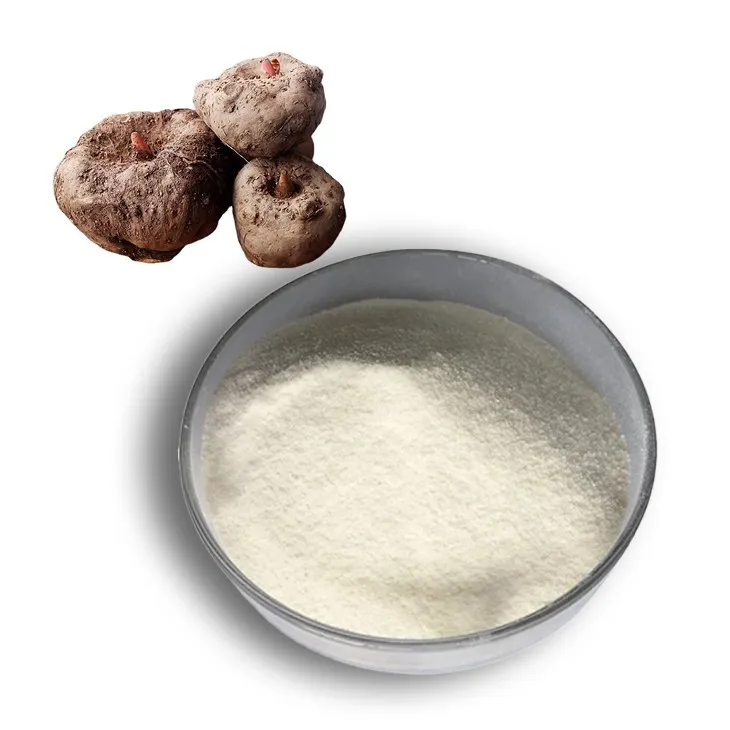
Konjac Powder is one of the most in-demand natural ingredients for food, health-food and supplement manufacturers. Because it is a glucomannan-rich hydrocolloid that builds viscosity, holds water and forms structured gels, it appears everywhere from shirataki noodles and plant-based meat to sauces, beverages, clear jelly and fiber-enriched supplements. If you are sourcing it in large volumes, the question is not just where to find it, but how to find a supplier you can depend on batch after batch. This guide walks through the buying options, the specifications that matter, and the questions to ask a potential partner.
What is Konjac Powder and why buy it in bulk?
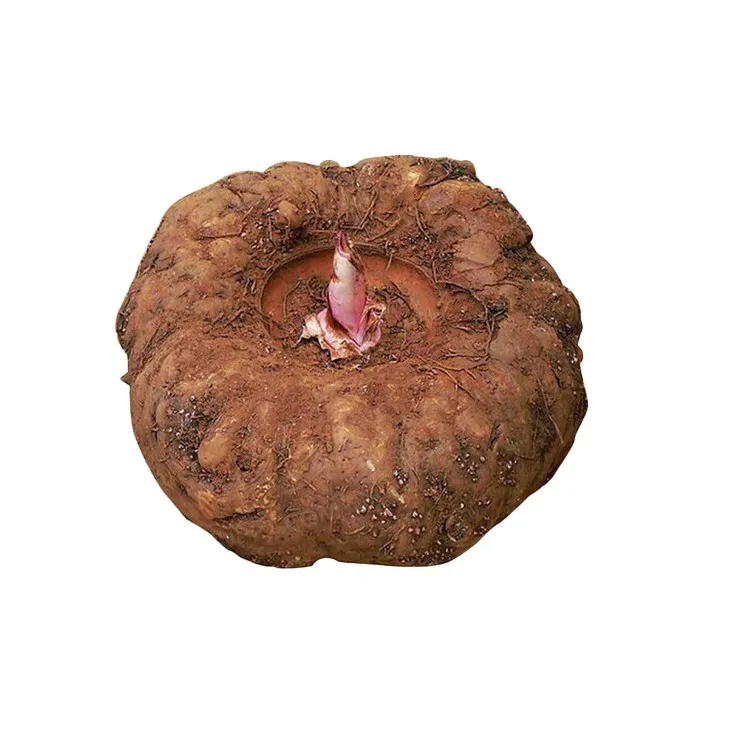
Konjac Powder is a natural ingredient extracted from the rhizome of the Konjac plant (Amorphophallus konjac). Its main functional component is konjac glucomannan (often abbreviated KGM), a high-molecular-weight soluble fibre responsible for the ingredient's hydration, thickening and heat-stable gel-forming behavior. Food-grade material is commonly standardized to a high KGM content, and international bodies identify konjac flour as additive INS 425.
Because even a relatively low use level can deliver substantial body and moisture retention, konjac powder is economical to use and highly versatile. For a manufacturer that runs continuous production across noodles, plant-based products, beverages or supplements, buying Konjac Powder from a single trusted source in bulk ensures consistent viscosity, purity and supply — and it is almost always cheaper per kilogram than repeated small purchases.
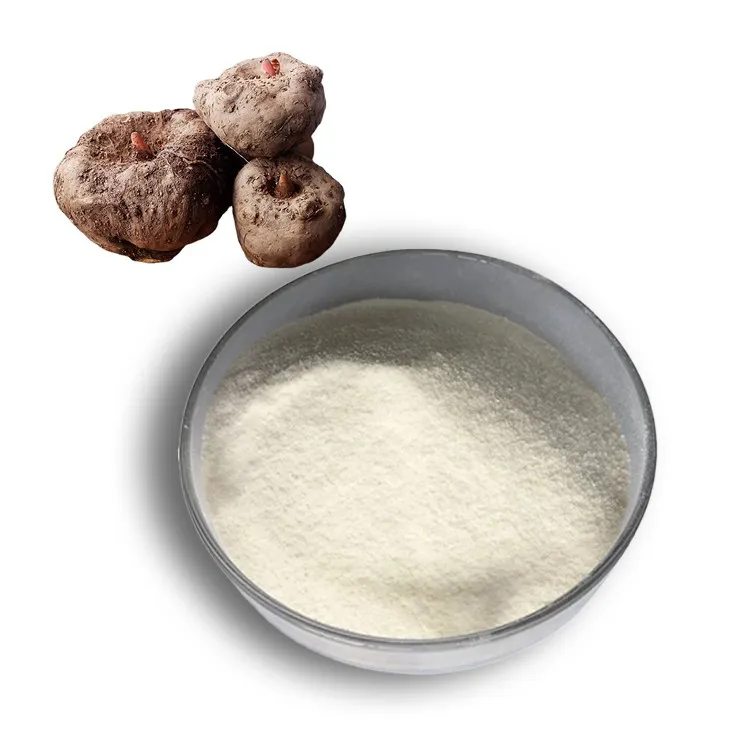
Where can you buy konjac powder in bulk?
There are three common sourcing routes, and each suits a different kind of buyer:
Direct from a manufacturer. For serious volume buyers this is usually the best option. You deal directly with the producer, get factory pricing, direct technical support, custom specifications and consistent supply. This is the route to choose when konjac is a core ingredient for your product line, because the manufacturer can guarantee repeatable quality and holds the processing know-how that a trader cannot.
B2B marketplaces and distributors. Platforms and regional distributors are convenient for smaller quantities and for comparing several suppliers quickly. The trade-off is that you may be buying from a reseller who does not control the production process, so you have less visibility into raw-material origin, drying, purification and lot consistency. Prices can also carry a markup over factory-direct supply.
Online wholesale storefronts. Useful for one-off or sample quantities, but rarely optimized for the packaging, documentation and supply guarantees a bulk program requires.
If your volumes are meaningful and your product depends on crunching raw-material costs, going direct to a manufacturer is almost always the smarter long-term move.
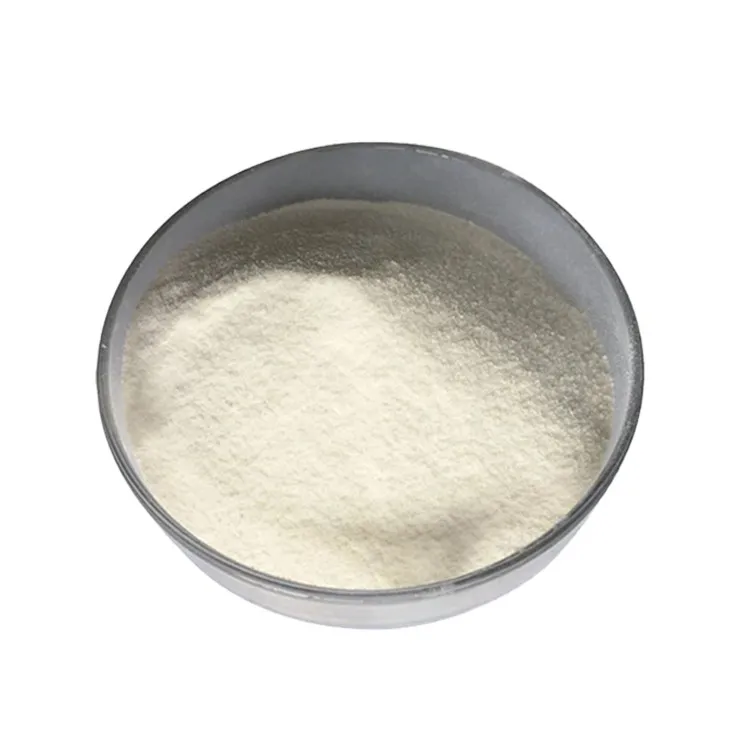
What to check before you buy
A price tag tells you very little on its own. Bulk buyers should compare measurable specifications rather than choose a material by vague marketing words like "premium" or "high purity". The essentials to confirm are:
- Glucomannan content — the declared KGM fraction, its test method and its permitted batch range. For most food and supplement applications, around 95% is the standard target.
- Viscosity — only meaningful with full test conditions (concentration, hydration time, temperature, instrument and speed). Two suppliers quoting different numbers may be using different methods.
- Particle size — affects feeding, dusting, dispersion and hydration rate, so it should be matched to your mixing equipment.
- Quality limits — moisture, ash, heavy metals, sulfites, pesticides and microbiological counts that must meet your destination-market requirements.
- Appearance, color and odor — critical in beverages, bakery products and light-colored or clear formulations.
Always request a certificate of analysis (COA) for a commercial lot and, before committing, order a sample and run a small trial under your own production conditions. A reliable supplier will provide both without hesitation.
Why the manufacturer matters for bulk orders
Konjac quality is shaped in the factory, not the warehouse. Drying conditions, purification methods, sulfite control and lot standardization all affect color, odor, molecular integrity and — ultimately — how the powder performs in your formula. This is where working with a vertically integrated producer pays off.
A manufacturer with its own research, development and production, such as Greensky, founded in Hangzhou in 2004, combines plant-extract production with in-house laboratories equipped with GC, HPLC and UV. That internal control means every batch can be tested for identity, assay, heavy metals and microbiology before it ships, and production can run in a food-grade 100,000-class clean area. Credible factories hold internationally recognized certifications such as ISO22000, BRCGS, ISO9001 and HALAL or Kosher, and provide the export documentation needed for Europe, the United States, South Korea and other regulated markets. These are the practical signals of a source you can rely on for a full program, not just a single shipment.
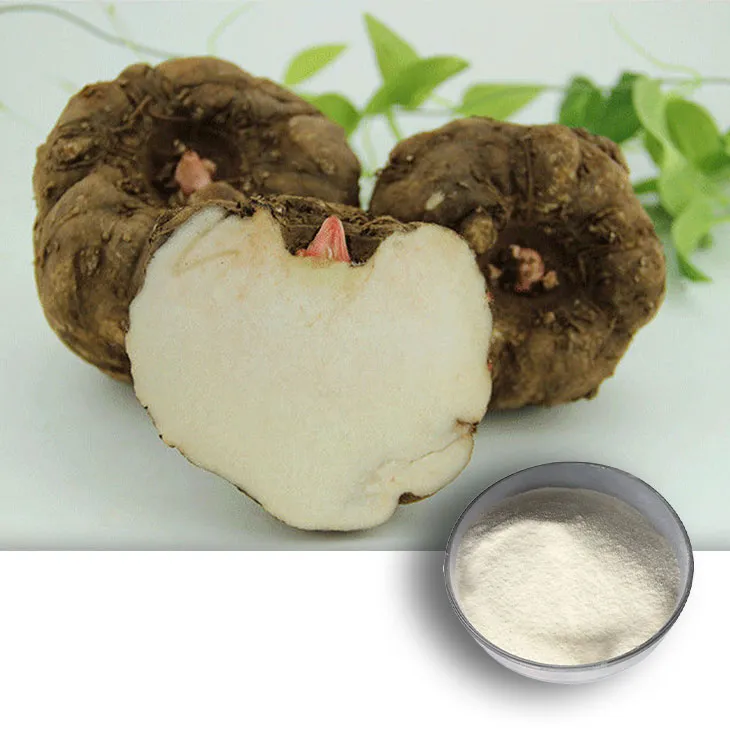
Choosing the right grade for your application
The right grade depends on what you are producing. For shirataki and konnyaku, the priority is gel response and elasticity under alkaline treatment. For plant-based meat, moisture control, binding and elastic bite matter most. Beverages need easy dispersion and a neutral odor, while sauces and soups rely on steady thickening and shear tolerance. Clear jellies call for transparency and elasticity, and fiber supplements are built around a standardized soluble-fiber content. Ask your supplier to recommend a grade and to share trial data for your specific process rather than assuming "high viscosity" is automatically the best fit.
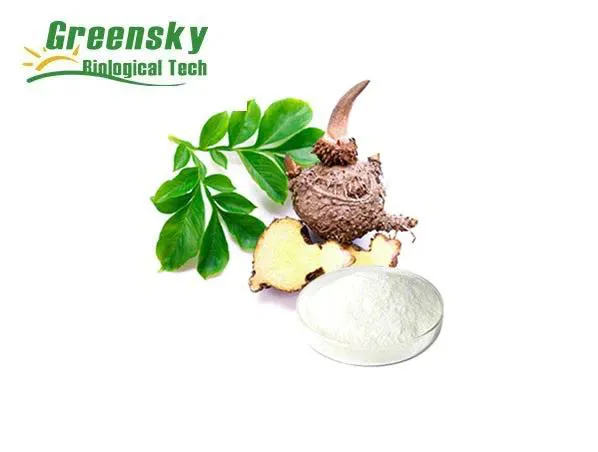
Regulatory and documentation essentials
Konjac flour is internationally identified as INS 425, and within the European union it is E 425, comprising konjac gum E 425(i) and konjac glucomannan E 425(ii). Some jurisdictions restrict E 425 in certain jelly mini-cups and dehydrated products that rehydrate during consumption, while United States guidance addresses glucomannan in relation to dietary-fiber declaration. Confirm the finished-product rules for your destination market — ingredient authorization on its own does not establish full product compliance.
Your supplier should also provide the core documents a bulk program needs, including product specifications and technical data sheets, lot-specific COAs, safety documentation, and export paperwork such as packing lists and certificates of origin.
How to place a bulk order, step by step
- Send an inquiry. Describe your application, target volumes, required specifications and destination market. A good manufacturer will respond with relevant grades, not just a price.
- Request samples and a COA. Test the material under your own conditions before any large commitment.
- Agree on specifications. Lock in assay, viscosity, particle size and quality limits in writing.
- Confirm packaging and lead time. Check whether you need drum, bag or custom packaging, and whether the factory can sustain your order schedule.
- Review the export documentation. Verify that everything needed for shipping and customs clearance is prepared.
Getting started
Konjac powder is a reliable, versatile ingredient, but the security of your supply chain depends on choosing the right partner. Buying direct from a manufacturer that controls production, tests every batch and supports export gives you consistent quality and predictable cost — the two things bulk producers can never afford to gamble on.
When you are ready to compare options, request a specification sheet, a sample and a quotation for Konjac Powder from Greensky, a plant-extract manufacturer with over twenty years of experience supplying natural ingredients in bulk.
TAGS:
- ▶ Hesperidin
- ▶ Citrus Bioflavonoids
- ▶ Plant Extract
- ▶ lycopene
- ▶ Diosmin
- ▶ Grape seed extract
- ▶ Sea buckthorn Juice Powder
- ▶ Fruit Juice Powder
- ▶ Hops Extract
- ▶ Artichoke Extract
- ▶ Mushroom extract
- ▶ Astaxanthin
- ▶ Green Tea Extract
- ▶ Curcumin
- ▶ Horse Chestnut Extract
- ▶ Other Product
- ▶ Boswellia Serrata Extract
- ▶ Resveratrol
- ▶ Marigold Extract
- ▶ Grape Leaf Extract
- ▶ New Product
- ▶ Aminolevulinic acid
- ▶ Cranberry Extract
- ▶ Red Yeast Rice
- ▶ Red Wine Extract
- ▶ blog
-
Milk Thistle Extract
2026-08-18
-
Fenugreek Extract Powder
2026-08-18
-
Calendula Extract
2026-08-18
-
Black Rice Extract
2026-08-18
-
Black Garlic Extract
2026-08-18
-
Tormentil Extract
2026-08-18
-
Phellodendron Extract
2026-08-18
-
Cactus Extract
2026-08-18
-
Green Tea Extract
2026-08-18
-
Angelica sinensis extract
2026-08-18
