- 0086-571-85302990
- [email protected]




What production equipment does a china stevia extract factory use?
2026-08-18
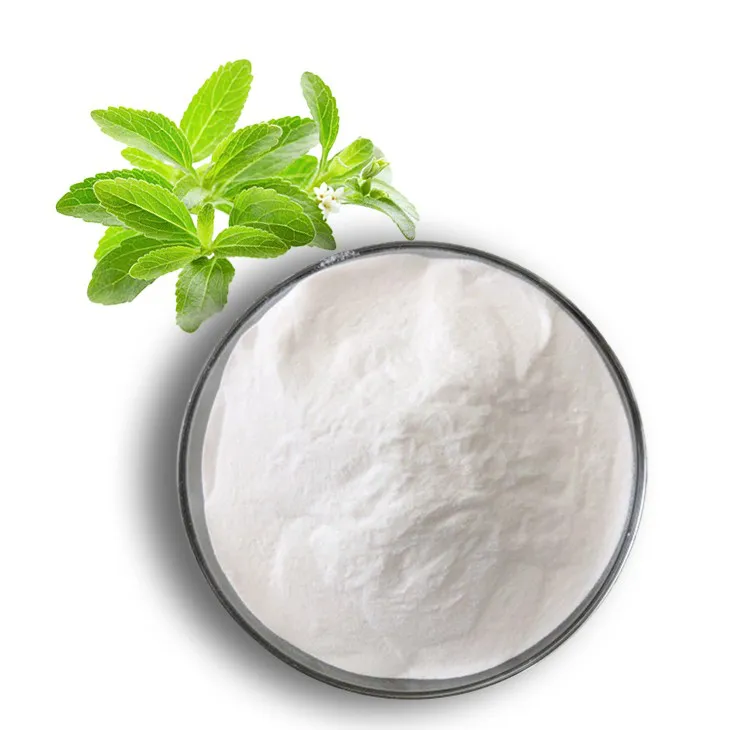
Stevia Extract is made from the leaves of Stevia rebaudiana, a natural sweetener whose steviol glycosides are hundreds of times sweeter than ordinary sugar while containing almost no calories. But that clean, high-purity powder does not appear by accident. Every gram of steviol glycoside moves through a carefully engineered production line, and that line is only as good as the equipment standing behind it. This article walks through the key production equipment a china stevia extract factory relies on, stage by stage, so that buyers know what to look for before they partner with a supplier.
1. Raw Material Preparation Equipment
The journey begins with dried stevia leaves. Because leaves arrive in bulk and may carry dust, stems and oversized fragments, a factory first runs them through cleaning and sieve equipment that removes impurities and standardizes the feedstock. A grinding or crushing unit then reduces the leaves to a consistent particle size, which increases the surface area available for water extraction. Some lines add a continuous feeding scale to meter raw material precisely into the process, protecting batch-to-batch consistency from the very first step.
2. Extraction Tanks
The heart of any stevia line is the extraction system. Industrial-scale plants rely on multi-functional extraction tanks, typically built of food-grade stainless steel, where the dried leaves are steeped in hot water under controlled temperature and agitation. Larger manufacturers install vessels in the multi-ton range, such as six-ton extraction tanks, so that a single batch can handle a meaningful volume of raw material and keep energy use per kilogram low. An efficient water-to-leaf ratio matters here: the more dilute the crude extract, the more energy is later spent removing water, which is why modern factories favour designs that limit water usage while maximizing glycoside recovery.
3. Separation and Filtration Equipment
After extraction, the liquid must be separated from the spent leaf matter. Plate-and-frame filter presses, centrifuges and separator columns remove coarse solids and plant debris, while membrane systems such as microfiltration and ultrafiltration clarify the coarse liquid further. This stage is critical because residual suspended solids would otherwise carry colour and impurities into the finished extract, hurting both purity and taste profile.
4. Concentration Equipment
A clarified extract is still a large volume of mostly water, so it must be concentrated before purification. High-efficiency low-temperature concentrators are the equipment of choice here: by evaporating water at reduced temperature and under vacuum, they protect heat-sensitive steviol glycosides from degradation while cutting the energy needed to shrink each batch. Effective concentration equipment is one of the clearest technical differences between an efficient factory and an energy-hungry one.
5. Purification and Refining Equipment
Reaching food-grade or higher purity requires more than simple concentration. Fully integrated plants use adsorption resin columns that selectively retain steviol glycosides while letting unwanted compounds pass through, followed by an alcohol wash and recrystallization to lift purity further. Some modern lines also employ a rotating disc contactor or ion-exchange columns to polish colour and minor impurities. This is the stage where a factory truly earns its purity claim, and it is the equipment buyers should ask about directly.
6. Drying Equipment
The purified liquid becomes a powder in the drying room. A spray drying tower atomizes the concentrated solution into fine droplets that dry almost instantly into free-flowing powder, which is the standard for bulk Stevia Extract. For products that need gentle, low-moisture drying, a vacuum drying box offers an alternative that further protects sensitive components. The finished powder is then milled and screened to a tight particle-size distribution so that it dissolves consistently in downstream food and beverage applications.
7. Blending and Packaging Lines
Quality must survive the trip to the customer, which is why automatic blending and packaging equipment round out the line. Blenders guarantee uniform rebaudioside levels across a lot, and automatic packing machines fill everything from bulk sacks to retail-ready pouches while protecting the powder from moisture and contamination. Metal-detection and check-weight systems on packing lines provide one more safety filter before goods leave the plant.
8. Quality Control Laboratory Equipment
No discussion of production equipment is complete without the laboratory. Reputable stevia extract manufacturers maintain in-house labs equipped with high-performance liquid chromatography (HPLC) to quantify individual steviol glycosides, gas chromatography (GC) and ultraviolet (UV) spectrophotometers for composition and impurity checks, plus moisture analyzers and microbiological testing tools. These instruments turn an abstract purity claim into a verifiable number on every batch certificate.
9. Clean Environment and Compliance Systems
Equipment operates best inside a controlled space. Leading factories run their filling and handling areas in 100,000-class clean production rooms that meet food-grade hygiene requirements, along with air-filtration and contamination-control systems. The facility is also expected to hold recognized certifications such as ISO22000, GMP, Kosher and Halal, plus export-registration documentation that lets goods clear customs for markets like Europe, the United States, South Korea and Russia. When you audit a potential supplier, verify that the equipment and the environment holding it both match the certificate on paper.
Choosing a Supplier with the Right Equipment
The equipment list above is the difference between a factory that produces consistent, high-purity pure stevia extract and one that struggles to repeat its own results. When evaluating a partner, ask about extraction tank capacity, purification resin and membrane systems, spray drying capability and the strength of the in-house QC lab. Greensky, a Hangzhou-based manufacturer active in plant extracts since 2004, operates vertically integrated facilities equipped with multi-ton extraction tanks, low-temperature concentration units, spray drying towers, vacuum dryers, separator columns and rotating disc contactors, all backed by an independent laboratory and global food-safety certifications. That combination gives buyers a single accountable source for Stevia Extract and other botanical ingredients.
TAGS:
- ▶ Hesperidin
- ▶ Citrus Bioflavonoids
- ▶ Plant Extract
- ▶ lycopene
- ▶ Diosmin
- ▶ Grape seed extract
- ▶ Sea buckthorn Juice Powder
- ▶ Fruit Juice Powder
- ▶ Hops Extract
- ▶ Artichoke Extract
- ▶ Mushroom extract
- ▶ Astaxanthin
- ▶ Green Tea Extract
- ▶ Curcumin
- ▶ Horse Chestnut Extract
- ▶ Other Product
- ▶ Boswellia Serrata Extract
- ▶ Resveratrol
- ▶ Marigold Extract
- ▶ Grape Leaf Extract
- ▶ New Product
- ▶ Aminolevulinic acid
- ▶ Cranberry Extract
- ▶ Red Yeast Rice
- ▶ Red Wine Extract
- ▶ blog
-
Andrographis Paniculata Extract Powder
2026-08-18
-
Beetroot juice Powder
2026-08-18
-
Carrageenan Extract Powder
2026-08-18
-
Green Tea Extract
2026-08-18
-
Citrus bioflavonoids
2026-08-18
-
White Willow Bark Extract
2026-08-18
-
Yohimbine Bark Extract
2026-08-18
-
Nettle Root Extract
2026-08-18
-
Pueraria Lobata Extract
2026-08-18
-
Cassia Seed Extract
2026-08-18