- 0086-571-85302990
- [email protected]






What is the difference between nutmeg extract and nutmeg essential oil?
2026-08-18
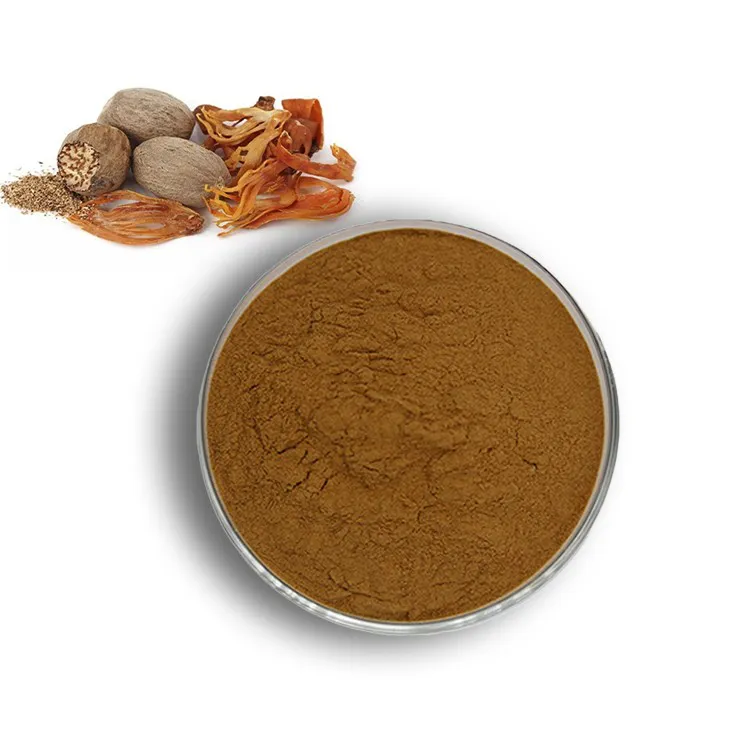
Nutmeg, the aromatic seed of Myristica fragrans native to Indonesia, has been valued for centuries as both a kitchen spice and a source of natural actives. For buyers sourcing botanical ingredients, two processed forms often cause confusion: Nutmeg Extract and nutmeg essential oil. While both come from the same seed, they are made differently, contain different compounds, and serve different purposes. Knowing the difference helps you pick the right material for your supplement, food, or cosmetic formula.
Below we break down how each form is produced, what it contains, and how to choose between them.
What Is Nutmeg Essential Oil?
Nutmeg essential oil is obtained by steam distilling the dried nutmeg seeds. The process captures the seed's volatile, aromatic fraction as a pale-yellow liquid with a warm, spicy scent. Because distillation isolates only the volatile components, the oil is highly concentrated.
Its main constituents are volatile terpenes and phenylpropenes — especially myristicin, along with sabinene, alpha-pinene, beta-pinene, and eugenol. The exact profile varies by origin and distillation conditions, which is why the oil is usually characterized with GC-MS before use in formulation.
Because it is a strong, concentrated oil, it is typically diluted before use, and requires storage in a sealed, light-protected container to preserve freshness.
What Is Nutmeg Extract?
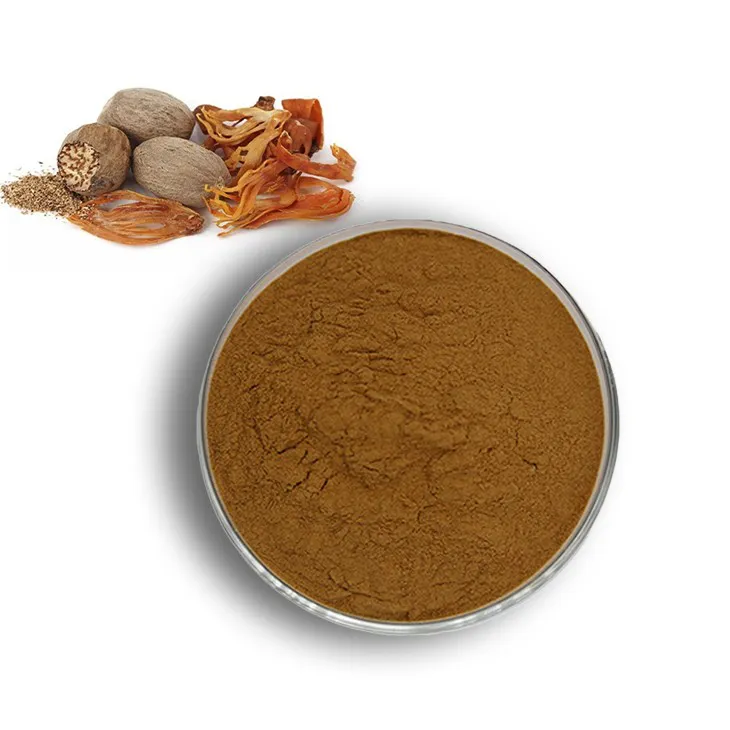
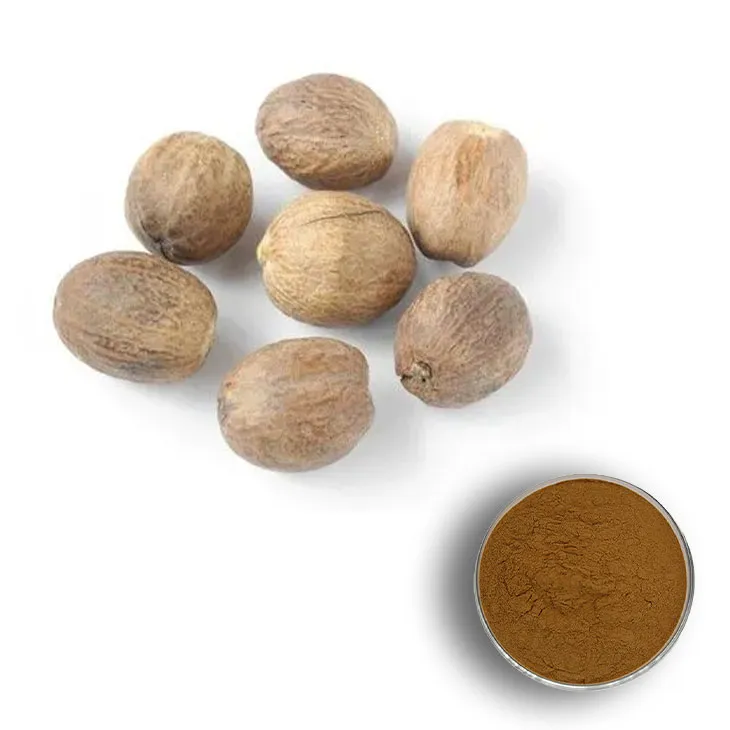
Nutmeg Extract is a processed botanical material in which the seed's active compounds are concentrated through extraction — typically with water, food-grade solvents, or standardized extraction technology. The result is a uniform powder or liquid that can be standardized to a marker compound, giving you a consistent active level batch after batch.
Unlike the essential oil, a full-spectrum nutmeg extract carries a broader balance of both volatile and non-volatile compounds, including flavonoids, phenolic acids, and other phytochemicals. That wider profile makes it well suited to dietary supplements and functional food ingredients, where reproducible dosing and a stable, easy-to-handle form matter more than intense aroma.
Key Differences at a Glance
Here is a quick side-by-side comparison of the two forms.
| Aspect | Nutmeg Essential Oil | Nutmeg Extract |
|---|---|---|
| Production | Steam distillation of volatile fraction | Solvent/water extraction, often standardized |
| Physical form | Concentrated volatile liquid oil | Standardized powder or liquid |
| Composition | Mostly volatile terpenes and phenylpropenes | Broad mix of volatile and non-volatile actives |
| Typical markers | Myristicin, sabinene, pinene, eugenol | Standardized marker compound or total polyphenols |
| Main uses | Flavoring, aromatherapy, cosmetics, balms | Dietary supplements, functional food raw materials |
| Concentration & dosing | Very concentrated; requires dilution | Controlled active level, easy to dose |
| Storage | Light/air sensitive; sealed container | Generally stable; dry, cool storage |
Which One Should You Choose?
Your choice comes down to your end product and application.
- Choose nutmeg essential oil if you are formulating flavored foods and drinks, aromatherapy blends, massage oils, or topical cosmetics that rely on the seed's aroma and volatile actives.
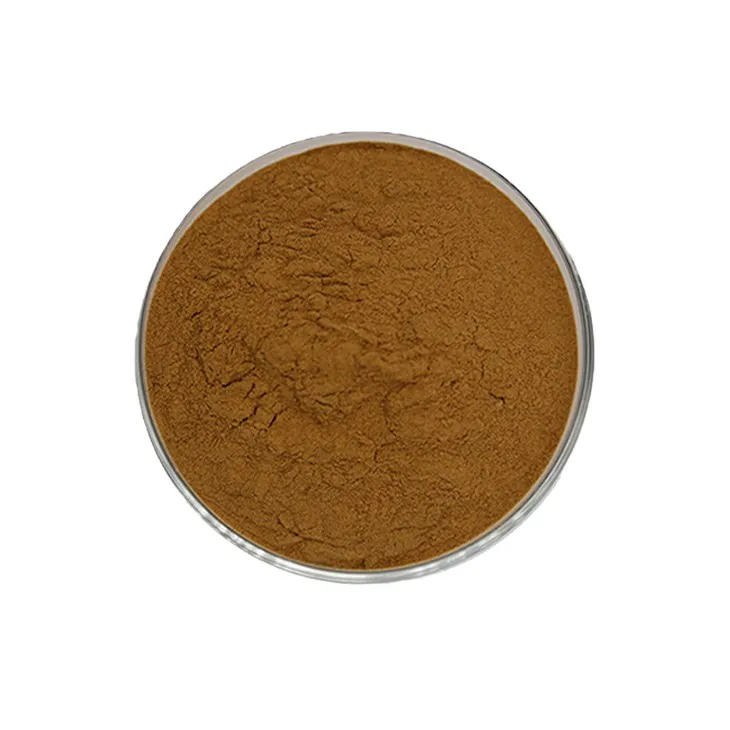
- Choose nutmeg extract if you are developing dietary supplements, wellness powders, or functional food ingredients that need a consistent, standardized active level in an easy-to-handle form.
Whichever you pick, work with a supplier that provides clear specifications, batch-to-batch consistency, and documentation for your regulatory submissions.
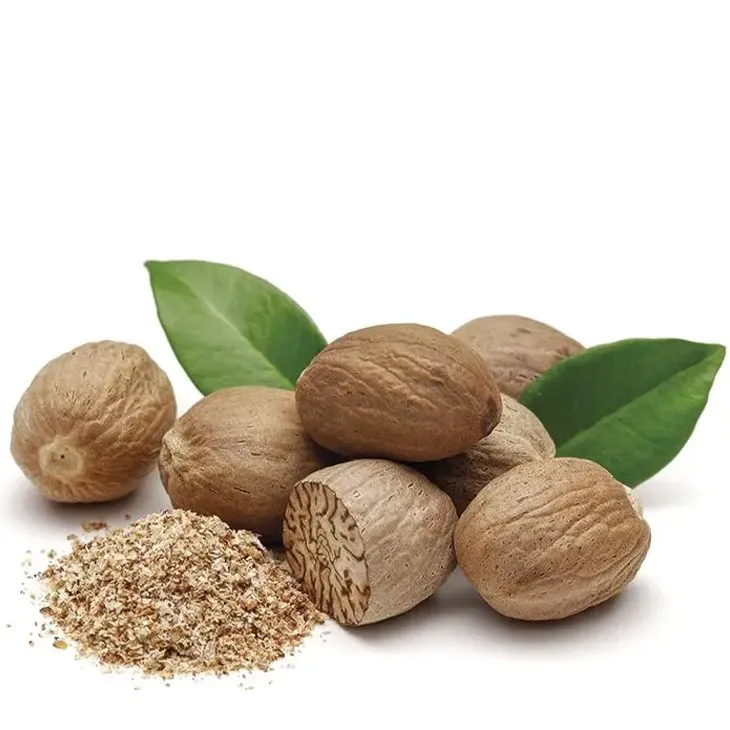
Sourcing Nutmeg Extract from a Trusted Manufacturer
If your formula calls for a reliable nutmeg extract, choosing a manufacturer with full vertical integration makes a real difference. Hangzhou Greensky Biological Tech. Co., Ltd. has produced natural plant extracts for over 20 years, backed by an independent laboratory equipped with GC, HPLC, and UV for quality control, plus a food-grade 100,000-class clean production area.
Greensky's certifications — including ISO22000, BRCGS, HALAL, and Kosher — help ensure the ingredient you source meets the requirements of international markets. Export registration and documentation are available to support your own regulatory filing.
The Takeaway
Nutmeg essential oil and nutmeg extract both come from the same seed but are fundamentally different ingredients. Essential oil is a concentrated volatile fraction used mainly for flavor and aroma; nutmeg extract is a broader, more standardized material built for consistent dosing in supplements and functional foods. Define your application first, then match the form and the supplier to your product's real needs.
TAGS:
- ▶ Hesperidin
- ▶ Citrus Bioflavonoids
- ▶ Plant Extract
- ▶ lycopene
- ▶ Diosmin
- ▶ Grape seed extract
- ▶ Sea buckthorn Juice Powder
- ▶ Fruit Juice Powder
- ▶ Hops Extract
- ▶ Artichoke Extract
- ▶ Mushroom extract
- ▶ Astaxanthin
- ▶ Green Tea Extract
- ▶ Curcumin
- ▶ Horse Chestnut Extract
- ▶ Other Product
- ▶ Boswellia Serrata Extract
- ▶ Resveratrol
- ▶ Marigold Extract
- ▶ Grape Leaf Extract
- ▶ New Product
- ▶ Aminolevulinic acid
- ▶ Cranberry Extract
- ▶ Red Yeast Rice
- ▶ Red Wine Extract
- ▶ blog
-
Stevia Extract
2026-08-18
-
Echinacea Extract
2026-08-18
-
Shikonin
2026-08-18
-
White Willow Bark Extract
2026-08-18
-
Diosmin
2026-08-18
-
Oat Straw Extract Powder
2026-08-18
-
Natural grape seed extract
2026-08-18
-
Apricot Powder
2026-08-18
-
Licorice Root Extract Powder
2026-08-18
-
Lemon Juice Powder
2026-08-18
