- 0086-571-85302990
- [email protected]



Centella Asiatica Extract
1. Introduction
Gotu Kola (Centella asiatica), revered in Ayurvedic medicine as one of the most important "Medhya Rasayanas" (brain-rejuvenating herbs) for over 5,000 years, has experienced a remarkable evolution from traditional remedy to evidence-based modern therapeutic ingredient. Known by many names — "tiger grass" in Southeast Asia, "Brahmi" in parts of India, and "积雪草" (Jīxuěcǎo) in Traditional Chinese Medicine — this humble creeping herb contains a remarkable family of triterpenoid compounds that have demonstrated significant benefits for cognitive function, skin repair, wound healing, and vascular health. Today, gotu kola extract is a rapidly growing ingredient in the global nootropic and premium skincare markets, with the Centella asiatica market projected to reach USD 1.2 billion by 2030.
Hangzhou Greensky Biological Tech Co., Ltd — a professional natural plant extract manufacturer established in 2004 — offers premium standardized gotu kola extract with verified asiaticoside and madecassoside content, backed by ISO22000, BRCGS, Ecocert Organic, and SGS-GMP certifications.
2. What Is Gotu Kola Extract?
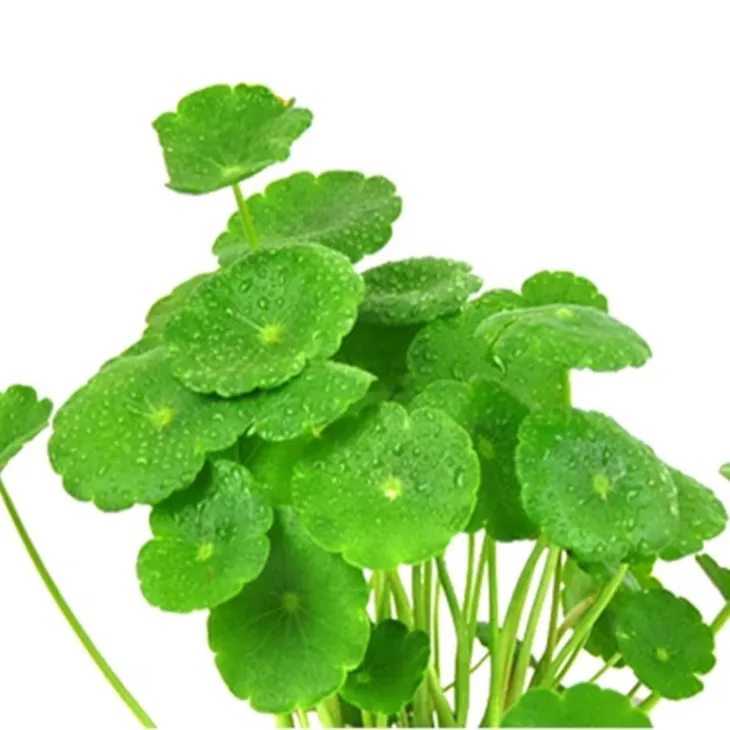
Gotu kola extract is a concentrated preparation derived from the whole herb (aerial parts) of Centella asiatica (L.) Urban, a small perennial herb in the Apiaceae family, widely distributed across tropical and subtropical regions of Asia, Africa, and Oceania. The extract concentrates a unique family of pentacyclic triterpenoids — collectively known as "centelloides" — into a standardized, bioavailable powder with well-documented neuroprotective, dermatological, and vascular benefits.
2.1 Botanical Information
| Item | Details |
|---|---|
| Latin Name | Centella asiatica (L.) Urban |
| Synonyms | Hydrocotyle asiatica, Trisanthus asiaticus |
| Family | Apiaceae (Umbelliferae) |
| Common Names | Gotu Kola, Tiger Grass, Indian Pennywort, Brahmi,积雪草 (Jīxuěcǎo), Mandukaparni |
| Source Plant | Centella asiatica |
| Main Growing Regions | India, Sri Lanka, China, Madagascar, Indonesia, Thailand, Vietnam, Africa |
| Extraction Part | Whole aerial parts (leaves, stems) |
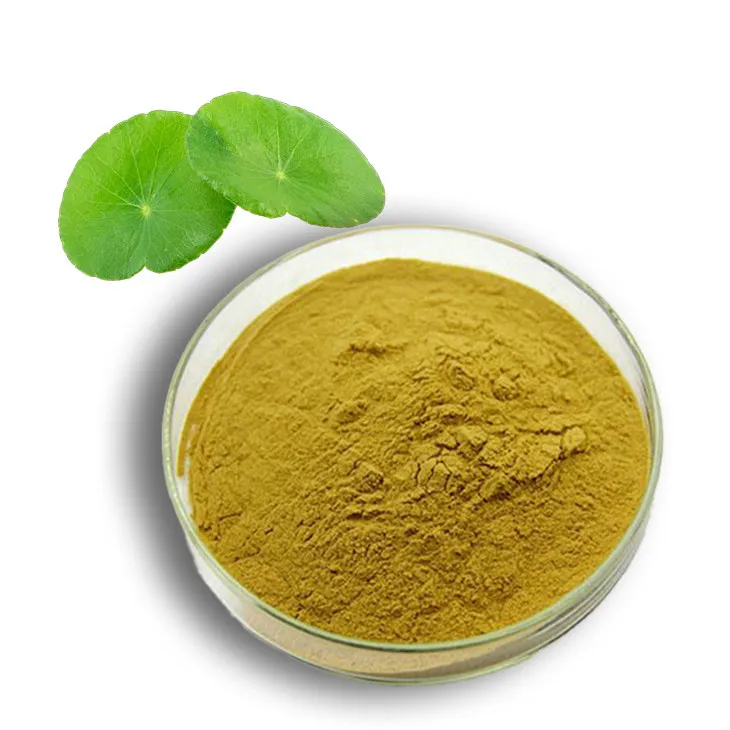
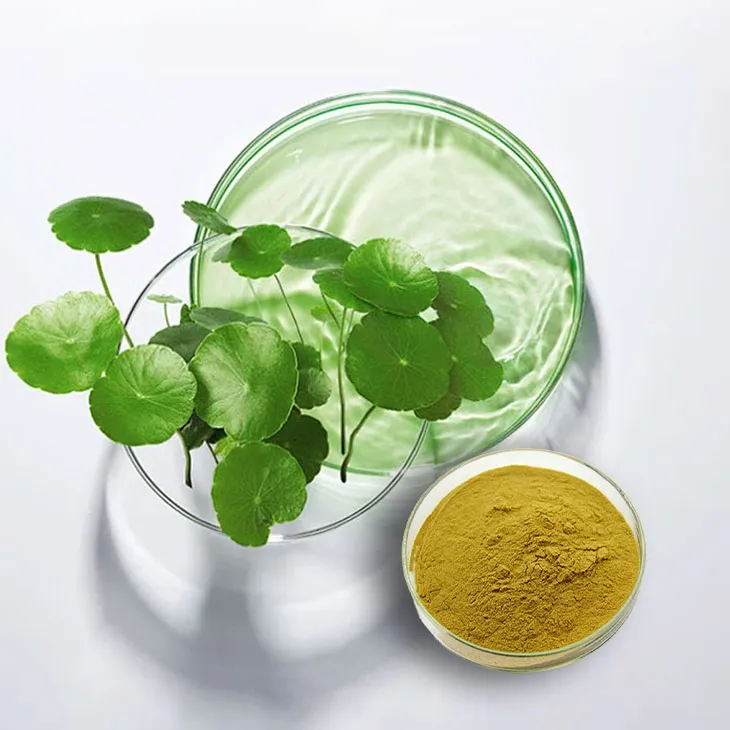
| Appearance | Light brown to brown-green fine powder |
| Odor | Characteristic mild earthy, slightly herbal aroma |
2.2 Key Active Compounds
| Compound | Class | Significance |
|---|---|---|
| Asiaticoside | Pentacyclic triterpenoid saponin (glycoside) | Primary bioactive marker; wound healing; collagen synthesis stimulation |
| Madecassoside | Pentacyclic triterpenoid saponin (glycoside) | Potent anti-inflammatory; skin barrier repair; antioxidant |
| Asiatic Acid | Triterpenoid aglycone | Active metabolite; BBB penetration; neuroprotective |
| Madecassic Acid | Triterpenoid aglycone | Anti-inflammatory; vascular protective; cognitive support |
| Brahmoside & Brahminoside | Minor triterpenoid glycosides | Additional nootropic compounds |
2.3 Standard Specifications
| Specification | Standard |
|---|---|
| Total Triterpenoids (as Asiaticoside) | 10%, 20%, 40%, 80%, 90%, 98% (HPLC) |
| Asiaticoside | 5%, 10%, 20%, 40%, 90% (HPLC) |
| Madecassoside | 1%, 5%, 10%, 20%, 40% (HPLC) |
| Asiatic Acid + Madecassic Acid | ≥1% (HPLC) |
| Loss on Drying | ≤5.0% |
| Ash Content | ≤5.0% |
| Heavy Metals | ≤10 ppm |
| Pesticide Residues | Compliant with EU/US pharmacopoeia limits |
| Microbiological | Total plate count <10,000 CFU/g; E. coli negative; Salmonella negative |
2.4 Certificate of Analysis (Representative)
| Test Item | Standard Requirement | Result |
|---|---|---|
| Assay (Total Triterpenoids) | ≥40% | 42.1% |
| Assay (Asiaticoside) | ≥20% | 21.3% |
| Assay (Madecassoside) | ≥10% | 11.5% |
| Appearance | Light brown to brown-green powder | Complies |
| Odor | Characteristic mild herbal | Complies |
| Loss on Drying | ≤5.0% | 3.8% |
| Heavy Metals (Pb, As, Cd, Hg) | ≤10 ppm total | <5 ppm |
| Pesticide Residues | EU compliant | Compliant |
| Total Plate Count | <10,000 CFU/g | <500 CFU/g |
| Yeast & Mold | <100 CFU/g | <10 CFU/g |
| E. coli | Negative | Negative |
| Salmonella | Negative | Negative |
3. Core Benefits & Mechanisms of Action
3.1 Cognitive Enhancement & Neuroprotection
Gotu kola is one of the most extensively researched botanical nootropics, with effects spanning multiple cognitive domains:
Memory & Learning: Asiaticoside and madecassoside promote neuronal differentiation and synaptic plasticity through upregulation of brain-derived neurotrophic factor (BDNF) and nerve growth factor (NGF). A randomized, double-blind, placebo-controlled study published in the Journal of Ethnopharmacology found that elderly participants taking standardized gotu kola extract (750 mg/day) showed significant improvements in working memory, attention, and cognitive flexibility after 12 weeks.
Neuroprotection: Research in Evidence-Based Complementary and Alternative Medicine demonstrated that asiatic acid protects neurons against oxidative stress, glutamate excitotoxicity, and amyloid-beta-induced toxicity — key mechanisms implicated in Alzheimer's disease and age-related cognitive decline. The compound's ability to cross the blood-brain barrier makes it uniquely effective for central nervous system targets.
Mood & Anxiety: Gotu kola exhibits anxiolytic properties through modulation of the GABAergic system, similar in concept to — but mechanistically distinct from — benzodiazepines. A clinical study comparing gotu kola to folic acid found significantly greater reductions in depression and anxiety scores in the gotu kola group.
Key Study: Wattanathorn J, et al. "Cognitive-enhancing effect of Centella asiatica in elderly volunteers." Journal of Ethnopharmacology. 2008;118(1):1-7.
3.2 Wound Healing & Skin Repair
This is arguably gotu kola's most established clinical application. The triterpenoid compounds in gotu kola extract promote wound healing through multiple complementary mechanisms:
Collagen synthesis stimulation: Asiaticoside upregulates Type I and Type III collagen production in dermal fibroblasts
Angiogenesis promotion: Enhanced blood vessel formation at wound sites accelerates tissue repair
Anti-inflammatory action: Madecassoside suppresses pro-inflammatory cytokines (IL-1β, IL-6, TNF-α)
Antioxidant protection: Scavenging of free radicals at the wound site
Gotu kola extract (madecassol) has been approved as a pharmaceutical wound healing agent in several countries, with clinical studies demonstrating accelerated healing of surgical wounds, burns, and chronic ulcers.
Key Study: Shukla A, et al. "In vitro molecular evidence for efficacy of Centella asiatica in wound healing." Journal of Investigative Dermatology. 1999;113(6):1066-1071.
3.3 Anti-Aging & Skin Rejuvenation
In the cosmetics industry, gotu kola extract has become a premium active ingredient for:
Wrinkle reduction: Stimulation of collagen and elastin production in dermal layers
Skin barrier strengthening: Madecassoside enhances ceramide synthesis and transepidermal water loss (TEWL) reduction
Hyperpigmentation treatment: Inhibition of tyrosinase activity and melanin synthesis
Scar minimization: Reduction of hypertrophic scar formation through regulated collagen deposition
A clinical study published in the Journal of Drugs in Dermatology found that a cream containing 1% madecassoside significantly improved skin elasticity and reduced wrinkle depth after 8 weeks of twice-daily application.
3.4 Vascular Health & Venous Insufficiency
Gotu kola extract has been clinically demonstrated to improve chronic venous insufficiency (CVI) by strengthening connective tissue in vein walls and reducing capillary permeability. Multiple randomized controlled trials have shown improvements in:
Leg heaviness and pain scores
Ankle circumference reduction (edema)
Microcirculatory blood flow
Capillary filtration rate
Key Study: Cesarone MR, et al. "Assessment of ankle oedema variations and cutaneous microcirculatory changes in chronic venous insufficiency after treatment with Centella asiatica." Angiology. 2006;57(5):559-565.
3.5 Anti-Inflammatory & Antioxidant Activity
The triterpenoid compounds in gotu kola extract demonstrate broad-spectrum anti-inflammatory activity through:
NF-κB pathway inhibition: Reducing expression of COX-2, iNOS, and pro-inflammatory cytokines
Nrf2 pathway activation: Enhancing endogenous antioxidant defense systems
MAPK pathway modulation: Regulating cellular stress responses
4. Wide Range of Applications
4.1 Cognitive Health & Nootropic Supplements
The fastest-growing application segment:
Brain health capsules: Standardized 40–80% total triterpenoids for daily cognitive support
Nootropic stacks: Combined with bacopa monnieri, lion's mane, phosphatidylserine, and L-theanine
Senior wellness formulas: Targeting age-related cognitive decline and memory support
Student focus supplements: Growing demand in the academic performance market
4.2 Premium Skincare & Cosmetics
Gotu kola extract is a star ingredient in the "Cica" (Centella) skincare trend:
Anti-aging serums and creams: Collagen-boosting and wrinkle-reducing formulations
Sensitive skin repair products: Soothing and barrier-strengthening formulations
Post-procedure skincare: Accelerating recovery after laser, peel, or microneedling treatments
Acne scar treatment products: Regulated collagen deposition for scar remodeling
Sheet masks and ampoules: High-concentration topical delivery
4.3 Wound Care & Medical Devices
Topical wound healing creams and dressings (pharmaceutical grade, 90–98% purity)
Burn treatment gels and ointments
Post-surgical recovery products
Diabetic ulcer management formulations
4.4 Functional Foods & Beverages
Brain-boosting beverages: Nootropic drinks and functional teas
Beauty-from-within supplements: Collagen-supporting ingestible beauty products
Adaptogenic blends: Combined with ashwagandha, rhodiola, and holy basil
4.5 Veterinary Applications
Equine wound care: Topical formulations for wound healing in horses
Pet skin health supplements: For dogs with dermatological conditions
5. How to Choose a Quality Gotu Kola Extract
5.1 Understanding the Triterpenoid Profile
Not all gotu kola extracts are equal. The therapeutic value depends on the specific triterpenoid composition:
| Profile | Best For |
|---|---|
| High Asiaticoside (≥20%) | Wound healing, collagen stimulation, skin repair |
| High Madecassoside (≥10%) | Anti-inflammatory, skin barrier, sensitive skin |
| Balanced Profile (Asiaticoside + Madecassoside) | Broad-spectrum applications; general wellness |
| Total Triterpenoids ≥40% | Premium nootropic and clinical-grade formulations |
5.2 Extraction Method
Ethanol extraction is the most common and well-validated method, producing extracts with consistent triterpenoid profiles
Water extraction yields extracts rich in polysaccharides and water-soluble compounds but lower in triterpenoids
Supercritical CO₂ extraction produces ultra-pure triterpenoid concentrates for pharmaceutical applications
5.3 Quality Markers
A premium gotu kola extract should provide:
HPLC-verified individual triterpenoid quantification (asiaticoside, madecassoside, asiatic acid, madecassic acid)
Heavy metal and pesticide residue testing (critical given diverse growing regions)
Consistent triterpenoid profile across batches
Microbiological compliance (particularly important for topical/cosmetic applications)
5.4 Sustainability Considerations
Centella asiatica grows wild in many tropical regions but is also widely cultivated. Quality suppliers should provide:
Cultivation origin documentation (preferred over wild-harvested for consistency)
Sustainable harvesting practices
Fair trade compliance where applicable
6. About Greensky Bio
As a professional natural plant extract manufacturer established in 2004, Hangzhou Greensky Biological Tech Co., Ltd brings over two decades of expertise in botanical extraction, quality control, and global supply chain management.
Why Partner with Greensky Bio for Gotu Kola Extract?
Comprehensive Standardization Range: We offer gotu kola extracts from 10% to 98% total triterpenoids, with customizable asiaticoside-to-madecassoside ratios for specific applications
State-of-the-Art QC: HPLC-equipped in-house laboratory with full triterpenoid profiling; third-party verification by SGS and Eurofins
Multi-Industry Expertise: Serving dietary supplement, cosmetics, pharmaceutical, and functional food markets with application-specific extract grades
Global Certifications: ISO22000, BRCGS, Ecocert Organic, and SGS-GMP certified manufacturing
Sustainable Sourcing: Partnerships with certified cultivation farms in India and China ensuring consistent, traceable, and sustainable raw material supply
Technical Support: R&D team available for formulation guidance, stability testing, and custom blend development
7. Conclusion & Call to Action
Gotu Kola Extract represents a rare convergence of ancient wisdom and modern science — a botanical with 5,000 years of traditional use now validated by hundreds of peer-reviewed studies across cognitive health, dermatology, wound healing, and vascular medicine. With the "Cica" skincare trend driving explosive demand in cosmetics, and the nootropic market creating unprecedented opportunities in brain health supplements, gotu kola extract is positioned as one of the most versatile and commercially attractive botanical ingredients available today.
Whether you're formulating a next-generation nootropic supplement, launching a premium Cica skincare line, or developing innovative wound care products, Greensky Bio provides the consistently standardized, thoroughly validated gotu kola extract your brand needs.
Interested in Gotu Kola Extract? Contact us today for:
Latest pricing and MOQ information
Free samples for testing and evaluation
Complete technical documentation package
Custom formulation consultation with our technical team
Our expert team is ready to help you unlock the full potential of Centella asiatica triterpenoids in your next product. Reach out now and discover the Greensky Bio advantage.
Disclaimer: This article is for informational purposes only and does not constitute medical advice. The statements regarding gotu kola extract have not been evaluated by the FDA. This product is not intended to diagnose, treat, cure, or prevent any disease. Always consult with a qualified healthcare professional before starting any supplement regimen.
© 2026 Hangzhou Greensky Biological Tech Co., Ltd. |
| name | Centella Asiatica Extract |
| Exterior | brown to greenish-brown powder |
| Attributes | herbal extracts, plant extracts, triterpenoids |
| purity | Varies depending on the product formulation |
| Product ingredients | Asiaticoside, madecassoside, triterpenoid saponins |
| source | Extracted from the leaves of Centella asiatica (gotu kola) |
| use | Skin health, wound healing, cognitive support, dietary supplements |
| Test Methods | High-performance liquid chromatography (HPLC), TLC (Thin-layer chromatography) |