We have five factories and 23 years of experience in plant extracts
- 0086-571-85302990
- [email protected]






How do I compare best rosemary extract products from suppliers?
2026-08-13
Related Product
Rosemary extract
We are the leading rosemary extract manufacturer and also the leading supplier and exporter of rosemary extract. We specialize in providing natural and organic rosemary extract to meet your needs.
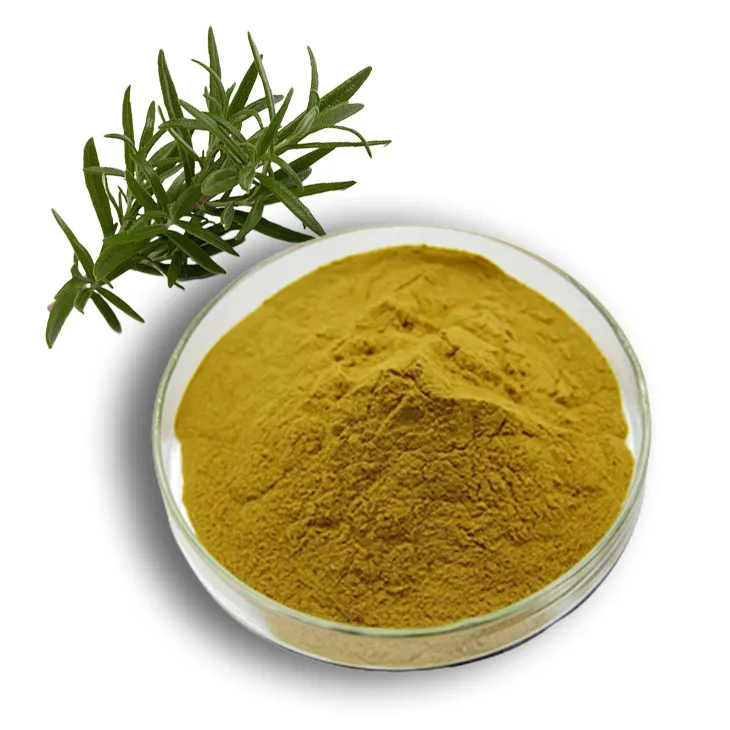
If you are sourcing Rosemary extract in bulk, the first thing you will notice is that quotes from different suppliers can be surprisingly far apart. Two products may both be labelled "Rosemary extract," yet the real value they deliver can be dramatically different. That is because Rosemary extract is not a single, fixed product. Active compound content, extraction method, quality control, certification, and manufacturing capacity all shape what a supplier can actually deliver and what it should cost. Comparing suppliers properly means comparing all of these dimensions, not just the price per kilogram. This guide walks through the seven things to check before you commit to a rosemary extract supplier.
Why quality varies so much between suppliers
Rosemary leaves are rich in antioxidant compounds, and the value of the extract comes from a small group of phenolic diterpenes, primarily carnosic acid and carnosol, together with water-soluble phenolics such as rosmarinic acid. These compounds are what make rosemary extract effective as a natural antioxidant in foods, supplements, and cosmetics. The percentage of these actives in the finished powder is the single most important number on any specification sheet. An extract standardized to 20% carnosic acid is a completely different product from one standardized to 5%. Because producing a higher, tightly controlled active level requires better raw material selection, stricter process control, and more rigorous testing, the cost difference is real. When a quote looks unusually cheap, the first thing to question is what the active content actually is.
1. Define your application and required specification first
Before comparing suppliers, be clear about what you need. The target application decides the standard you should hold each supplier to. A food manufacturer cares about antioxidant performance and oil-solubility, a supplement brand focuses on standardized active content and clean-label positioning, and a cosmetic formulator prioritizes botanical origin, safety documentation, and formulation compatibility. Instead of asking for "rosemary extract," request a defined active level, such as a stated minimum carnosic acid percentage, and the carrier or form you need, whether powder, oil-soluble, or water-soluble. Suppliers that can explain which specification fits your use case and adjust it to your needs are far more useful partners than those that only send a generic spec sheet.
2. Verify the active compound content and testing method
The active content is the headline figure on every reliable specification. For rosemary extract, that means carnosic acid, often reported together with carnosol as total diterpenes, and rosmarinic acid for water-soluble grades. The assay should be verified with a reliable analytical method such as high-performance liquid chromatography (HPLC). Ask the supplier what method they use and whether the result is printed on a certificate of analysis for each batch. A supplier with an in-house laboratory equipped with HPLC, GC, and UV instruments can test consistently as part of production; one that outsources everything on an occasional basis is harder to verify. Batch-to-batch consistency is exactly what this number protects.
3. Check the extraction method and residual solvents
Rosemary extract can be produced with different extraction techniques, most commonly ethanol, acetone, or supercritical CO2. The method affects product purity, the presence of residual solvent, and cost. Supercritical CO2 extraction leaves effectively no solvent residue and preserves heat-sensitive compounds, making it popular for premium grades, while ethanol extraction is widely used and can be fully compliant when residual solvent is controlled within limits. Whatever method a supplier uses, the certificate of analysis should confirm that any residual solvent is below the regulated threshold. If the method is not disclosed, treat that as a red flag and ask directly.
4. Review the quality-control and documentation package
Documentation is not paperwork; it is the core of supplier qualification. Before confirming a bulk order, request a rosemary extract certificate of analysis covering active content, carrier identity, residual solvent, heavy metals, microbiological limits, and, where relevant, pesticide residues. Also ask for a safety data sheet and a specification sheet. These documents let your procurement, R&D, and quality teams confirm that the material meets your target market's regulatory requirements. A supplier that routinely provides a complete document pack per batch is far lower risk than one that hesitates. Export registration and documentation for global regulatory submissions are a strong sign that a supplier is used to dealing with serious overseas buyers.
5. Look for recognized certifications
Certifications give you third-party visibility into a supplier's processes. For rosemary extract, relevant certifications include ISO22000 and ISO9001 for food safety and quality systems, BRCGS for retailer food safety, SGS-GMP for good manufacturing practices, and HALAL and Kosher where your market requires them. Organic certification adds another layer, requiring traceable raw materials, stricter production management, and external audits, which is why organic-grade extract carries a cost premium. These certificates do not replace testing, but they indicate that the production, hygiene, and quality practices are audited rather than self-declared. A supplier that can list the certifications relevant to your destination market is signaling real manufacturing capability.
6. Assess manufacturing capacity and supply stability
Price and paperwork tell you what a supplier can offer today; capacity and vertical integration tell you whether they can keep delivering. A manufacturer that controls the research, development, and production chain in-house can maintain consistency and respond to specification changes more reliably than a trading company that simply resells. Durable equipment such as multi-ton extraction tanks, low-temperature concentrators, spray-drying towers, and vacuum drying boxes point to genuine production scale. A clean, food-grade production area helps keep microbiological results within limits. For a buyer planning long-term supply, the real cost of a supplier includes active-content consistency, documentation integrity, and supply stability, not just the invoice.
7. Request samples and compare value, not just price
Always request samples before a large order and evaluate them against your own specification. Compare suppliers on value rather than headline price. A higher carnosic acid grade costs more per kilogram but is dosed at a lower rate, so the meaningful comparison is cost per unit of active compound, not cost per kilogram of powder. When you request a quote, provide the target application, required active content, estimated order quantity, documentation needs, certification requirements, and destination market. The more complete your request, the more accurate and actionable the supplier's response will be. A low price with unclear active content, weak documentation, or unstable batch quality can cause serious problems during formulation, production, or regulatory review.
Questions to ask every rosemary extract supplier
To make the comparison concrete, use this checklist when evaluating candidates. What is the carnosic acid content, and is it consistent across batches? Is the extract standardized for carnosic acid or rosmarinic acid, and which testing method is used? What extraction method is employed, and what are the residual solvent limits? Can you provide a per-batch certificate of analysis covering heavy metals and microbiology? Which certifications do you hold, and do they match my destination market? What is your production capacity, and can you guarantee stable supply for my order volume? Do you provide samples for evaluation, and can you adjust specifications to my needs? A supplier that answers these clearly and backs the answers with documents is one you can work with for the long term.
For branded buyers, choosing a China rosemary extract manufacturer with real production capability and complete documentation is the most reliable path to a consistent, compliant ingredient. Greensky, founded in 2004 and headquartered in Hangzhou, has over two decades of experience in producing natural plant extracts. The company operates its own production plants and a functional red yeast rice facility, with a clean production area that meets food-grade requirements and an independent laboratory equipped with HPLC, GC, and UV instruments. It holds ISO22000, BRCGS, Ecocert organic, SGS-GMP, ISO9001, HALAL, and Kosher certifications, and its export value reached nearly 30 million US dollars in 2023, with main markets in Europe, the United States, South Korea, and Russia. When you compare suppliers on specification, quality control, certification, and supply stability, Greensky is positioned to meet the rigorous needs of food, supplement, and cosmetic manufacturers.
The best rosemary extract supplier is rarely the one with the lowest price. It is the one that balances specification, documentation, certified manufacturing, and long-term supply capability. Define your application, hold every candidate to the same active-content and testing standards, review the document pack, verify the certifications, and evaluate samples before committing. When the certificate of analysis, the clean production environment, and the in-house laboratory all line up, you have a defensible basis for every batch you bring into your formulation.
TAGS:
FAQ
- ▶ Hesperidin
- ▶ Citrus Bioflavonoids
- ▶ Plant Extract
- ▶ lycopene
- ▶ Diosmin
- ▶ Grape seed extract
- ▶ Sea buckthorn Juice Powder
- ▶ Fruit Juice Powder
- ▶ Hops Extract
- ▶ Artichoke Extract
- ▶ Mushroom extract
- ▶ Astaxanthin
- ▶ Green Tea Extract
- ▶ Curcumin
- ▶ Horse Chestnut Extract
- ▶ Other Product
- ▶ Boswellia Serrata Extract
- ▶ Resveratrol
- ▶ Marigold Extract
- ▶ Grape Leaf Extract
- ▶ New Product
- ▶ Aminolevulinic acid
- ▶ Cranberry Extract
- ▶ Red Yeast Rice
- ▶ Red Wine Extract
- ▶ blog
Recommended Products
-
Andrographis Paniculata Extract Powder
2026-08-13
-
Liposomal NMN
2026-08-13
-
melatonin
2026-08-13
-
Diosmin
2026-08-13
-
Rosemary extract
2026-08-13
-
Passionflower Extract
2026-08-13
-
Green coffee bean Extract
2026-08-13
-
Shikonin
2026-08-13
-
Apricot Powder
2026-08-13
-
Magnolia Bark Extract
2026-08-13
Get a Quote
