- 0086-571-85302990
- [email protected]





Grape Seed Extract
1. Introduction
For centuries, grape seeds were considered a worthless by-product of the wine industry — discarded in massive quantities after juice extraction. The discovery that these tiny seeds harbor one of nature's most potent antioxidant complexes — oligomeric proanthocyanidins (OPCs) — transformed them into a prized botanical ingredient. Today, Grape Seed Extract (GSE) is among the top-selling plant extracts globally, with applications spanning cardiovascular health, skin protection, dietary supplements, and premium cosmetics. This comprehensive guide covers everything you need to know about sourcing, specifications, and applications of high-quality Grape Seed Extract.
2. What Is Grape Seed Extract?
2.1 Botanical Profile
| Parameter | Detail |
|---|---|
| Scientific Name | Vitis vinifera L. |
| Family | Vitaceae |
| Source Plant | Common grapevine (cultivated varieties including Cabernet Sauvignon, Merlot, Pinot Noir) |
| Major Growing Regions | France (Bordeaux, Burgundy), Italy, Spain, Chile, Australia, South Africa, China (Ningxia, Xinjiang) |
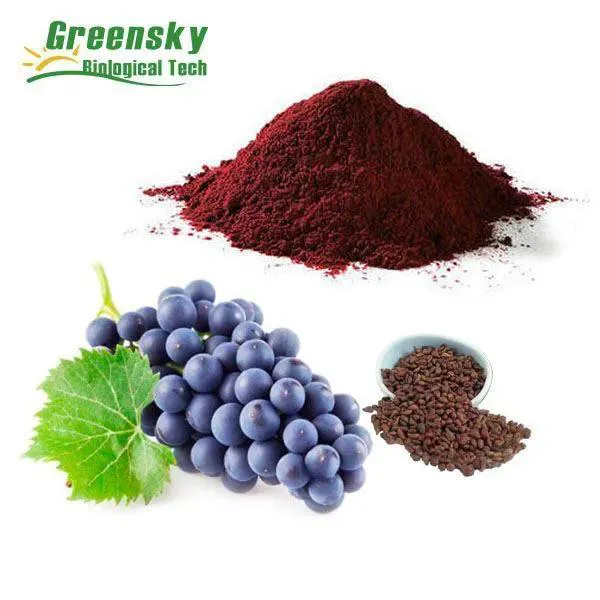
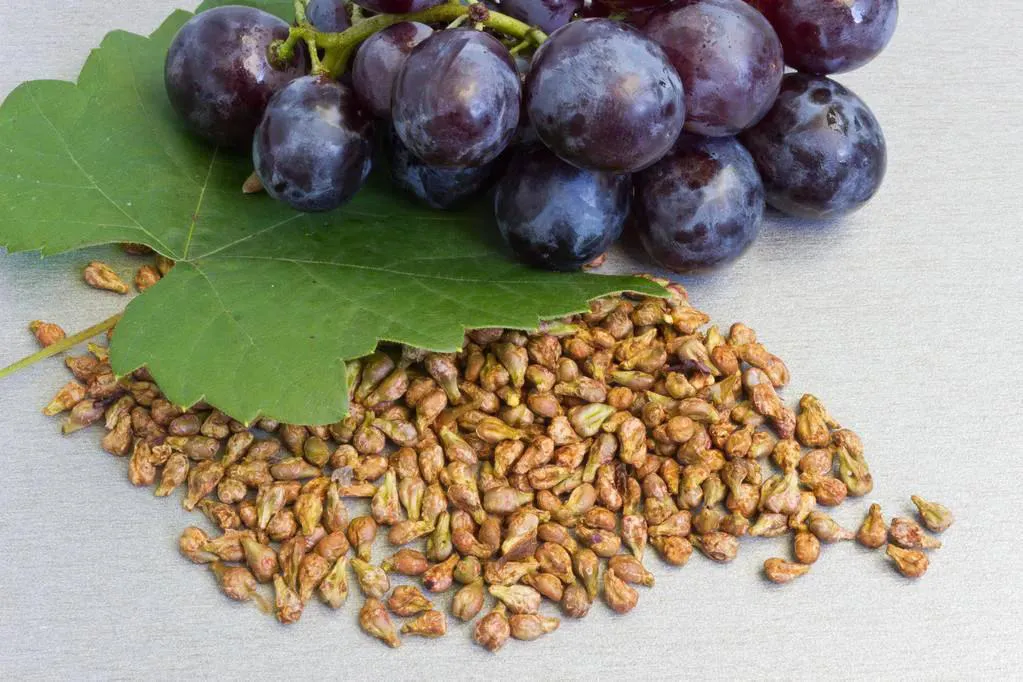
| Extraction Part | Seeds (separated from grape pomace after pressing) |
2.2 Active Compounds
The primary bioactive constituents of grape seed extract are oligomeric proanthocyanidins (OPCs) — a class of condensed tannins composed of catechin and epicatechin monomers linked in chains of varying lengths. These compounds are responsible for the deep color and characteristic astringency of the extract.
Key active compounds include:
Monomeric flavan-3-ols: Catechin, epicatechin, epicatechin gallate
Oligomeric proanthocyanidins (dimers–tetramers): Procyanidin B1, B2, B3, B4, C1
Polymeric proanthocyanidins: Higher molecular weight tannin polymers
Phenolic acids: Gallic acid, vanillic acid
Flavonols: Quercetin, kaempferol, myricetin (trace amounts)
2.3 Available Specifications
We supply grape seed extract in multiple standardized grades to meet diverse customer needs:
| Specification | OPC Content | UV Test | Typical Application |
|---|---|---|---|
| GSE-40 | 40% OPCs | UV | General supplements, animal nutrition |
| GSE-85 | 85% OPCs | UV | Premium dietary supplements |
| GSE-95 | 95% OPCs | HPLC | Pharmaceutical-grade, clinical research |
| GSE-50 (Water-Soluble) | 50% OPCs | UV | Beverages, liquid formulations |
2.4 Certificate of Analysis (Typical)
| Item | Specification | Typical Result |
|---|---|---|
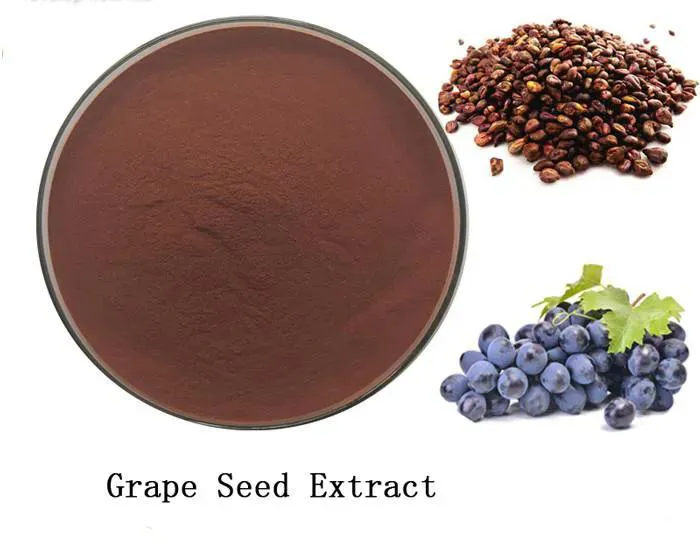
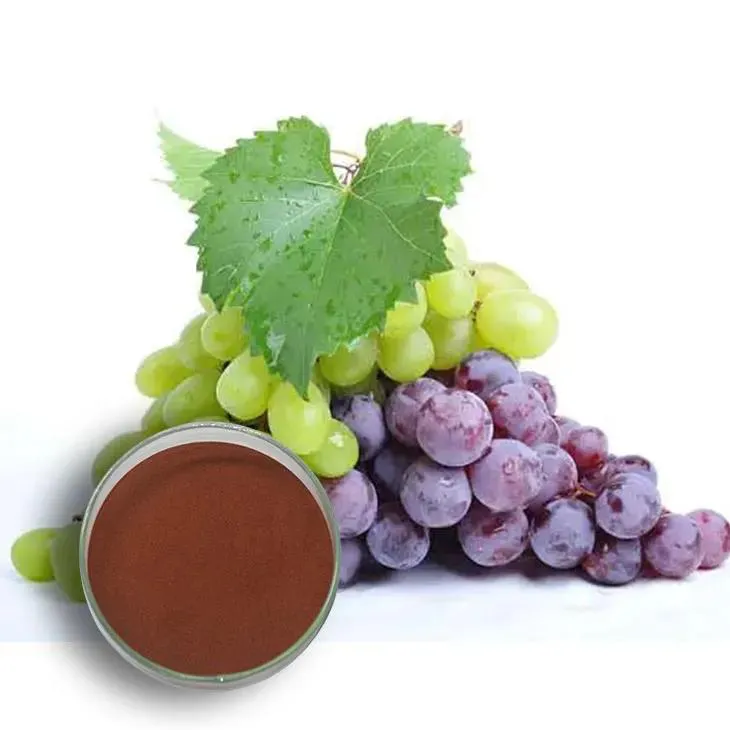
| Appearance | Fine brown-red powder | Conforms |
| Odor | Characteristic | Conforms |
| Particle Size | 100% through 80 mesh | Conforms |
| Proanthocyanidins (UV) | ≥ 95.0% | 95.8% |
| Loss on Drying | ≤ 5.0% | 2.8% |
| Ash | ≤ 5.0% | 1.6% |
| Heavy Metals (Pb, As, Cd, Hg) | Compliant | Within limits |
| Pesticide Residues | ≤ 0.01 mg/kg | Non-detectable |
| Total Plate Count | ≤ 1,000 CFU/g | < 100 CFU/g |
| E. coli / Salmonella | Negative | Negative |
All batches are tested by independent third-party laboratories (SGS, Eurofins, or equivalent). Full COA available upon request.
3. Core Benefits & Mechanisms of Action
3.1 Powerful Antioxidant & Anti-Aging Protection
Grape seed proanthocyanidins are among the most potent natural antioxidants known, with free radical scavenging capacity estimated at 20–50 times greater than vitamin E and 50 times greater than vitamin C. OPCs directly neutralize reactive oxygen species (ROS) and reactive nitrogen species (RNS), while also upregulating endogenous antioxidant enzymes including superoxide dismutase (SOD), catalase, and glutathione peroxidase.
Key Study: Bagchi et al. (2000) demonstrated that grape seed proanthocyanidin extract (GSPE) exhibited significantly greater antioxidant activity than vitamins C and E against peroxyl, hydroxyl, and superoxide radicals (Molecular and Cellular Biochemistry, 208: 59–67).
3.2 Cardiovascular & Vascular Health
OPCs support cardiovascular function through multiple pathways:
Endothelial protection: Enhancing nitric oxide (NO) bioavailability, promoting vasodilation and healthy blood pressure
LDL oxidation prevention: Inhibiting the oxidative modification of low-density lipoprotein, a key early step in atherogenesis
Microcirculation improvement: Strengthening capillary walls by cross-linking with collagen fibers, reducing capillary permeability and fragility
Anti-platelet aggregation: Modulating platelet function without interfering with normal hemostasis
Clinical Evidence: A meta-analysis by Park et al. (2016) reviewed 16 randomized controlled trials and found that grape seed extract supplementation significantly reduced systolic blood pressure (−1.69 mmHg) and diastolic blood pressure (−1.49 mmHg) (Medicine, 95(30): e4249).
3.3 Skin Health & Photoprotection
Topical and oral administration of GSE has demonstrated protective effects against UV-induced skin damage, collagen degradation, and hyperpigmentation. OPCs inhibit matrix metalloproteinases (MMPs) that break down collagen and elastin, while stimulating transforming growth factor-beta (TGF-β) pathways that promote collagen synthesis.
Research Highlight: A double-blind, placebo-controlled study by Cho et al. (2015) found that women supplemented with a grape seed extract–containing formula showed significant improvement in skin elasticity and hydration after 12 weeks (Nutrition Research and Practice, 9(3): 272–278).
3.4 Anti-Inflammatory & Immune Modulation
Proanthocyanidins modulate inflammatory signaling by inhibiting nuclear factor-kappa B (NF-κB) activation, reducing expression of pro-inflammatory cytokines (TNF-α, IL-6, IL-1β), and downregulating cyclooxygenase-2 (COX-2) and inducible nitric oxide synthase (iNOS).
Mechanistic Study: Yamakoshi et al. (2001) showed that oligomeric proanthocyanidins from grape seeds inhibited LDL oxidation and reduced atherosclerotic lesion formation in animal models (Atherosclerosis, 156: 199–206).
3.5 Cognitive Function & Neuroprotection
Emerging research suggests OPCs may cross the blood-brain barrier and provide neuroprotective effects by reducing oxidative stress in neural tissues, modulating neuroinflammatory pathways, and potentially supporting memory and attention.
Review Article: Rendeiro et al. (2013) reviewed the neuroprotective potential of dietary (poly)phenols, highlighting flavanols from grape-derived sources as promising candidates for cognitive support (Nutrients, 5(4): 1262–1289).
3.6 Metabolic & Blood Sugar Support
Several studies indicate that grape seed extract may improve insulin sensitivity, reduce fasting blood glucose, and mitigate complications associated with metabolic syndrome, making it relevant for the growing nutraceutical market targeting metabolic health.
4. Wide-Ranging Application Areas
4.1 Dietary Supplements & Nutraceuticals
The largest market for grape seed extract. Formulations include:
Capsules & Tablets: Standardized 85–95% OPC extracts for cardiovascular, antioxidant, and general health supplements
Softgels: Combined with omega-3 fatty acids, vitamin E, or resveratrol for synergistic antioxidant formulations
Effervescent Tablets & Gummies: Water-soluble GSE for consumer-friendly delivery formats
Functional Beverages: Added to antioxidant-rich juices, energy drinks, and wellness shots
Market Drivers: Growing consumer awareness of antioxidant benefits, aging population demand for cardiovascular support, and the clean-label trend favoring botanical ingredients.
4.2 Cosmetics & Personal Care
Grape seed extract is increasingly featured in premium skincare and haircare products:
Anti-Aging Serums & Creams: Leveraging collagen-protective and free radical-scavenging properties
Sunscreens & After-Sun Products: UV-protective and skin-repairing benefits
Eye Care Products: Addressing dark circles and puffiness through improved microcirculation
Hair Care: Scalp health and hair follicle protection through antioxidant action
Lip Care: Preventing oxidative damage to delicate lip tissue
4.3 Food & Beverage Industry
Natural Preservative: Extending shelf life of food products through antioxidant activity
Functional Food Ingredient: Fortification of bread, pasta, and snack bars
Natural Colorant: Providing stable brown-red hues in certain applications
Wine & Juice Industry: Recovery and value-addition from grape processing by-products
4.4 Animal Nutrition & Veterinary
Pet Supplements: Joint health, coat condition, and antioxidant support for dogs and cats
Livestock Feed Additive: Improving animal health outcomes and meat quality
Equine Supplements: Supporting vascular health and recovery in performance horses
4.5 Pharmaceutical & Clinical Research
Active pharmaceutical ingredient (API) precursor for standardized silymarin-class formulations
Clinical trial material for ongoing research in cardiovascular disease, diabetes, and oncology adjunct therapy
5. How to Identify Premium Grape Seed Extract
When sourcing grape seed extract, consider the following critical factors:
5.1 Testing Method Matters
UV spectrophotometry is commonly used for routine QC but may overestimate OPC content due to interference from other phenolic compounds
HPLC analysis provides accurate quantification of individual proanthocyanidin fractions (monomers, dimers, trimers) and is essential for pharmaceutical-grade sourcing
Request both UV and HPLC data to ensure full transparency
5.2 OPC Profile & Molecular Weight Distribution
Not all "95% OPC" extracts are equal. The biological activity depends on the distribution of oligomeric chains:
Dimers and trimers (DP 2–3): Highest bioavailability, most studied for cardiovascular benefits
Polymers (DP > 4): Lower bioavailability but contribute to gut health through microbiome modulation
Premium suppliers provide oligomeric profile data, not just total OPC percentage
5.3 Extraction Technology
Solvent extraction (ethanol/water): Most common, cost-effective, suitable for food and supplement grade
Supercritical CO₂ extraction: Solvent-free, preserves heat-sensitive compounds, ideal for premium cosmetics and pharmaceutical applications
Membrane filtration technology: Enables precise molecular weight fractionation and concentration
5.4 Quality Certifications to Look For
ISO 22000 / HACCP: Food safety management
Organic Certification (USDA NOP, EU Organic, JAS): For organic supplement lines
Kosher & Halal: For global market access
Non-GMO Project Verified: Increasingly required by North American brands
Third-party lab testing (SGS, Eurofins, Intertek): Independent verification of potency and purity
5.5 Stability & Shelf Life
High-quality grape seed extract should be packaged in moisture-barrier, light-resistant containers (aluminum foil bags with inner PE liner) and stored in a cool, dry environment. Properly packaged GSE maintains potency for 24–36 months from the date of manufacture.
6. About Our Company
As a specialized botanical extract manufacturer with extensive experience in grape seed extract production, we provide customers with the following advantages:
Our Core Competencies
Consistent Quality: Every batch standardized to declared specifications with full traceability from raw material to finished product
Advanced Extraction Capabilities: Multi-stage extraction and purification processes optimized for maximum OPC yield and profile integrity
Custom Specifications: Tailored OPC concentrations, particle sizes, and water-soluble grades to match your formulation requirements
Regulatory Support: Complete documentation packages including COA, TDS, MSDS, allergen statements, and non-GMO declarations
Scalable Supply: From kilogram-scale sampling to multi-ton commercial production, with reliable lead times
Technical Partnership: Our R&D team provides formulation guidance, stability data, and market insights to support your product development
Why Partner With Us
We understand that your end product's success depends on the quality of every ingredient. That's why we invest in rigorous quality control, transparent testing, and long-term relationships — not just transactions. Whether you're launching a new supplement line, reformulating an existing product, or sourcing for clinical research, we deliver the consistency and support your brand deserves.
7. Conclusion & Get a Quote
Grape seed extract (OPC) continues to be one of the most scientifically validated and commercially successful botanical ingredients in the global health products market. From cardiovascular support to skin health, from dietary supplements to premium cosmetics, the demand for high-quality, standardized grape seed extract shows no signs of slowing.
Ready to explore how our grape seed extract can enhance your product line?
Contact us today for the latest pricing, specifications, and free sample availability
Our technical team is available to discuss custom specifications, formulation compatibility, and regulatory documentation
Flexible MOQs for both trial orders and large-scale commercial supply
Worldwide shipping with full export documentation
Whether you need a specific OPC concentration, water-soluble grade, or custom particle size — we'll work with you to find the right solution.
Request your free sample and competitive quote now — our team responds within 24 hours.
| Specification Item | Description |
|---|---|
| Product Name | Grape Seed Extract |
| CAS Number | 84929-27-1 |
| Appearance | Brownish-red powder |
| Specification | 95% |
| Form | Solid |
| Source | Extracted from grape seeds |
| Applications | Pharmaceuticals, health supplements, cosmetics, etc. |
| Storage Conditions | Stored in a cool, dry place, avoiding exposure to sunlight and moisture |
| Packaging | Safe and compliant with transport standards |
| Supply Capacity | Customized based on demand |
| Shipping | Express/Air/Sea |
| Delivery Time | Dependent on order volume and destination |
| Price | Based on specifications and demand |
| Minimum Order Quantity | Contact for quotation |
FAQ