- 0086-571-85302990
- [email protected]




How is horse chestnut extract standardized?
2026-08-15
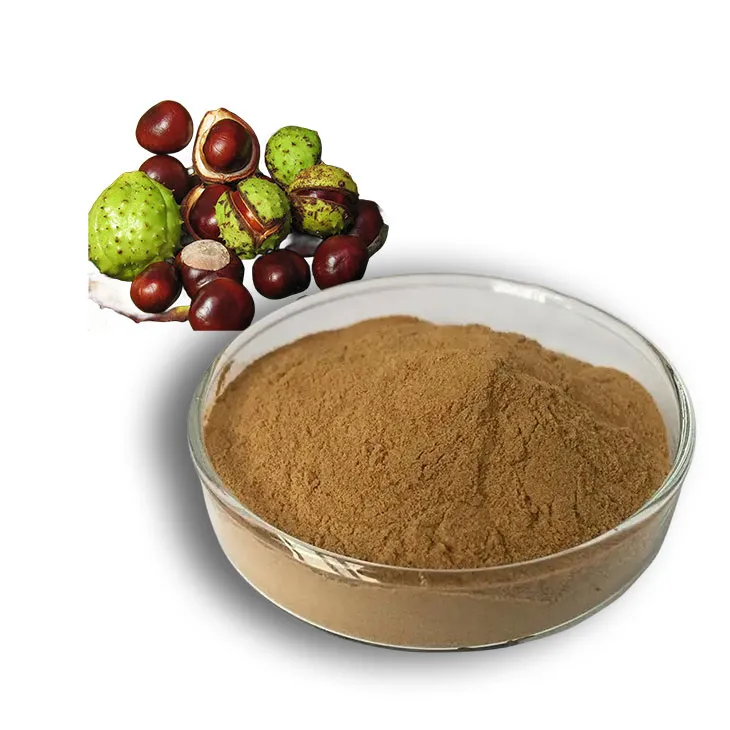
Standardization is what separates a reliable botanical ingredient from a gamble. For horse chestnut extract, standardization means every batch is processed and verified to contain a guaranteed amount of aescin, the triterpenoid saponin responsible for its vascular benefits. In this guide, we walk through exactly how Horse Chestnut Extract is standardized, from raw seed selection to laboratory testing, and why the aescin percentage printed on the label matters more than any other figure.
What Does "Standardized" Mean for Horse Chestnut Extract?
A standardized extract is a concentrated botanical preparation that is processed and tested to contain a defined, consistent level of one or more active marker compounds. For Horse Chestnut Extract, that marker is aescin (also written as escin), a complex of triterpenoid saponins that includes α-aescin and β-aescin, the two most bioactive isomers. A standardized product guarantees a stated aescin content in every batch, typically in the range of 16% to 20%, with 20% being the most widely used commercial specification.
This matters because the therapeutic value of horse chestnut extract is directly tied to its aescin content. Non-standardized preparations made from whole seeds or simple powders can vary widely from batch to batch, which makes consistent dosing, reliable clinical results, and safety control all but impossible.
The Source Plant and the Active Compound
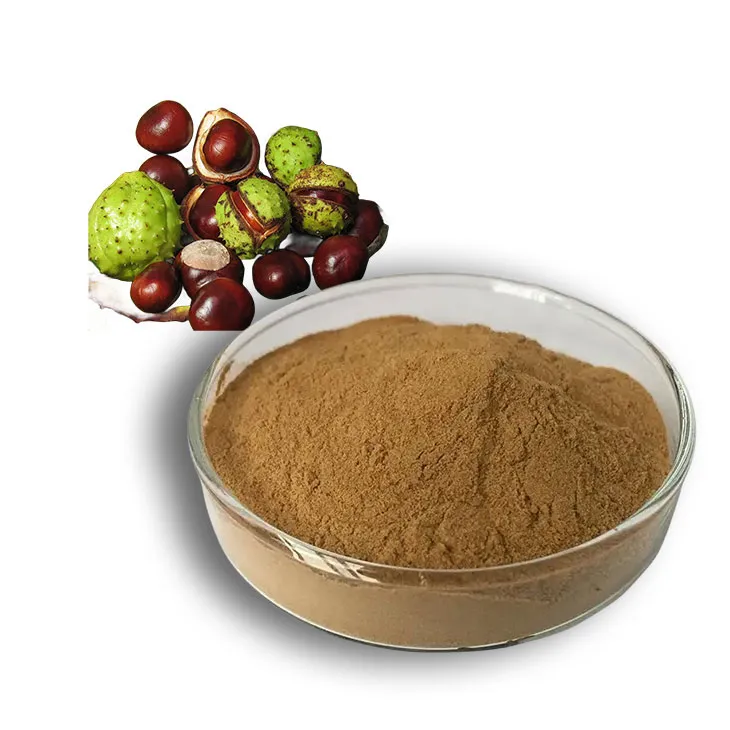
Horse chestnut extract is derived from the ripe seeds, commonly called conkers, of Aesculus hippocastanum, a deciduous tree in the Sapindaceae family. Native to the Balkan Peninsula, the tree is now cultivated across temperate regions worldwide. The seeds are harvested in autumn and dried at low temperatures to preserve their bioactive compounds before the shells are removed for extraction.
Aescin is most concentrated in mature seeds, where it can reach up to 3% of the raw material. Alongside aescin, the extract naturally contains complementary compounds such as flavonoids (including Quercetin and kaempferol), tannins, and polysaccharides, which support antioxidant and anti-inflammatory activity. However, aescin remains the primary marker used to standardize the extract.
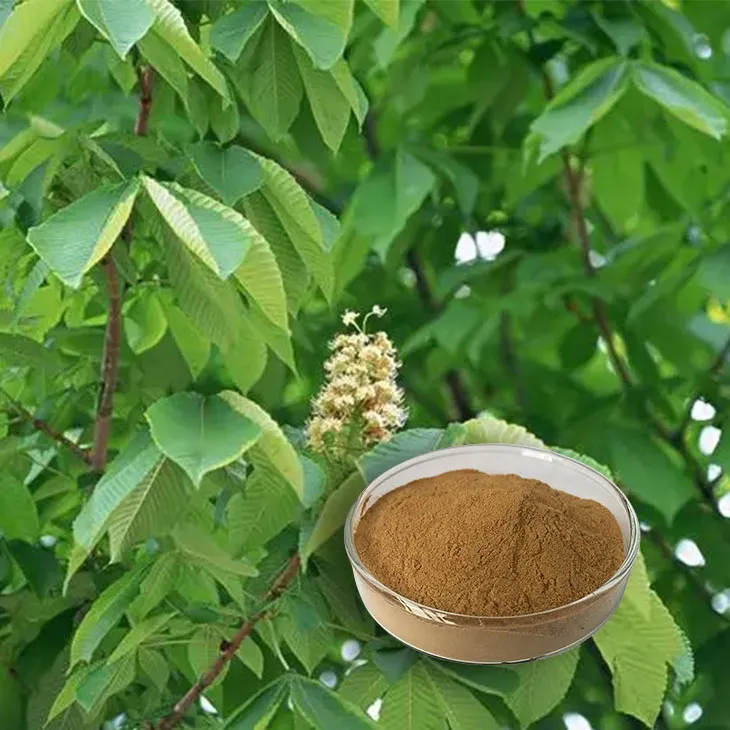
How Horse Chestnut Extract Is Standardized: Step by Step
Standardization is not a single step but a controlled production chain. Here is how a reputable manufacturer produces a standardized horse chestnut extract:
- Raw material selection. Only mature, pesticide-free seeds from certified farms are accepted. Sourcing regions with climates similar to the plant's native habitat tend to yield seeds with higher aescin content.
- Gentle drying and shelling. Seeds are dried at low temperatures to protect heat-sensitive compounds, then the shells are removed to isolate the kernels.
- Extraction. Water-ethanol co-extraction or supercritical CO2 extraction is used to pull the aescin-rich fraction from the plant material while avoiding high-heat processing that would degrade the bioactives.
- Purification and concentration. The crude extract is purified and concentrated to raise the aescin level toward the target specification and to reduce unwanted components.
- Analytical verification by HPLC. High-performance liquid chromatography (HPLC) is used to measure the aescin content precisely. The batch is adjusted until it meets the stated specification, for example 20% aescin.
- Safety controls. Esculin, a coumarin derivative that can be toxic at elevated levels, is strictly controlled and kept at or below 0.1%.
- Full quality testing. Each batch is screened for heavy metals, pesticide residues, microbial contamination, and solvent residues before release.
- Documentation. A Certificate of Analysis (COA) is issued for every batch, recording the verified aescin content and all safety parameters.
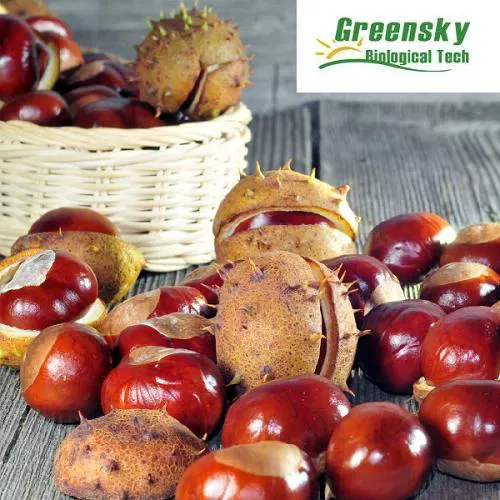
Typical Standardized Specifications
A standardized horse chestnut extract is defined by a clear set of physical and chemical specifications. The following is representative of a commercial 20% aescin product:
- Marker compound: Aescin, typically 20% by HPLC, with optional concentrations of 10%, 15%, or 25% available for specific applications.
- Appearance: Light brown to beige fine powder, soluble in water and ethanol.
- Moisture: Not more than 5%, ensuring stability and preventing clumping.
- Particle size: 80 to 100 mesh, suitable for supplements, pharmaceuticals, and cosmetic formulations.
- Heavy metals: Lead, cadmium, mercury, and arsenic each below 0.5 ppm.
- Esculin: Not more than 0.1%, limiting harmful coumarin derivatives.
Why Standardization Matters
Standardization delivers three practical benefits for manufacturers, formulators, and end users alike. First, it guarantees consistent potency, so a capsule or tablet delivers the same aescin dose every time. Clinical research on horse chestnut seed extract has typically used standardized preparations at around 50 mg of aescin taken twice daily, and consistent dosing is what makes those results reproducible in real products. Second, standardization supports safety, because the process removes or reduces esculin and other undesirable compounds while concentrating aescin. Third, it enables regulatory compliance, since documented specifications and test results are required for food, supplement, and pharmaceutical submissions in most markets.
How to Verify a Standardized Horse Chestnut Extract
When sourcing horse chestnut extract, the label is only the beginning. A genuine standardized product should be backed by verifiable evidence:
- Look for a stated aescin percentage. Wording such as "standardized to 20% aescin" on the specification sheet is the first sign of a standardized product. Products that list only a milligram amount with no percentage are not standardized.
- Request the Certificate of Analysis. A COA should confirm the aescin content by HPLC, along with esculin, heavy metal, pesticide, microbial, and solvent residue results.
- Ask about third-party testing. Independent verification by laboratories such as SGS or Intertek adds an extra layer of confidence.
- Check certifications. GMP, ISO 9001, HALAL, and Kosher certifications indicate that the manufacturer follows recognized quality and safety standards.
Sourcing Standardized Horse Chestnut Extract from a Reliable Supplier
Choosing the right manufacturing partner is as important as choosing the right specification. Hangzhou Greensky Biological Tech. Co., Ltd. is a professional manufacturer of natural plant extract ingredients with more than 20 years of experience in identifying, researching, developing, and producing active botanical compounds. The company operates a 100,000-class clean production area that meets food-grade requirements, and its independent laboratory is equipped with GC, HPLC, and UV instruments for in-house quality control.
Greensky offers horse chestnut extract standardized to 20% aescin by HPLC, with optional concentrations from 10% to 25% and customizable particle size, solubility, and packaging. Every batch is released with a complete COA covering aescin content, esculin control, heavy metals, pesticide residues, and microbial testing. The company holds ISO22000, BRCGS, Ecocert Organic, SGS-GMP, ISO9001, HALAL, and Kosher certifications, and it exports to markets across Europe, the United States, South Korea, and Russia.
As a plant extract supplier, Greensky supports customers with technical data sheets, safety data sheets, regulatory documentation, and custom formulation services, making it a practical choice for nutraceutical, pharmaceutical, cosmetic, and food companies that need a dependable source of standardized botanical ingredients.
Conclusion
Horse chestnut extract is standardized by controlling the concentration of aescin, its key marker compound, through careful raw material selection, gentle extraction, purification, and HPLC verification. The result is a product with guaranteed potency, controlled safety, and batch-to-batch consistency. When sourcing horse chestnut extract for your product line, always confirm the aescin percentage, review the Certificate of Analysis, and choose a manufacturer with the certifications and testing capabilities to back its claims.
- ▶ Hesperidin
- ▶ Citrus Bioflavonoids
- ▶ Plant Extract
- ▶ lycopene
- ▶ Diosmin
- ▶ Grape seed extract
- ▶ Sea buckthorn Juice Powder
- ▶ Fruit Juice Powder
- ▶ Hops Extract
- ▶ Artichoke Extract
- ▶ Mushroom extract
- ▶ Astaxanthin
- ▶ Green Tea Extract
- ▶ Curcumin
- ▶ Horse Chestnut Extract
- ▶ Other Product
- ▶ Boswellia Serrata Extract
- ▶ Resveratrol
- ▶ Marigold Extract
- ▶ Grape Leaf Extract
- ▶ New Product
- ▶ Aminolevulinic acid
- ▶ Cranberry Extract
- ▶ Red Yeast Rice
- ▶ Red Wine Extract
- ▶ blog
-
Citrus Aurantium Extract
2026-08-15
-
Natural grape seed extract
2026-08-15
-
Pomegranate Extract
2026-08-15
-
Beetroot Powder
2026-08-15
-
Bilberry Extract
2026-08-15
-
Echinacea Extract
2026-08-15
-
Chaga Mushroom Extract
2026-08-15
-
Artichoke Extract
2026-08-15
-
Red Vine Extract
2026-08-15
-
Licorice Root Extract Powder
2026-08-15