- 0086-571-85302990
- [email protected]



Brassica Oleracea Extract
2026-03-16
Brassica Oleracea Extract
1.Introduction
For If you’ve been anywhere near the wellness or skincare world lately, you’ve probably noticed a lot of buzz around Brassica oleracea. Maybe you’ve seen it listed on a high-end serum or spotted it in a new “superfood” supplement. But here’s the thing—this isn’t some exotic new ingredient. Chances are, you’ve eaten it for dinner.
Brassica oleracea is the scientific name for a whole family of familiar vegetables: broccoli, kale, cabbage, cauliflower, and Brussels sprouts. They’re all the same species, just cultivated differently over centuries . And now, modern science is taking a hard look at what makes these plants so good for us—and concentrating that power into a standardized extract.
Whether you're a formulation specialist, a supplement brand owner, or just someone deep-diving into ingredients, this guide covers everything you need to know about Brassica oleracea extract—from its bioactive compounds and clinical research to how to choose a supplier who’s not just selling powder but delivering genuine quality.
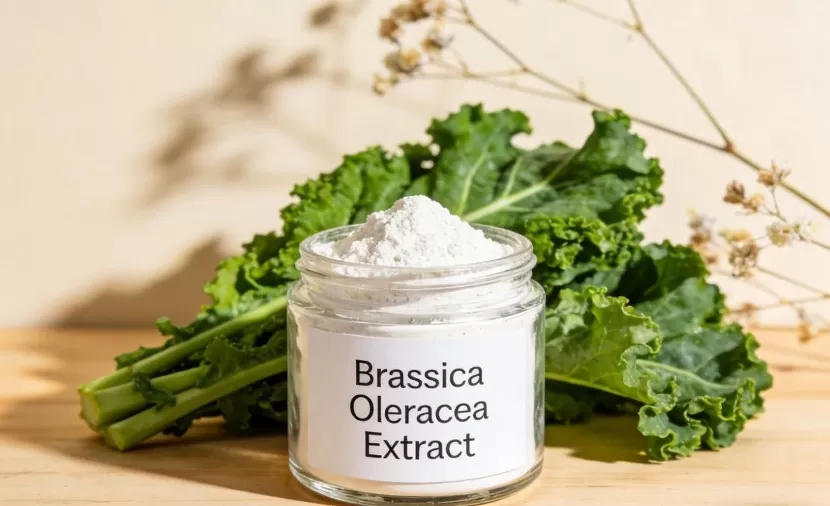
Part 1: What Exactly Is Brassica Oleracea Extract?
Let’s start with the basics.
Brassica oleracea is a plant species from the Brassicaceae family. What’s fascinating about it is its genetic versatility—depending on how it’s bred, it can grow into very different vegetables:
u Italica group → Broccoli
u Capitata group → Cabbage
u Sabellica group → Kale
u Botrytis group → Cauliflower
For commercial extracts, the most common sources are broccoli and kale, though some innovative suppliers are now also utilizing parts like discarded cabbage outer leaves—a great example of upcycling in the nutraceutical world .
Key Active Compounds
When we talk about the extract, we’re talking about concentrated bioactives. The main players include:
u Glucosinolates & their derivatives (like Sulforaphane): These are sulfur-rich compounds linked to detoxification and cellular health .
u Polyphenols & Flavonoids: Including Quercetin and kaempferol, known for antioxidant activity.
u Vitamins: Particularly Vitamin C and K .
Common Specifications
Depending on your application, extracts are typically standardized to:
l Sulforaphane: 1%, 5%, 10%, or higher (up to 98% for research use)
l Glucoraphanin: 5%, 10%, 13%, 20%
l Extract ratios: 4:1, 10:1, or 20:1 concentrates
l Test methods: HPLC for specific compounds, TLC for fingerprint identification
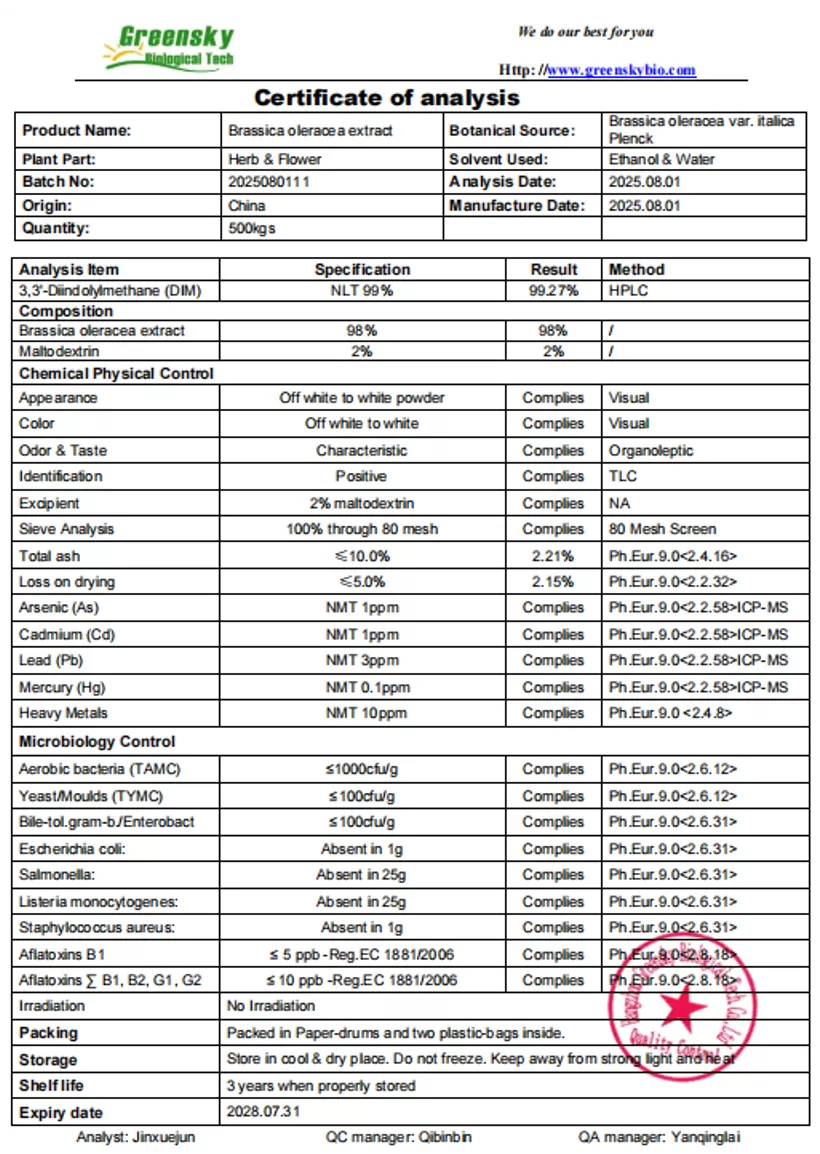
At our facility, every batch comes with a detailed Certificate of Analysis (CoA) covering these specifications plus microbiological and heavy metal panels.
Part 2: Core Benefits and What the Science Says
This is where it gets exciting. We’re not just relying on "grandma said eat your veggies" here—there’s real, peer-reviewed research backing these claims.
1. Potent Antioxidant Activity
The most well-documented benefit. A 2025 study published in the Pharmacognosy Journal evaluated Brassica oleracea extracts and found significant radical scavenging activity. The ethanol extract showed DPPH radical scavenging of 45–91% at just 5μg/mL, outperforming other solvent extracts .
What this means: The extract effectively neutralizes free radicals—unstable molecules that cause oxidative stress, premature aging, and cellular damage.
2. Anti-Inflammatory Effects
Inflammation is at the root of most chronic diseases. Research using RAW 264.7 macrophages (a standard model for inflammation) demonstrated that cabbage leaf extract significantly reduced nitric oxide production, a key inflammatory marker . This suggests the extract could help calm inflammation at a cellular level.
3. Skin Health and Anti-Aging
This is a growing area of interest, and the data is compelling.
A 2026 clinical study—yes, very recent—investigated oral supplementation with Brassica oleracea extract (Purebkale™) in 50 women over 56 days. The results were impressive:
l Transepidermal water loss (TEWL) decreased by 7.5% (stronger skin barrier)
l Dermis density increased by 12.8% (thicker, firmer skin)
l Wrinkle depth was reduced by 15.1%
l Skin firmness improved by 17.4%
Another study from July 2025 found that extract from cabbage outer leaves showed tyrosinase inhibition activity reaching 100.4% compared to ascorbic acid (vitamin C)—meaning it could be a powerful natural alternative for brightening and even-toned skin .
4. Antiproliferative (Cell Health) Potential
The same 2025 study that looked at antioxidant activity also tested the extract on THP-1 cells. The ethanolic extract significantly decreased cell viability in a concentration-dependent manner, indicating potential bioactivity against unwanted cell proliferation . While more research is needed (this is early-stage), it opens the door for applications in advanced nutritional support.
Part 3: Where Is It Used? (The Market Landscape)
If you're wondering where this ingredient fits commercially, the answer is: almost everywhere.
Dietary Supplements
This is the largest market. Brassica oleracea extract is encapsulated or tableted for:
l Detox support (thanks to sulforaphane’s role in phase II liver detoxification)
l Immune health formulas
l Daily wellness/"greens" capsules—a convenient alternative to drinking powdered greens
Functional Foods & Beverages
We’re seeing more "superfood" shots, protein bars, and even sparkling beverages incorporating broccoli or kale extracts. The advantage of an extract is you get the benefits without the strong vegetal taste that might turn off consumers.
Cosmetics and Skincare
Given the clinical data on skin barrier and anti-wrinkle effects, this ingredient is popping up in:
l Anti-aging serums and creams
l Brightening treatments (tyrosinase inhibition)
l Barrier-repair moisturizers
l "Beauty from within" nutricosmetic products
Animal Nutrition
The antioxidant and anti-inflammatory properties also make it a valuable addition to pet supplements and livestock feed, supporting overall animal health naturally.
Part 4: How to Choose a High-Quality Supplier (Don't Skip This)
Here’s the honest truth: Not all extracts are created equal. The market has everything from cheap fillers to premium, research-backed ingredients. Here’s what separates the good from the "just okay."
1. Look at the Extraction Process
Ethanol and water extractions are common. But CO₂ supercritical extraction? That’s the gold standard for preserving heat-sensitive compounds like sulforaphane. It avoids toxic solvent residues and yields a cleaner product. We use a low-temperature, food-grade ethanol process that maintains bioactivity while ensuring safety.
2. Demand Third-Party Testing
Don’t just take a supplier’s word for it. Ask for:
l HPLC chromatograms (to verify active compound levels)
l Heavy metal analysis (should meet or exceed USP standards)
l Microbiological testing (negative for pathogens like Salmonella and E. coli)
Our standard CoA includes all of the above, and we’re happy to arrange third-party audits.
3. Check the Source
Where is the raw material grown? Is it cultivated with pesticides? Some suppliers use "discarded" or "upcycled" agricultural parts (like outer cabbage leaves), which is both sustainable and effective . Others use whole, fresh-harvested plants. Both can be excellent—just know what you're getting.
4. Certifications Matter
Look for:
l Organic certification (if that’s your market)
l ISO 9001 (quality management)
l Kosher/Halal (if applicable)
l Non-GMO verification
Part 5: Why Work With Us?
We’ve been in the plant extract space for over a decade, and Brassica oleracea is one of our flagship products. Here’s what sets us apart:
l Traceable Sourcing: Our raw material comes from controlled farms with known agricultural practices.
l Flexible Specifications: Need 5% glucoraphanin for a supplement? 10:1 extract for a cosmetic? We can customize.
l Full Documentation: Every shipment includes CoA, MSDS, allergen statement, and if needed, organic certificates.
l R&D Support: Our in-house team stays current with the latest research—like the 2025/2026 studies cited here—to help you formulate with confidence.
Conclusion: The Science-Backed Choice for Formulators
Brassica oleracea extract is no longer just "vegetable powder." It’s a clinically studied, multi-functional ingredient with applications spanning dietary supplements, functional foods, and high-performance cosmetics. From antioxidant protection to measurable improvements in skin density and wrinkles , the evidence is solid—and growing.
Whether you're developing a new "beauty from within" product, upgrading your antioxidant line, or formulating a natural brightening cream, this extract delivers.
Ready to see the specs for yourself?
We’d love to earn your business. Contact us today for:
l A detailed product specification sheet with HPLC data
l Pricing based on your volume (from kilograms to metric tons)
l A free working sample to test in your formulation
Our team is here to help—whether you need technical documentation or just want to talk shop about the latest sulforaphane research. Shoot us an email or use the chat box below. Let’s build something great together.
References
1. Venugopal, N., Jayaraman, R., Hussain Dowlath, M. J., et al. (2025). Comprehensive Analysis of Brassica oleracea: Phytochemical Composition, Radical Scavenging, and Anti-Proliferative Activity. Pharmacognosy Journal, 17(3), 293-298.
2. (Additional citation for the same study from repository source)
3. (2025). Skin whitening potential of extracts from discarded cabbage outer leaves. PMC / Scientific Reports, 15, 25947.
4. Alfa Chemistry. (2024). Broccoli Extract Product Specification.
5. Parchem Fine & Specialty Chemicals. Broccoli Extract Specification.
6. Kindherb Biotechnology. (2025). Brassica Oleracea Broccoli Extract Technical Data Sheet.
7. Jahangiri Manesh, M. R., Cestone, E., Pelizzola, A., et al. (2026). Oral Supplementation with Brassica oleracea Dry Aqueous Extract Improves Skin Barrier Function, Dermis Density, and Wrinkle Appearance. Cosmetics, 13(1), 47.
TEST REPORT
- ▶ Hesperidin
- ▶ Citrus Bioflavonoids
- ▶ Plant Extract
- ▶ lycopene
- ▶ Diosmin
- ▶ Grape seed extract
- ▶ Sea buckthorn Juice Powder
- ▶ Fruit Juice Powder
- ▶ Hops Extract
- ▶ Artichoke Extract
- ▶ Mushroom extract
- ▶ Astaxanthin
- ▶ Green Tea Extract
- ▶ Curcumin
- ▶ Horse Chestnut Extract
- ▶ Other Product
- ▶ Boswellia Serrata Extract
- ▶ Resveratrol
- ▶ Marigold Extract
- ▶ Grape Leaf Extract
- ▶ New Product
- ▶ Aminolevulinic acid
- ▶ Cranberry Extract
- ▶ Red Yeast Rice
- ▶ Red Wine Extract
- ▶ blog
-
Resveratrol
2026-03-16
-
Coconut Water Powder
2026-03-16
-
Polygonum Cuspidatum Extract
2026-03-16
-
Beetroot juice Powder
2026-03-16
-
Phyllanthus Emblica Extract
2026-03-16
-
Marigold Extract
2026-03-16
-
Pomegranate Extract
2026-03-16
-
Hericium erinaceus extract powder
2026-03-16
-
Horse Chestnut Extract
2026-03-16
-
Black Pepper Extract
2026-03-16