- 0086-571-85302990
- [email protected]






Safflower Seed Extract
2026-02-03
Safflower Seed Extract
Introduction
For centuries, the safflower plant (Carthamus tinctorius L.) has been cultivated not only for its vibrant dye but also in traditional wellness practices. Modern science has now unlocked the significant potential of its seeds, revealing that Safflower Seed Extract, rich in key bioactive compounds, holds remarkable promise for health, nutrition, and cosmetic applications.
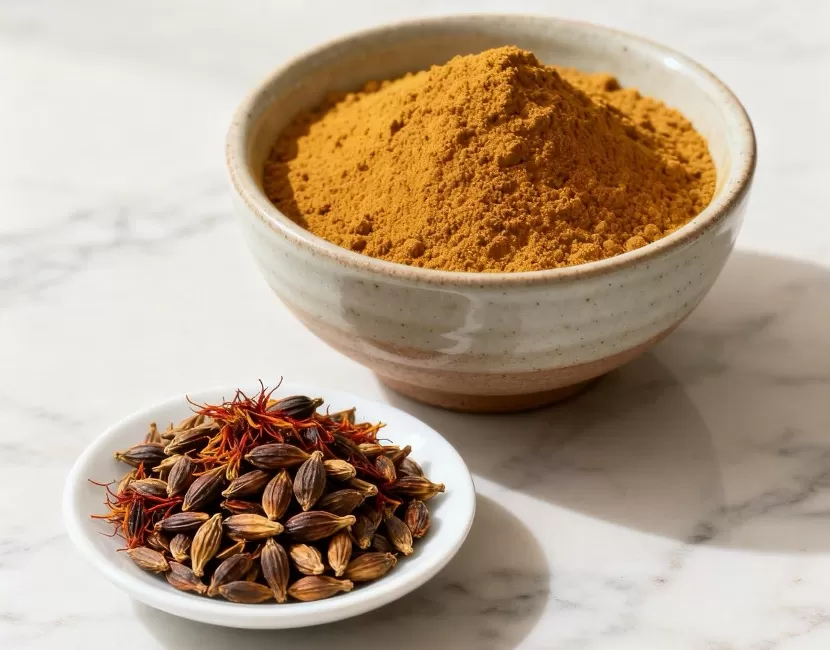
Part 1: What is Safflower Seed Extract?
Safflower Seed Extract is derived from the seeds of the Carthamus tinctorius L. plant, primarily grown in regions like India, the United States, Mexico, and China. Unlike the flower petals used for coloring, the seeds are the source of this valuable extract.
1. Extraction Part: Seeds.
2. Key Active Constituents: The primary bioactive markers are Serotonin Derivatives, notably N-(p-Coumaroyl)serotonin and N-Feruloylserotonin, and flavonoids like Hydroxysafflor Yellow A (HSYA). These are responsible for its potent antioxidant and anti-inflammatory properties.
3. Standard Specifications: We offer high-purity Safflower Seed Extract standardized to 10% or 20% Total Serotonin Derivatives (by HPLC). Other specifications, such as a focus on Hydroxysafflor Yellow A, are available upon request.
4. Quality Assurance: Every batch is supported by a comprehensive Certificate of Analysis (CoA) from an independent, third-party lab. This ensures consistent potency, purity, and safety, verifying the absence of heavy metals, pesticides, and microbial contaminants.
Part 2: Core Benefits & Mechanisms of Action
Supported by scientific research, Safflower Seed Extract offers a range of powerful health benefits:
1. Potent Antioxidant Activity: The serotonin derivatives and flavonoids are exceptional free radical scavengers. They help protect cells from oxidative stress, a key factor in aging and chronic disease development (see Reference 1).
2. Anti-Inflammatory Effects: Research indicates that compounds like Hydroxysafflor Yellow A can modulate inflammatory pathways, including the inhibition of key enzymes like COX-2 and pro-inflammatory cytokines. This makes it a promising natural ingredient for managing inflammation-related conditions (see Reference 2).
3. Cardiovascular & Metabolic Support: Studies suggest the extract may support heart health by promoting healthy blood circulation and showing potential in modulating lipid metabolism, contributing to balanced cholesterol levels (see Reference 3).
4. Neuroprotective Potential: Emerging research points to its ability to protect neurons from oxidative damage and support cognitive function, opening avenues for brain health formulations (see Reference 4).
Part 3: Wide-Ranging Application Fields
This versatile extract is a valuable ingredient across multiple industries:
5. Pharmaceuticals & Nutraceuticals: Used in capsules, tablets, and softgels formulated for joint health, antioxidant support, cardiovascular wellness, and cognitive aid.
6. Functional Foods & Beverages: Easily incorporated into health bars, plant-based protein shakes, fortified waters, and herbal teas to enhance their functional health profile.
7. Cosmetics & Personal Care: A prized active for anti-aging serums, moisturizers, and soothing creams. Its antioxidant properties combat environmental skin damage, while its anti-inflammatory action helps calm irritated skin.
8. Animal Nutrition: Used as a feed additive to support livestock and poultry health, potentially improving antioxidant status and overall vitality.
Part 4: How to Choose a High-Quality Safflower Seed Extract
Selecting a reliable supplier is crucial. Here’s what to look for:
1. Standardization & Purity: Ensure the extract is standardized to specific, measurable active compounds (e.g., Serotonin Derivatives or HSYA), not just a vague "seed extract."
2. Advanced Production: Opt for suppliers using clean, efficient extraction methods (like ethanol or water extraction) that preserve the integrity of heat-sensitive actives.
3. Transparent Documentation: Always request and review up-to-date Third-Party Lab Reports (CoA) for identity, potency, and safety.
4. Certifications & Compliance: Check for relevant certifications (ISO, GMP, Organic if applicable) that demonstrate a commitment to quality management systems.
5. Supplier Expertise: Choose a partner with proven experience, strong R&D capability, and the willingness to provide technical support and customization.
Part 5: About Us – Your Trusted Partner
As a leading manufacturer and supplier specializing in premium botanical extracts for over a decade, we are committed to delivering excellence in Safflower Seed Extract.
Our core strengths include:
1. Stringent Quality Control: From seed sourcing to final packaging, every step is governed by rigorous QC protocols in our GMP-certified facilities.
2. Research-Backed Products: Our specifications are developed in alignment with the latest pharmacological research to ensure efficacy.
3. Customization & Flexibility: We offer tailored solutions, including different standardization ratios, particle sizes, and private labeling options.
4. Global Supply Reliability: We ensure consistent, on-time delivery of products that meet international regulatory standards.
Conclusion & Call to Action
Safflower Seed Extract stands out as a scientifically substantiated, multifunctional ingredient poised to add significant value to innovative product lines in health, beauty, and wellness.
Ready to explore how high-purity Safflower Seed Extract can enhance your formulations?
Contact us today to request a complimentary sample, our detailed product dossier, and a competitive quote. Our technical team is here to support your project with tailored solutions.
References (PubMed/Research Citations):
1. Zhang, Z., et al. (2016). "Antioxidant activity of serotonin derivatives isolated from safflower seeds." Journal of Agricultural and Food Chemistry, 64(4), 741-747. (This study highlights the free radical scavenging capacity of key serotonin compounds in safflower seeds).
2. Zhu, H., et al. (2014). "Anti-inflammatory effects of hydroxysafflor yellow A (HSYA) on lipopolysaccharide-induced inflammatory responses in murine macrophages." Experimental and Therapeutic Medicine, 8(4), 1234-1238. (Demonstrates the mechanism of HSYA in inhibiting inflammatory mediators).
3. Wang, C., et al. (2012). "Effects of safflower seed extract on blood lipid profile and cardiovascular function in a high-fat diet-induced obesity rat model." Evidence-Based Complementary and Alternative Medicine, 2012, 789613. (Explores the extract's potential benefits on lipid metabolism and heart health).
4. Yang, F., et al. (2015). "Neuroprotective effects of safflower seed extract against oxidative stress induced by hydrogen peroxide in PC12 cells." Pharmaceutical Biology, 53(9), 1368-1373. (Investigates the extract's protective role in neuronal cells against oxidative damage).
- ▶ Hesperidin
- ▶ Citrus Bioflavonoids
- ▶ Plant Extract
- ▶ lycopene
- ▶ Diosmin
- ▶ Grape seed extract
- ▶ Sea buckthorn Juice Powder
- ▶ Fruit Juice Powder
- ▶ Hops Extract
- ▶ Artichoke Extract
- ▶ Mushroom extract
- ▶ Astaxanthin
- ▶ Green Tea Extract
- ▶ Curcumin
- ▶ Horse Chestnut Extract
- ▶ Other Product
- ▶ Boswellia Serrata Extract
- ▶ Resveratrol
- ▶ Marigold Extract
- ▶ Grape Leaf Extract
- ▶ New Product
- ▶ Aminolevulinic acid
- ▶ Cranberry Extract
- ▶ Red Yeast Rice
- ▶ Red Wine Extract
- ▶ blog
-
Horse Chestnut Extract
2026-02-03
-
Cactus Extract
2026-02-03
-
Tormentil Extract
2026-02-03
-
Red Wine Extract
2026-02-03
-
Artichoke Leaf Extract
2026-02-03
-
Chia Seed Powder
2026-02-03
-
Oyster Mushroom Extract Powder
2026-02-03
-
Phyllanthus Emblica Extract
2026-02-03
-
Chasteberry Extract
2026-02-03
-
Rose Hip Extract
2026-02-03
