- 0086-571-85302990
- [email protected]


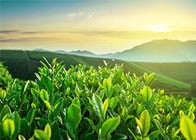


Which brand of moringa powder is best ranked?
2026-08-19
Ask "which brand of Moringa powder is best" and you will get a different answer from almost every source you consult. Some rankings are built on taste tests, others on price, and a surprising number on nothing more than marketing budgets. The honest answer is that a truly top-ranked Moringa powder is not defined by a single review site, but by a set of measurable qualities: where the leaves are grown, how they are processed, how thoroughly the powder is tested, and the standards of the facility that produces it.
For consumers, those qualities show up as color, taste, and consistency. For supplement brands, food manufacturers, and distributors, they show up as something far more important: batch-to-batch consistency, verified purity, complete documentation, and a supply chain that does not break. This article breaks down what actually separates the best Moringa powder from the rest, and how to judge a brand or a supplier against those standards.
What "best ranked" really means for moringa powder
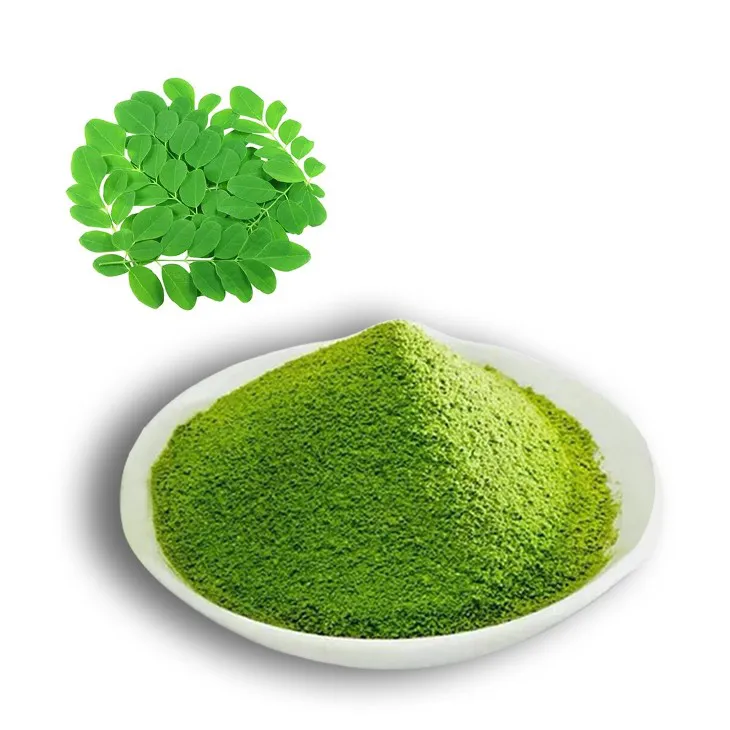
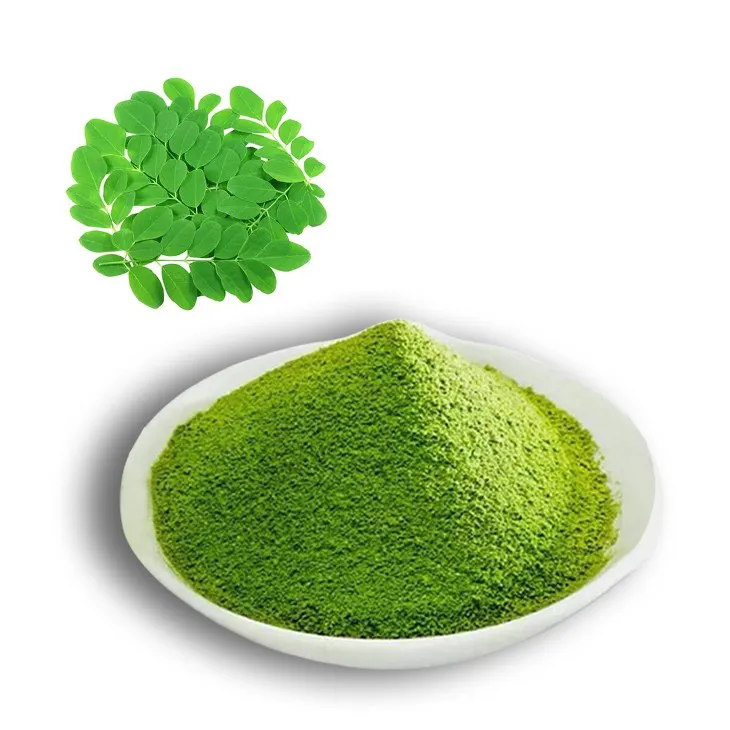
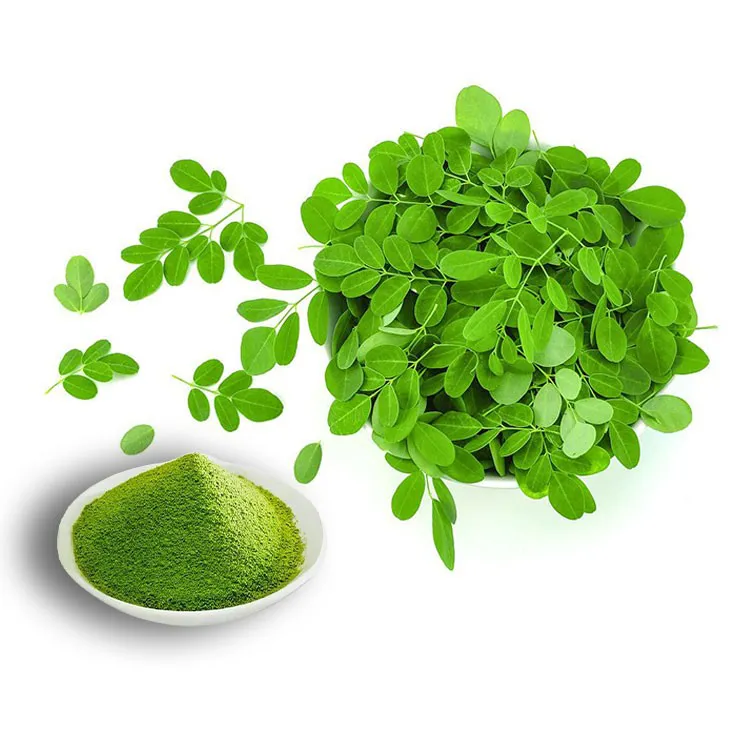
Moringa powder is made by grinding the dried leaves of the Moringa oleifera tree, a plant native to India that now grows across tropical and subtropical regions. The leaves are prized for their dense nutritional content: vitamins, minerals, antioxidants, chlorophyll, and plant protein. Because the raw material is so nutrient-rich, the quality of the final powder depends almost entirely on how carefully it is handled from harvest to packaging.
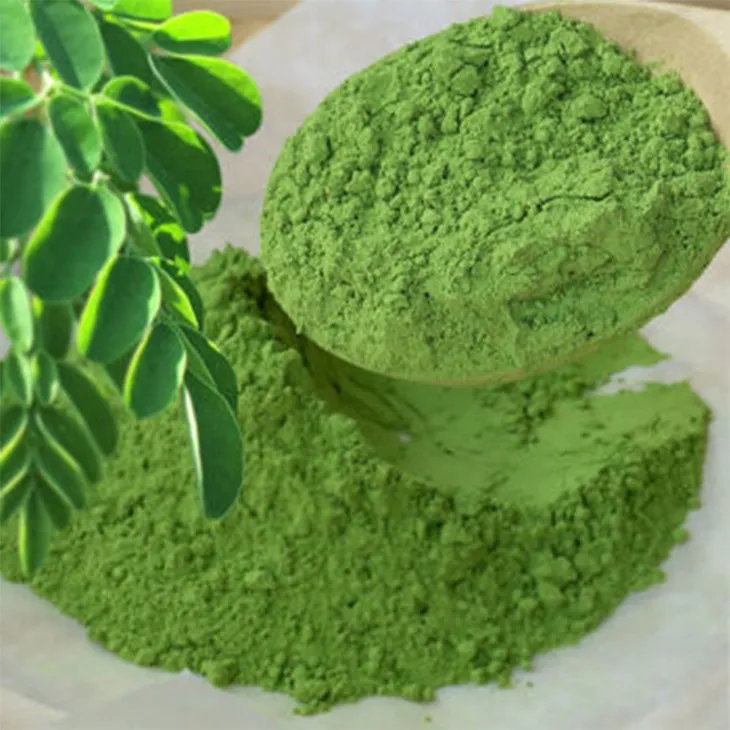
A quick visual test tells you a lot. A bright green powder signals leaves that were dried at low temperature soon after harvest, which protects heat-sensitive nutrients. A brownish or dull powder usually means high-heat drying, long storage, or the inclusion of stems and twigs. That is why serious buyers look beyond the label and ask about processing, not just the brand name.
Five factors that separate top-ranked moringa powder
1. Sourcing and origin
The best brands can tell you exactly where their leaves come from and how the farms are managed. Transparent sourcing usually correlates with better farming practices and fresher leaf quality. If a brand cannot name its origin or refuses to share sourcing details, that alone is a reason to rank it lower.
2. Processing method
Low-temperature drying preserves the vitamins and antioxidants that make moringa valuable. High-heat processing is faster and cheaper, but it degrades the very nutrients buyers are paying for. A reputable producer controls temperature, humidity, and timing throughout the drying and milling stages, and can document that process.
3. Purity and testing
Top-ranked products are tested, not assumed. Reliable manufacturers run analytical checks such as UV-visible spectroscopy for active content and microbiological testing for safety, and they issue a certificate of analysis with every batch. If a supplier cannot produce test reports, treat that as a red flag regardless of how good the packaging looks.
4. Certifications and manufacturing standards
Certifications are the fastest way to compare brands that otherwise look identical. Look for food-safety systems such as ISO22000, quality management like ISO9001, and market-specific credentials such as HALAL, Kosher, or organic certification. For buyers supplying regulated markets, these documents are not optional extras; they are entry requirements.
5. Supply reliability and documentation
A brand can rank first in a consumer review and still fail a business buyer, because consumer reviews never test delivery times, batch consistency, or regulatory paperwork. For anyone buying moringa in volume, a supplier that delivers the same quality every time, on schedule, with complete export documentation, will always outrank one that does not.
The brand behind the brand
Here is something most rankings never mention: many of the retail brands that top consumer lists do not grow or process moringa themselves. They buy the powder from a manufacturer and put their own label on it. That means the real quality decision is made upstream, at the factory. When you are comparing brands, you are often really comparing their choice of moringa powder supplier.
Hangzhou Greensky Biological Tech. Co., Ltd. is one such manufacturer. Founded in 2004, the company has spent more than two decades producing plant extracts and health product raw materials, and it operates with full vertical integration: research, development, production, and sales are all handled within one group of five wholly-owned subsidiaries. Its moringa powder is ground from Moringa oleifera leaves into a green to dark green powder used in nutritional supplements, superfood blends, and dietary products.
What makes Greensky's product worth a top ranking is not the label but the infrastructure behind it. Production runs in a 100,000-class clean area that meets food-grade requirements, with no radiation treatment. An independent laboratory equipped with GC, HPLC, and UV instruments verifies quality at every stage. The company holds ISO22000, BRCGS, Ecocert Organic Standard, SGS-GMP, ISO9001, HALAL, and Kosher certifications, and its export registration and documentation are prepared for global regulatory submissions. In 2023 alone, export value reached nearly 30 million US dollars, with main markets in Europe, the United States, South Korea, and Russia.
How to evaluate a moringa powder supplier
Whether you are a supplement brand choosing a contract manufacturer or a distributor comparing sources, run every candidate through this checklist:
- Request a certificate of analysis for the specific batch you are considering, not a generic document.
- Verify certifications against the issuing bodies, and confirm they cover the facility, not just the company name.
- Ask about the production environment: cleanroom class, drying method, and whether any radiation or chemical treatment is used.
- Confirm traceability from farm to finished powder, including the country of origin of the leaves.
- Order a sample and test it yourself for color, particle size, taste, and microbial counts.
- Check export experience and documentation, especially if you ship to regulated markets in Europe or North America.
A supplier that answers all six points confidently is a supplier that belongs on a shortlist. One that hesitates on any of them should be ranked accordingly.
Why Greensky moringa powder ranks at the top
Putting the pieces together, the best moringa powder is not the one with the loudest advertising. It is the one that combines fresh, carefully processed leaves with rigorous testing, credible certifications, and dependable supply. That combination is exactly what Greensky has built over two decades of manufacturing plant extracts.
If you are evaluating moringa powder for your own brand, product line, or distribution business, start with the factory rather than the label. Contact Greensky at [email protected] to request specifications, certificates, and samples, and judge the product on the evidence rather than on rankings that rarely look past the packaging.
- ▶ Hesperidin
- ▶ Citrus Bioflavonoids
- ▶ Plant Extract
- ▶ lycopene
- ▶ Diosmin
- ▶ Grape seed extract
- ▶ Sea buckthorn Juice Powder
- ▶ Fruit Juice Powder
- ▶ Hops Extract
- ▶ Artichoke Extract
- ▶ Mushroom extract
- ▶ Astaxanthin
- ▶ Green Tea Extract
- ▶ Curcumin
- ▶ Horse Chestnut Extract
- ▶ Other Product
- ▶ Boswellia Serrata Extract
- ▶ Resveratrol
- ▶ Marigold Extract
- ▶ Grape Leaf Extract
- ▶ New Product
- ▶ Aminolevulinic acid
- ▶ Cranberry Extract
- ▶ Red Yeast Rice
- ▶ Red Wine Extract
- ▶ blog
-
Hawthorn Extract
2026-08-19
-
Peppermint Extract Powder
2026-08-19
-
Red Date Extract
2026-08-19
-
Sophora Japonica Flower Extract
2026-08-19
-
Stevia Extract
2026-08-19
-
Boswellia Serrata Extract
2026-08-19
-
Senna Leaf Extract
2026-08-19
-
Red Wine Extract
2026-08-19
-
Reishi mushroom extract
2026-08-19
-
Avocado Extract Powder
2026-08-19