- 0086-571-85302990
- [email protected]






What is the pycnogenol dosage for circulation?
2026-08-17
Pycnogenol is one of the most studied botanical extracts for supporting healthy blood flow, and the dose you need depends on why you are taking it. For everyday circulatory support, most research uses 50–100 mg per day. For more pronounced circulation problems such as heavy, swollen legs linked to chronic venous insufficiency, clinical trials typically use 100–300 mg per day, usually split into two or three doses taken with meals. This article breaks down the evidence-based dosage ranges, how to take the extract, and what to look for when choosing a plant extract supplier.
What is Pycnogenol?
Pycnogenol is the registered trademark for a standardized extract made from the bark of the French maritime pine (Pinus pinaster). It is a concentrated source of oligomeric proanthocyanidins (OPCs), a family of natural polyphenols that act as powerful antioxidants. Because the raw material and the extraction process are tightly controlled, every batch has a consistent polyphenol profile, which is why the extract has been examined in more than 160 clinical trials and why its results are more reproducible than those of generic, unstandardized pine bark powders.
How does it support circulation?
The extract works mainly at the level of the small blood vessels through several interlocking mechanisms:
- It helps reduce capillary permeability, so less fluid leaks into the surrounding tissue and less swelling builds up.
- It protects collagen and elastin, the proteins that keep vein walls strong, elastic, and resistant to damage.
- It supports nitric oxide production, which helps blood vessels relax and improves microcirculation through the smallest vessels.
- It calms low-grade inflammation in the vessel wall, reducing aching and discomfort.
These mechanisms explain why the strongest clinical evidence for Pycnogenol sits in circulation-related conditions such as chronic venous insufficiency, leg edema, and travel-related leg swelling.
Recommended pycnogenol dosage for circulation
There is no single "correct" dose, because the amount used in studies depends on the goal. The table below summarizes the commonly used ranges:
| Purpose | Typical daily dose | Notes |
|---|---|---|
| General antioxidant and wellness support | 50 mg | A convenient daily maintenance dose. |
| Preventive cardiovascular support | 25–50 mg | Manufacturer guidance for general cardiovascular health. |
| Impaired circulation or higher cardiovascular risk | 50–100 mg | Used in studies of hypertension, blood hypercoagulation, and poor circulation. |
| Chronic venous insufficiency and leg swelling | 100–300 mg | Most trials used 150–300 mg, split into two or three doses. |
| Long-haul flight leg edema | 100–200 mg | Taken before and during travel in the flight studies. |
If you are unsure where to start, 50 mg per day is a reasonable baseline for general support, while 100–200 mg per day is the range most often used when circulation is the specific concern. Higher doses should be discussed with a healthcare professional.
How to take it
- Take it with meals to support absorption and reduce any stomach upset.
- Split higher doses (for example 150–300 mg) into two or three smaller doses spread across the day.
- Be consistent. Benefits build gradually over 4–12 weeks rather than appearing overnight, so give the supplement time to work.
Safety and precautions
- Pycnogenol is generally well tolerated, but it can slightly reduce platelet stickiness. If you take blood thinners (such as warfarin or apixaban) or antiplatelet drugs (such as aspirin or clopidogrel), talk to your clinician first and stop before surgery.
- It can modestly lower blood pressure, so monitor if you are on antihypertensive medication.
- Sudden one-sided leg swelling, warmth, or calf pain can signal a deep vein thrombosis, which is a medical emergency. Do not self-treat these symptoms with a supplement; seek medical care.
- Pregnant women should use it only under medical advice.
Choosing a quality pine bark extract
Not all pine bark extracts are the same. Because Pycnogenol is a patented, trademarked product, generic "pine bark extract" powders vary widely in OPC content, source species, and processing. When sourcing raw material for formulation, work with a reliable plant extract manufacturer that can document standardization, batch consistency, and third-party testing.
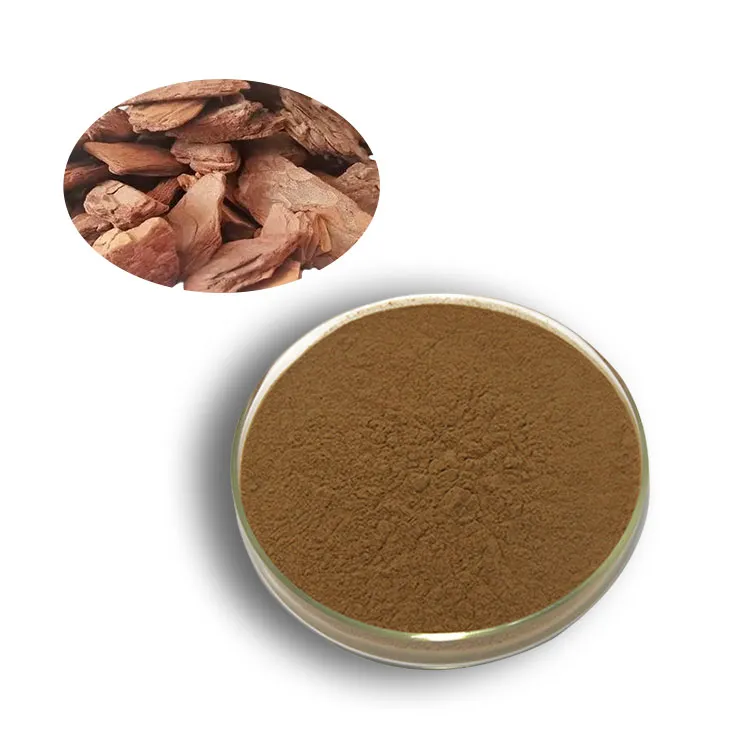
Greensky is a professional plant extract supplier with more than 20 years of experience producing active botanical ingredients. Its Pine bark Extract Powder is rich in flavonoids and polyphenols, and the company's vertically integrated production and independent laboratory (GC, HPLC, UV) support consistent quality for nutraceutical applications.
TAGS:

- ▶ Hesperidin
- ▶ Citrus Bioflavonoids
- ▶ Plant Extract
- ▶ lycopene
- ▶ Diosmin
- ▶ Grape seed extract
- ▶ Sea buckthorn Juice Powder
- ▶ Fruit Juice Powder
- ▶ Hops Extract
- ▶ Artichoke Extract
- ▶ Mushroom extract
- ▶ Astaxanthin
- ▶ Green Tea Extract
- ▶ Curcumin
- ▶ Horse Chestnut Extract
- ▶ Other Product
- ▶ Boswellia Serrata Extract
- ▶ Resveratrol
- ▶ Marigold Extract
- ▶ Grape Leaf Extract
- ▶ New Product
- ▶ Aminolevulinic acid
- ▶ Cranberry Extract
- ▶ Red Yeast Rice
- ▶ Red Wine Extract
- ▶ blog
-
Propolis Extract Powder
2026-08-17
-
Pine bark Extract Powder
2026-08-17
-
Longan Extract
2026-08-17
-
Carrageenan Extract Powder
2026-08-17
-
Diosmin
2026-08-17
-
Grapefruit Seed Extract Powder
2026-08-17
-
Nutmeg Extract
2026-08-17
-
Ginseng Root Extract
2026-08-17
-
Sophora Japonica Flower Extract
2026-08-17
-
Giant Knotweed Extract
2026-08-17
