- 0086-571-85302990
- [email protected]






What is boswellia for phlegm and how does it help?
2026-08-18
Coughing up thick, sticky phlegm is one of the most uncomfortable parts of a cold, a bout of bronchitis, or an asthma flare-up. Phlegm is the body's way of trapping irritants and infections, but when it builds up in the airways it can leave you congested, wheezy, and worn out. While plenty of remedies promise quick relief, more people are turning to natural ingredients that address the root of the problem rather than simply thinning the mucus. One of the most interesting is boswellia serrata extract, an herbal ingredient with a long history in traditional medicine and a growing body of modern research behind it.
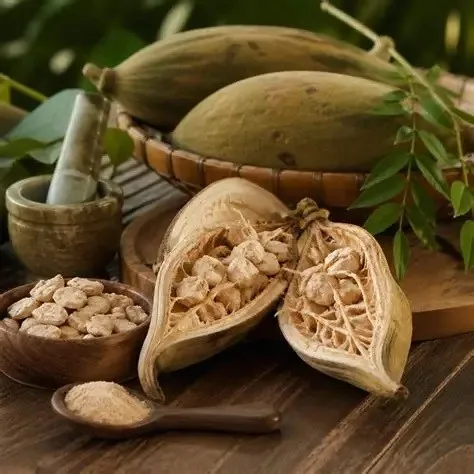
Boswellia, also known as frankincense, is a resin harvested from trees of the Boswellia genus. The most widely studied species is Boswellia serrata, native to India, where it has been used in Ayurvedic medicine for centuries. The resin contains a group of active compounds called boswellic acids, and it is these compounds that give the extract its distinctive health properties. Today, boswellia is available as a supplement in pill, tablet, and capsule form, and it has become one of the most popular botanical ingredients in the natural health market.
Phlegm is essentially an overproduction of mucus. Mucus normally lines the respiratory tract and protects it from bacteria, viruses, and environmental irritants. When the immune system detects an invader, whether it is a cold virus, an allergen, or smoke, it increases mucus production and thickens it, turning it into phlegm. This is why phlegm often appears alongside colds, sinus infections, bronchitis, and asthma flare-ups. In many cases, the excess mucus is driven by inflammation in the airways, which is exactly where boswellia comes into play.
The key to boswellia's effect on phlegm lies in its anti-inflammatory action. Boswellic acids work by inhibiting an enzyme called 5-lipoxygenase (5-LOX), which is involved in the production of leukotrienes. Leukotrienes are inflammatory compounds that play a central role in airway inflammation, causing the airways to swell and stimulating the overproduction of mucus. By helping to lower leukotriene activity, boswellia supports calmer airways, which in turn can reduce the excess mucus that turns into phlegm.
This mechanism is why boswellia has been studied for respiratory conditions such as asthma and chronic obstructive pulmonary disease (COPD), where inflammation and excess mucus are central problems. Integrative physicians have noted that for chronic lung phlegm linked to asthma or emphysema, boswellia can noticeably decrease both lung inflammation and excess phlegm production. Research has also explored boswellia as part of supportive therapy for chronic sinusitis, another condition in which mucus overproduction is a major complaint.
Clinical studies on boswellia have focused mainly on its anti-inflammatory effects. In asthma research, boswellia extracts have been associated with improvements in breathing and reductions in symptoms, consistent with its ability to influence the inflammatory pathways that drive airway mucus production. Studies in chronic sinusitis have combined boswellia with other natural ingredients such as bromelain and vitamin D to help modulate local inflammation in the nose. While more research is still needed to establish exact effects, the evidence so far supports boswellia's traditional reputation as a respiratory herb.
Boswellia is usually taken orally in capsule or tablet form. A typical recommended dose is 250 to 500 mg two to three times a day, though the right amount depends on the product and its concentration of boswellic acids. When choosing a supplement, look for a standardized extract with a clearly stated boswellic acid content, as this ensures you are getting a consistent amount of the active compounds. For anyone considering boswellia for a chronic respiratory condition, it is always wise to discuss it with a healthcare provider first, especially if you are already taking medication.
Because boswellia is a natural botanical, quality varies considerably between products. The best boswellia serrata extract comes from a manufacturer that can guarantee purity, consistent boswellic acid content, and reliable quality control. This is where sourcing matters: working with an experienced plant extract supplier helps ensure the raw material is properly harvested, extracted, and standardized. Greensky, a professional manufacturer of natural plant extracts with more than 20 years of experience, produces Boswellia Serrata Extract as part of a broad catalog of botanical ingredients, backed by in-house laboratories and international certifications.
Boswellia offers a natural, research-backed approach to managing the inflammation behind excess phlegm. By targeting the inflammatory pathways that drive mucus overproduction, it can be a useful addition to a respiratory health routine, particularly for people dealing with asthma-related or chronic phlegm. As with any supplement, quality and consistency matter, so choosing a trusted supplier is the first step to getting real results.
TAGS:
- ▶ Hesperidin
- ▶ Citrus Bioflavonoids
- ▶ Plant Extract
- ▶ lycopene
- ▶ Diosmin
- ▶ Grape seed extract
- ▶ Sea buckthorn Juice Powder
- ▶ Fruit Juice Powder
- ▶ Hops Extract
- ▶ Artichoke Extract
- ▶ Mushroom extract
- ▶ Astaxanthin
- ▶ Green Tea Extract
- ▶ Curcumin
- ▶ Horse Chestnut Extract
- ▶ Other Product
- ▶ Boswellia Serrata Extract
- ▶ Resveratrol
- ▶ Marigold Extract
- ▶ Grape Leaf Extract
- ▶ New Product
- ▶ Aminolevulinic acid
- ▶ Cranberry Extract
- ▶ Red Yeast Rice
- ▶ Red Wine Extract
- ▶ blog
-
Cranberry Extract
2026-08-18
-
Hawthorn powder
2026-08-18
-
Artichoke Extract
2026-08-18
-
Black Pepper Extract
2026-08-18
-
5-HTP (5-Hydroxytryptophan)
2026-08-18
-
Giant Knotweed Extract
2026-08-18
-
Troxerutin
2026-08-18
-
Scutellaria Extract
2026-08-18
-
Lion's Mane Mushroom Extract
2026-08-18
-
Black Seed Extract
2026-08-18
