- 0086-571-85302990
- [email protected]






How is marigold extract powder used in supplements?
2026-08-15
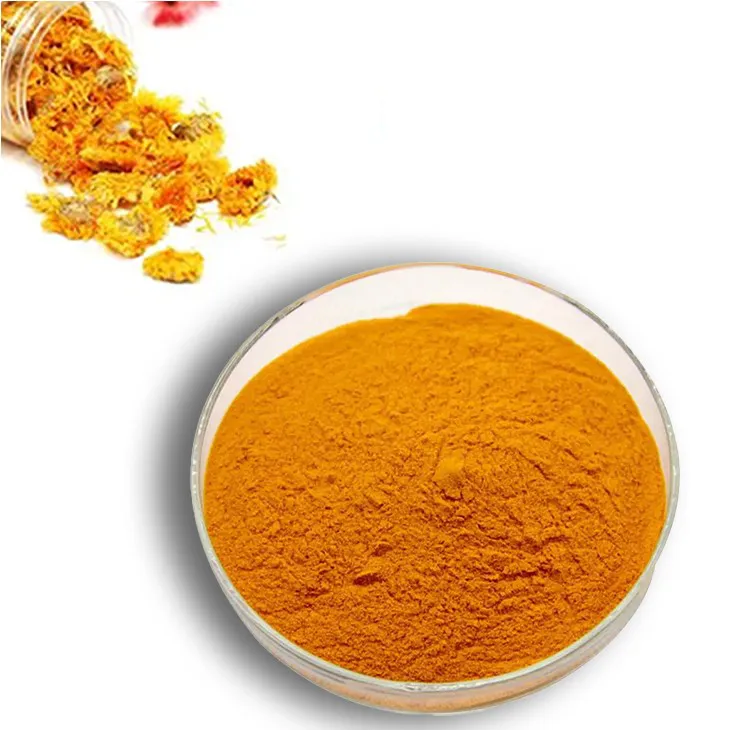
Marigold Extract powder has become one of the most widely used botanical ingredients in the supplement industry, and for good reason. Sourced from the bright orange petals of the marigold flower (Tagetes erecta), this fine yellow-orange powder is prized for its naturally high content of two carotenoids, lutein and zeaxanthin, which are the same pigments that give the flower its vivid color. When you see "lutein" or "zeaxanthin" on a supplement label, there is a very good chance the ingredient started life as marigold extract. Because the powder is concentrated, stable, and easy to blend, manufacturers use it across a wide range of supplement formats. This article explains how it is used, what to look for in a quality source, and why it has earned such a firm place in the market.
Why Marigold Extract Powder Matters in Supplements
The value of Marigold Extract powder comes down to its carotenoid profile. Lutein and zeaxanthin are xanthophyll carotenoids that accumulate naturally in the macula of the human eye, where they act as a yellow filter that absorbs high-energy blue light and helps protect retinal tissue from oxidative stress. The body cannot make these compounds on its own, so they must come from the diet or from supplements.
This is exactly why marigold extract is a core ingredient in eye health formulas. Clinical research, including the landmark AREDS2 trial, has linked daily intake of lutein and zeaxanthin with better macular pigment density and a reduced risk of age-related macular degeneration progression. Beyond the eyes, studies have also looked at lutein for skin health, cognitive function, and general antioxidant support, which is why the ingredient keeps appearing in new product categories.

The Main Supplement Formats
Marigold extract powder is versatile enough to fit almost any delivery format. The most common ways it ends up in supplements include:
Capsules and tablets. This is the most traditional use. The powder is blended with excipients and filled into hard-shell capsules or compressed into tablets. Eye health formulas typically combine marigold extract with other vision-supporting ingredients such as Bilberry Extract, grape seed extract, or vitamin A.
Softgels. Because lutein is fat-soluble, some manufacturers suspend the extract in a carrier oil and fill it into softgels. The oil helps with absorption and keeps the carotenoids stable over the shelf life of the product.
Powder and sachets. Marigold extract powder can be mixed directly into drink powders, smoothie mixes, and meal replacement sachets. In this form it also serves as a natural yellow colorant, which is a bonus for formulators who want to avoid synthetic dyes.
Gummies and chewables. More recently, the extract has found its way into gummy and chewable supplements aimed at children and adults who prefer not to swallow capsules. Microencapsulated or beadlet forms of lutein are often used here to mask any off-taste and protect the active compounds.

Standardization and Quality
Not all marigold extract powder is the same, and the difference matters. Commercial grades are usually standardized to a specific lutein content, commonly 5%, 10%, or 20%. The label should state the standardized level clearly, because a 5% product and a 20% product deliver very different amounts of active lutein per gram of powder.
There is also a distinction between free lutein and lutein esters. Marigold petals naturally contain lutein in esterified form, and manufacturers may either keep the esters or saponify them to produce free lutein. Both forms have been shown to raise blood lutein levels, but the choice affects bioavailability, formulation, and cost, so it is worth understanding which form a supplier offers.
For formulators, working with a reliable plant extract manufacturer is essential. A reputable supplier provides certificates of analysis, batch-to-batch consistency, and documentation for regulatory submissions. Look for manufacturers with clean production facilities, independent testing laboratories, and certifications such as ISO, HACCP, HALAL, or Kosher, which give confidence that the powder is pure, safe, and produced to a consistent standard.

How Much Is Typically Used
Dosage in supplements is usually expressed in terms of active lutein and zeaxanthin rather than raw powder weight. Most eye health products provide around 10 to 20 mg of lutein per daily serving, often paired with 2 to 5 mg of zeaxanthin, a ratio that mirrors the natural composition of the macula. Because the powder is standardized, formulators can calculate exactly how much raw material is needed to hit the target dose.
It is always sensible to follow the serving instructions on the label and to consult a healthcare professional before starting any new supplement, particularly for pregnant women, children, or anyone taking medication.

Working with a Marigold Extract Manufacturer
GreenSky (Hangzhou Greensky Biological Tech. Co., Ltd.) is a professional marigold extract manufacturer and supplier, founded in 2004 with more than 20 years of experience in botanical ingredients. The company's export value reached nearly 30 million US dollars in 2023, with main markets in Europe, the United States, South Korea, and Russia. Its marigold extract, rich in lutein and zeaxanthin, is a powerful antioxidant that has been extensively studied and used to support eye health.
GreenSky operates five wholly-owned subsidiaries with full vertical integration from research and development to production, a 100,000-class clean production area that meets food-grade requirements, and an independent laboratory equipped with HPLC, GC, and UV instruments. Certifications include ISO22000, BRCGS, Ecocert Organic Standard, SGS-GMP, ISO9001, HALAL, and Kosher, together with the Export Food Production Enterprise Registration Certificate. For buyers who need a dependable source of marigold extract powder, the company provides certificates of analysis, export documentation, and samples on request.
Conclusion
Marigold extract powder has earned its place as a staple of the supplement industry. Its primary role remains eye health, where lutein and zeaxanthin have strong scientific backing, but it is steadily expanding into skin, cognitive, and general wellness products. For manufacturers, it offers a natural, plant-based, well-documented ingredient that fits capsules, tablets, softgels, powders, and gummies alike. Whether you are formulating a new vision support product or simply choosing a daily supplement, understanding how marigold extract powder is used, standardized, and dosed makes it much easier to pick the right product and the right supplier.
FAQ
Q: What is marigold extract powder made from?
It is made from the petals of the marigold flower (Tagetes erecta) and is naturally rich in the carotenoids lutein and zeaxanthin.
Q: Why is marigold extract used in eye health supplements?
Lutein and zeaxanthin accumulate in the macula of the eye, where they filter blue light and protect retinal tissue from oxidative stress, supporting healthy vision.
Q: What is the difference between free lutein and lutein esters?
Marigold petals naturally contain lutein in esterified form. Manufacturers may keep the esters or convert them to free lutein. Both forms raise blood lutein levels, but the choice affects bioavailability, formulation, and cost.
Q: How much lutein should a supplement provide?
Most eye health products provide around 10 to 20 mg of lutein per daily serving, often paired with 2 to 5 mg of zeaxanthin. Always follow the label and consult a healthcare professional.
- ▶ Hesperidin
- ▶ Citrus Bioflavonoids
- ▶ Plant Extract
- ▶ lycopene
- ▶ Diosmin
- ▶ Grape seed extract
- ▶ Sea buckthorn Juice Powder
- ▶ Fruit Juice Powder
- ▶ Hops Extract
- ▶ Artichoke Extract
- ▶ Mushroom extract
- ▶ Astaxanthin
- ▶ Green Tea Extract
- ▶ Curcumin
- ▶ Horse Chestnut Extract
- ▶ Other Product
- ▶ Boswellia Serrata Extract
- ▶ Resveratrol
- ▶ Marigold Extract
- ▶ Grape Leaf Extract
- ▶ New Product
- ▶ Aminolevulinic acid
- ▶ Cranberry Extract
- ▶ Red Yeast Rice
- ▶ Red Wine Extract
- ▶ blog
-
Boswellia Serrata Extract
2026-08-15
-
Lotus leaf extract
2026-08-15
-
Red Wine Extract
2026-08-15
-
Stevia Extract
2026-08-15
-
Citrus bioflavonoids
2026-08-15
-
Troxerutin
2026-08-15
-
Chaga Mushroom Extract
2026-08-15
-
Carrageenan Extract Powder
2026-08-15
-
Kidney Bean Extract
2026-08-15
-
White mustard seed extract
2026-08-15
