- 0086-571-85302990
- [email protected]






How is fig extract made?
2026-08-13
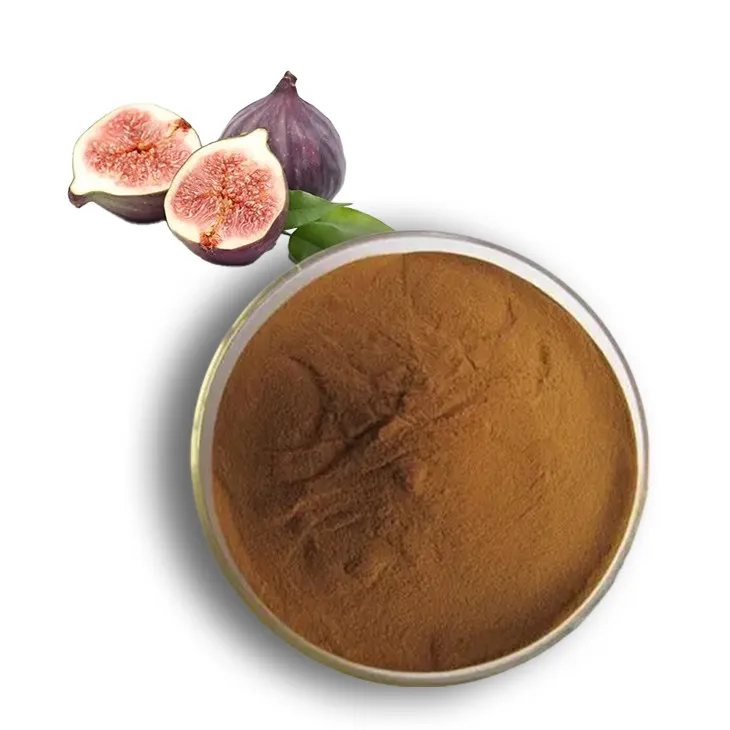
Fig Extract is a concentrated botanical ingredient produced from the fruit of the mulberry-family tree Ficus carica. In the dietary supplement and food-ingredient industry, the question "How is Fig Extract made?" usually refers to turning dried figs into a stable powder or liquid that brands can use in capsules, powders, and functional foods. The process is a careful combination of extraction, concentration, and drying, and the quality of the final product depends on every step along the way.
If you are evaluating a fig extract supplier, it helps to understand exactly how the material is made. This article walks through the full manufacturing route, from raw fruit selection to the finished powder, and explains what separates a reliable manufacturer from one that cuts corners.
1. Raw material selection and preparation
Every good extract starts with good fruit. Dried figs are inspected for color, moisture, and consistency, and foreign matter is removed before processing. The figs are then coarsely ground and cleaned so that only the fleshy fruit reaches the extraction tank. Choosing consistent, well-dried raw material matters because it directly affects the active compound content and the batch-to-batch stability of the extract.
2. Extraction
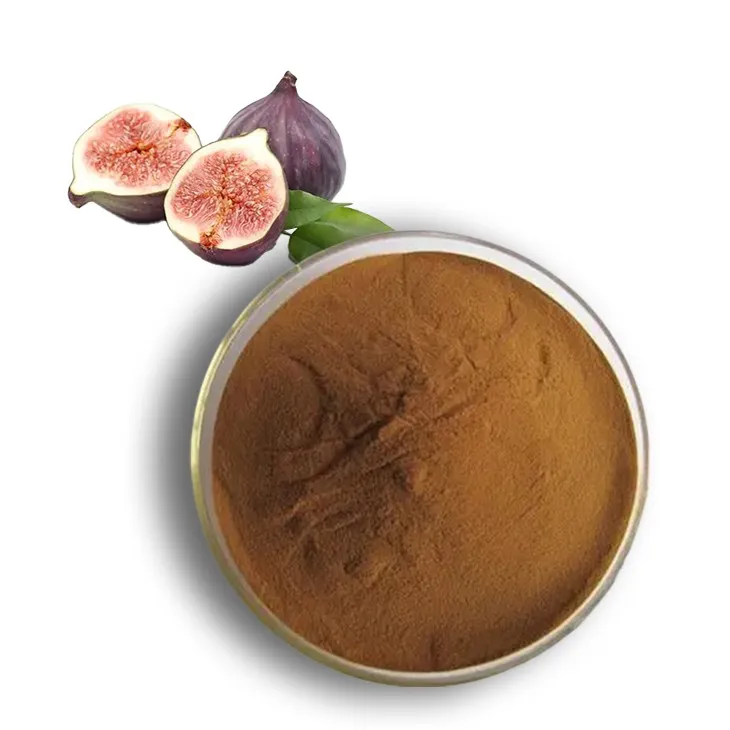
The cleaned fig material is loaded into a large extraction tank with a suitable solvent, most commonly purified water. Ethanol or other food-grade solvents may be used when a customer requests a specific specification. The mixture is heated and extracted in repeated cycles, typically two or three rounds, with each cycle lasting one to two hours. After each round, the liquid is drawn off into a storage tank. Repeating the extraction step is important because it pulls out more of the soluble sugars, organic acids, and phenolic compounds each time, giving a fuller and more efficient yield.
At this stage the result is a liquid known as the Fig Extract solution, which still contains a large amount of water and needs to be concentrated.
3. Concentration
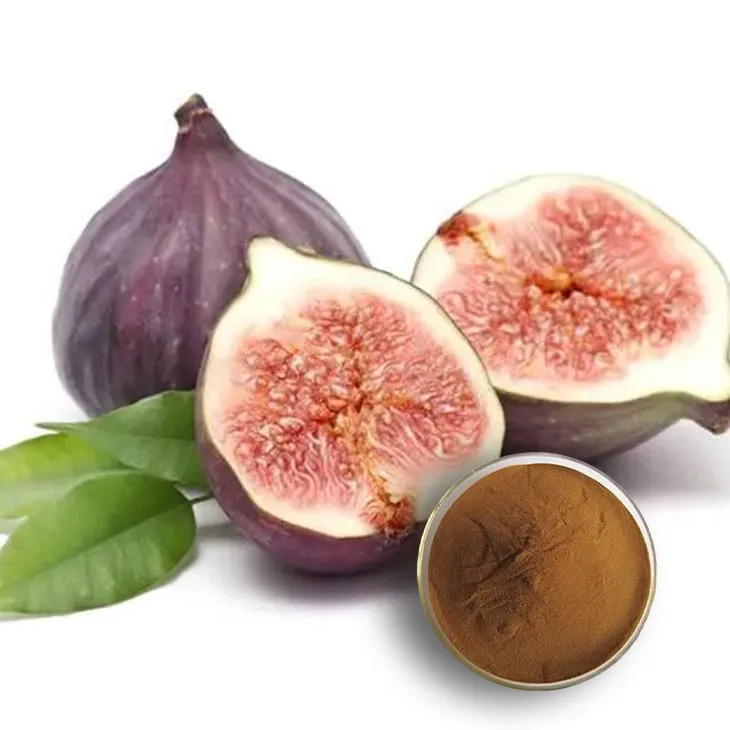
The extract solution is transferred to a concentration vessel, where much of the water is removed under reduced pressure. Vacuum concentration keeps the temperature low, which protects heat-sensitive compounds and prevents the extract from turning dark or losing its aroma. The result is a concentrated syrupy material, sometimes called the extract paste or thick liquid, with a much higher solid content than the starting solution.
Low-temperature concentration is a strong point of vertically integrated manufacturers. For example, Greensky's production facilities use high-efficiency low-temperature concentrators, which help preserve the natural profile of the fruit while still producing a dense, consistent concentrate.
4. Drying into powder
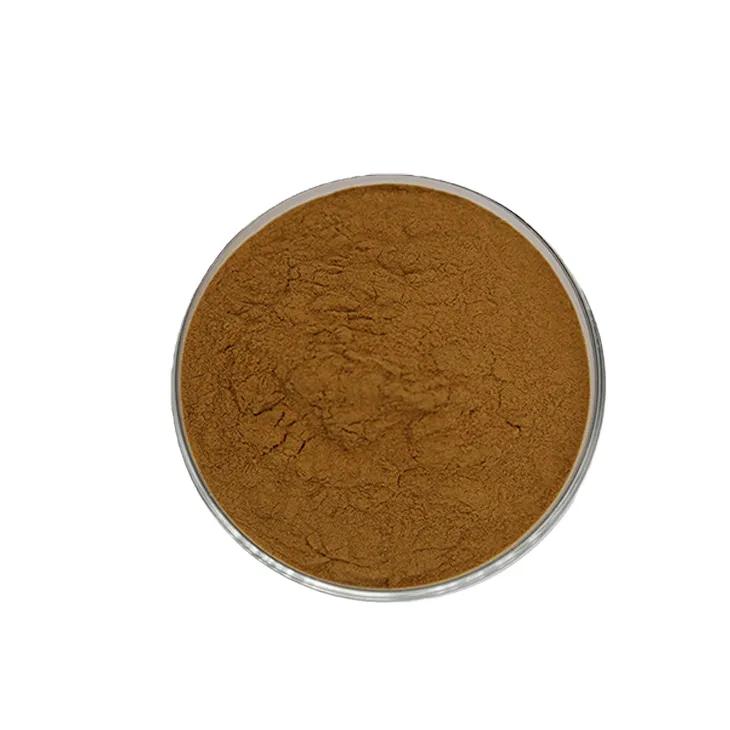
To turn the concentrate into a shelf-stable powder, the material is fed into a spray drying tower. Hot air quickly removes the remaining moisture, leaving a fine, free-flowing powder. Spray drying is the method most commonly used for fig extract because it is fast, gentle enough to preserve sensitive compounds, and produces a powder that dissolves easily and mixes well into finished products.
After drying, the powder is milled and passed through a sieve to reach a uniform particle size, usually in the range of 80 to 120 mesh or finer. Uniform particle size ensures consistent behavior in blending and encapsulation downstream.
5. Screening, sterilization, and packaging
Before the powder is packed, it is screened again to remove any clumps or impurities and then sterilized to meet food- and supplement-grade hygiene standards. The finished fig extract powder is packed in sealed food-grade bags or drums, labeled with the batch number, and stored in a cool, dry, light-protected area. A retained sample is kept from every batch for reference and traceability.
6. Quality control and testing
Reputable manufacturers do not ship a batch until it has passed laboratory testing. Common checks include appearance, color, odor, particle size, moisture, and assay of marker compounds. Analytical methods such as TLC, UV, and HPLC are widely used to confirm the specification and to verify that the product matches its label claim. A manufacturer with an in-house laboratory, like Greensky, which is equipped with GC, HPLC, and UV instruments, can run these checks internally and keep tight control over consistency.
Fig extract is offered in a range of ratios, such as 10:1, 20:1, or 30:1, which indicate how many parts of raw fruit are represented by one part of extract. Supplying the right ratio for a customer's application is a routine part of working with an experienced ingredient manufacturer.
7. Why the manufacturing process matters for buyers
Understanding how fig extract is made helps buyers ask the right questions when choosing a plant extract manufacturer. A supplier that controls raw material sourcing, runs repeatable extraction cycles, uses low-temperature concentration, verifies quality in its own laboratory, and operates under recognized food-safety certifications is far more likely to deliver a consistent, compliant ingredient.
Greensky, a Chinese manufacturer established in 2004, produces fig extract and a broad catalog of botanical extracts. Its vertically integrated group, food-grade clean production area, and certifications including ISO22000, BRCGS, and HALAL provide a strong foundation for reliable bulk supply.
Conclusion
Fig extract is made through a sequence of well-established steps: selecting and cleaning dried figs, extracting them with water in repeated cycles, concentrating the liquid under low temperature, spray drying it into a uniform powder, and finally screening, sterilizing, and packaging the material. Each stage influences the quality, stability, and performance of the final ingredient. When you know the process, you can evaluate suppliers more confidently and choose a plant extract supplier whose facilities and quality systems match your needs.
TAGS:
- ▶ Hesperidin
- ▶ Citrus Bioflavonoids
- ▶ Plant Extract
- ▶ lycopene
- ▶ Diosmin
- ▶ Grape seed extract
- ▶ Sea buckthorn Juice Powder
- ▶ Fruit Juice Powder
- ▶ Hops Extract
- ▶ Artichoke Extract
- ▶ Mushroom extract
- ▶ Astaxanthin
- ▶ Green Tea Extract
- ▶ Curcumin
- ▶ Horse Chestnut Extract
- ▶ Other Product
- ▶ Boswellia Serrata Extract
- ▶ Resveratrol
- ▶ Marigold Extract
- ▶ Grape Leaf Extract
- ▶ New Product
- ▶ Aminolevulinic acid
- ▶ Cranberry Extract
- ▶ Red Yeast Rice
- ▶ Red Wine Extract
- ▶ blog
-
Troxerutin
2026-08-13
-
Citrus Aurantium Extract
2026-08-13
-
Mulberry leaf Extract
2026-08-13
-
Nettle Root Extract
2026-08-13
-
Echinacea Extract
2026-08-13
-
White Willow Bark Extract
2026-08-13
-
Chaga Mushroom Extract
2026-08-13
-
Ginger Extract
2026-08-13
-
Milk Thistle Extract
2026-08-13
-
Propolis Extract Powder
2026-08-13
