- 0086-571-85302990
- [email protected]





How are wholesale lemon juice powder prices determined?
2026-08-18
How Are Wholesale Lemon Juice Powder Prices Determined?
Whether you run a beverage brand, a supplement company, a bakery, or a food distribution business, lemon juice powder is likely on your shortlist of ingredients. It delivers the bright citrus acidity and clean aroma of fresh lemons in a dry, stable format that blends easily and stores well. But when it comes to buying in bulk, the first question buyers ask is usually: how are wholesale Lemon Juice Powder prices determined?
The honest answer is that there is no single fixed price. The number on a quote depends on a handful of factors, most of which you can control. Understanding them helps you compare quotes fairly, budget accurately, and avoid paying for quality you do not need or missing the quality you do.
What Is Lemon Juice Powder?
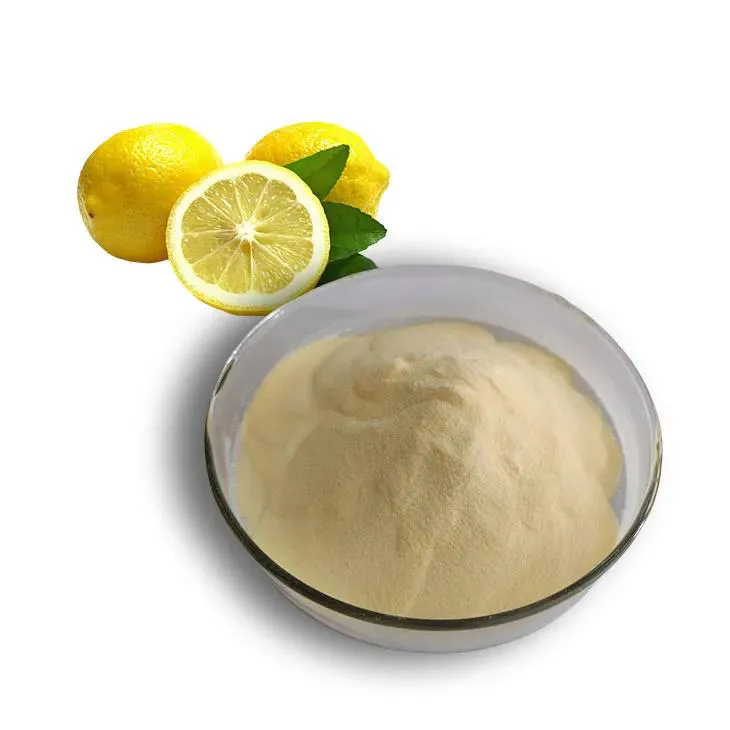
Lemon juice powder is a spray-dried ingredient made from real lemon juice or lemon juice concentrate. The liquid is concentrated and then dried, often with a food-grade carrier such as maltodextrin, to produce a pale yellow-to-cream free-flowing powder with a characteristic lemon aroma and a sour citrus profile. Two specifications define any batch: juice-solids content and acidity. Together they determine how strong the flavor is and how much powder you need in a finished formula.
Key Factors That Drive Wholesale Pricing
1. Raw Material and Lemon Sourcing
Lemons are a seasonal crop, so raw juice prices move with harvest conditions. Organic fruit, premium varieties, and growers who control cultivation from planting to harvest cost more upstream, and that difference carries straight into the wholesale price. A manufacturer with a stable, well-managed fruit supply has a clear advantage here.
2. Juice Solids and Carrier Ratio
A powder with more real lemon solids hits harder in flavor and costs more to produce because you are packing more concentrated juice into every kilo. A grade with a higher carrier ratio is cheaper per kilo but usually requires a higher use level in your formula. The cheaper-looking powder is not always the lower-cost option once dosage is factored in.
3. Drying and Processing Method
Spray drying is energy-intensive, and the drying conditions directly affect aroma retention, flowability, and moisture. Facilities running modern, efficient equipment can usually hold costs down without cutting corners. That is one reason the production line behind a quote matters as much as the number itself.
4. Specification and Testing Requirements
Particle size, titratable acidity, moisture limits, and checkpoints for heavy metals and microbiology all affect cost. Formulas that demand a tight spec or destination-market compliance typically carry a modest premium over a basic food-grade powder, because each batch has to be tested and documented to prove it.
5. Certifications
Organic, HALAL, Kosher, and food-safety certifications such as ISO22000 and BRCGS add value and cost. Certified organic powder, for example, is priced higher than a conventional product because it caters to buyers willing to pay more for verified quality. If your market requires specific certifications, expect them to be reflected in the quote.
6. Order Quantity and Minimum Order Size
This is the factor bulk buyers control. Wholesale pricing is built around volume: the more you order in a single run, the lower the per-kilo cost tends to fall, because setup, packaging, and shipping are spread across a larger batch. Knowing your realistic annual usage and ordering in consolidated quantities is the most direct way to bring your unit price down.
7. Packaging, Freight, and Export Documents
Bulk lemon juice powder is typically packed in 10-25 kg units with a food-grade inner liner to keep moisture out, then palletized for ocean freight. Packing specifications, destination port, and documents such as the certificate of origin, commodity inspection, and compliance certificates all contribute to the landed cost.
Why Buying from a Source Factory Usually Beats the Middleman
For lemon juice powder wholesale purchases, the most cost-effective route for serious volume is almost always a manufacturer that is the source factory, rather than a trader or distributor that marks up someone else's production. A source factory controls its own raw material, production line, and quality testing, so there is no intermediary margin added to the price.
Greensky is one such manufacturer. Founded in 2004 and headquartered in Hangzhou, China, the company has more than 20 years of experience in producing natural plant extracts and fruit juice powders. With five wholly-owned subsidiaries and full vertical integration spanning research, development, production, and sales, Greensky produces lemon juice powder in a 100,000-class clean production area that meets food-grade requirements, and every batch is checked in its independent laboratory equipped with GC, HPLC, and UV instruments. The company holds ISO22000, BRCGS, Ecocert Organic Standard, SGS-GMP, ISO9001, HALAL, and Kosher certifications, and in 2023 its export value reached nearly $30 million, with main markets in Europe, the United States, South Korea, and Russia.
Buying directly from a certified source factory gives you a competitive bulk price, batch-level traceability, and export documentation in one place.
Where Lemon Juice Powder Is Used
Lemon juice powder pulls weight across several categories, which is why demand stays steady. It appears in powdered beverages and drink mixes for a clean sour lift; in electrolyte and immunity stick packs to mask mineral notes; and in gummies, chewable tablets, and confectionery for citrus character and acid balance. Bakery mixes and seasoning blends use it for tartness without adding liquid. If you are buying for any of these formats, the target acidity and carrier ratio of your powder should be matched to the application rather than chosen at random.
How to Get an Accurate Wholesale Quote
Because there is no published price list, a useful quote depends on how specific your request is. When you contact a lemon juice powder supplier for the best lemon juice powder for your formula, provide the following and you will get a realistic number back quickly:
- Your intended application
- The target acidity or flavor strength
- Whether you need certified organic material
- Your expected order quantity per run
- The destination market and port
- The documentation or certifications you require
Ask for a bulk price quote, a certificate of analysis, and a small evaluation sample so you can confirm the powder performs in your formula before committing to a large batch.
Frequently Asked Questions
Q1: Is there a fixed wholesale price for lemon juice powder?
No. The price depends on raw material sourcing, juice solids, processing, specifications, certifications, order volume, and logistics. Comparing quotes on the same specification is the only fair way to evaluate price.
Q2: Why do prices for the same-looking powder differ between suppliers?
Because the underlying specifications differ. Juice-solids content, carrier ratio, acidity, particle size, and certifications all affect production cost. A lower price per kilo can be misleading if the powder requires a higher use level in your formula.
Q3: Does ordering more always lower the unit price?
Generally yes. Setup, packaging, and shipping costs are spread across a larger batch, so consolidated orders tend to bring the per-kilo price down. Knowing your realistic annual usage helps you plan the right order size.
Q4: Are organic lemon juice powders more expensive?
Usually. Certified organic raw material costs more upstream, and the certification process adds cost. Buyers who need organic material should expect a premium over conventional food-grade powder.
Q5: What information should I give a supplier to get an accurate quote?
Your application, target acidity or flavor strength, whether you need organic material, expected order quantity, destination market and port, and the certifications or documents you require. A certificate of analysis and an evaluation sample help you verify quality before committing.
The Bottom Line
There is no single fixed wholesale price for lemon juice powder, and that is actually good news for a bulk buyer. Price is driven by raw material sourcing, juice solids, carrier ratio, processing, specification, certifications, order volume, and logistics, so you have real levers to pull. Understand your formula's dosage, consolidate your order quantity, and source directly from a certified manufacturer, and you can secure a competitive bulk rate without compromising on quality. Start by sending a clear specification to the factory and comparing quotes on that basis rather than on the package weight alone.
- ▶ Hesperidin
- ▶ Citrus Bioflavonoids
- ▶ Plant Extract
- ▶ lycopene
- ▶ Diosmin
- ▶ Grape seed extract
- ▶ Sea buckthorn Juice Powder
- ▶ Fruit Juice Powder
- ▶ Hops Extract
- ▶ Artichoke Extract
- ▶ Mushroom extract
- ▶ Astaxanthin
- ▶ Green Tea Extract
- ▶ Curcumin
- ▶ Horse Chestnut Extract
- ▶ Other Product
- ▶ Boswellia Serrata Extract
- ▶ Resveratrol
- ▶ Marigold Extract
- ▶ Grape Leaf Extract
- ▶ New Product
- ▶ Aminolevulinic acid
- ▶ Cranberry Extract
- ▶ Red Yeast Rice
- ▶ Red Wine Extract
- ▶ blog
-
Phyllanthus Emblica Extract
2026-08-18
-
Saffron Extract Powder
2026-08-18
-
Phellodendron Extract
2026-08-18
-
Clove Powder
2026-08-18
-
Dandelion Leaf Extract
2026-08-18
-
Medicinal Marshmallow Extract
2026-08-18
-
Chaste Berry Extract
2026-08-18
-
Citrus Aurantium Extract
2026-08-18
-
Lycopene
2026-08-18
-
Camu Camu Extract
2026-08-18