- 0086-571-85302990
- [email protected]




L-Theanine
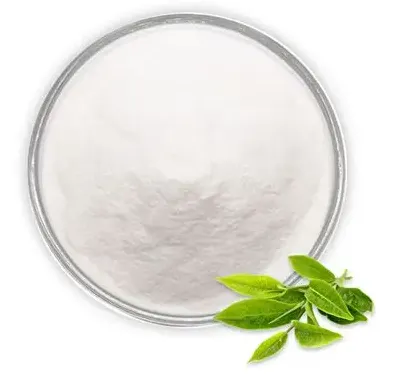
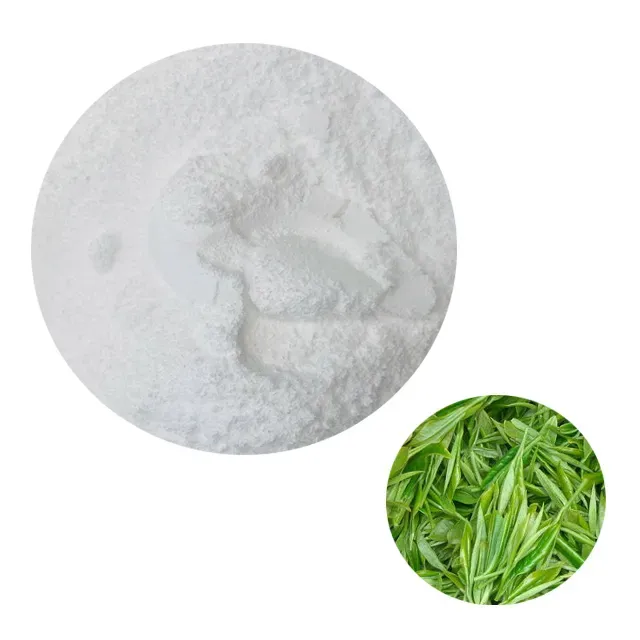
Table of Contents
What Is L-Theanine and Why Is It the Most Popular Calm-Focus Supplement?
Natural Sources: Tea Leaves, Mushrooms and Synthetic Production
Mechanism of Action: Alpha Brain Waves, GABA and Neurotransmitter Modulation
Clinical Evidence for Stress, Anxiety and Cognitive Performance
The Caffeine + L-Theanine Stack: Why This Combination Is So Effective
Sleep Quality and Relaxation Without Sedation
Quality Standards, Purity Testing and GRAS Status
B2B Sourcing Guide: How to Choose an L-Theanine Supplier
GreenSky: Reliable L-Theanine Supply
What Is L-Theanine and Why Is It the Most Popular Calm-Focus Supplement?
L-Theanine (γ-glutamylethylamide) is a unique non-proteinogenic amino acid found almost exclusively in tea leaves (Camellia sinensis) and a few mushroom species. Discovered in 1949 by Japanese scientists, L-Theanine has become one of the most popular dietary supplement ingredients worldwide, with the global market exceeding USD 100 million in 2024 and growing at a CAGR of 6.8%.
What makes L-Theanine remarkable is its ability to promote relaxation and reduce anxiety without causing drowsiness — a rare combination in the supplement world. This "calm alertness" profile has made it popular among professionals, students, athletes, and anyone seeking stress relief without impaired cognitive function.
L-Theanine has received GRAS (Generally Recognized As Safe) status from the U.S. FDA and is approved for use in food and beverage products in the United States, Japan, the European Union, and many other markets.
Natural Sources: Tea Leaves, Mushrooms and Synthetic Production
L-Theanine occurs naturally in several sources:
| Source | L-Theanine Content | Commercial Viability |
|---|---|---|
| Green tea leaves | 1–3% of dry weight | High — most common natural source |
| Matcha (powdered green tea) | 2–4% of dry weight | High — premium source |
| Black tea | 0.5–1.5% of dry weight | Medium — lower content |
| White tea | 1–2% of dry weight | Medium — seasonal availability |
| Boletus badius (bay bolete mushroom) | 0.5–2% of dry weight | Low — limited supply |
| Enzymatic synthesis | >99% purity | High — most cost-effective for supplements |
For commercial supplement production, most L-Theanine is produced via enzymatic synthesis from glutamine and ethylamine, which yields a product identical to natural L-Theanine at significantly lower cost. Both natural and synthetic L-Theanine are chemically identical (L-glutamic acid γ-ethylamide, C₇H₁₄N₂O₃) and have the same biological activity.
Some premium brands prefer tea-extracted L-Theanine for marketing purposes ("natural source"). GreenSky offers both options to suit different brand positioning and price points.
Mechanism of Action: Alpha Brain Waves, GABA and Neurotransmitter Modulation
L-Theanine's effects on the brain are mediated through multiple complementary mechanisms:
Alpha Brain Wave Enhancement
EEG studies consistently show that L-Theanine (50–200 mg) increases alpha brain wave activity within 30–40 minutes of ingestion. Alpha waves (8–13 Hz) are associated with a state of relaxed alertness — the mental state achieved during meditation, creative thinking, and flow states. This is the neurophysiological basis of L-Theanine's "calm focus" effect.
GABA Modulation
L-Theanine increases levels of gamma-aminobutyric acid (GABA), the brain's primary inhibitory neurotransmitter. By enhancing GABAergic signaling, L-Theanine reduces neuronal excitability and produces calming effects similar to (but much milder than) benzodiazepines — without the sedation, dependence, or cognitive impairment.
Glutamate Receptor Modulation
L-Theanine is structurally similar to glutamate and can bind to glutamate receptors (AMPA, NMDA, and kainate receptors) as a weak antagonist. This modulates excitatory neurotransmission and may provide neuroprotective effects against glutamate-induced excitotoxicity.
Dopamine and Serotonin Effects
Animal studies show that L-Theanine increases dopamine and serotonin levels in specific brain regions, contributing to mood enhancement and stress resilience. Human studies confirm improvements in subjective mood and stress ratings following L-Theanine supplementation.
Clinical Evidence for Stress, Anxiety and Cognitive Performance
Stress and Anxiety Reduction
A 2019 RCT found that 200 mg/day of L-Theanine for 4 weeks significantly reduced perceived stress and cortisol levels in healthy adults under high-stress conditions. A 2021 meta-analysis of 8 RCTs (n=513) confirmed that L-Theanine (200–400 mg) produces moderate but consistent reductions in stress and anxiety scores compared to placebo.
Cognitive Performance Under Stress
L-Theanine improves cognitive performance specifically in stressful or demanding situations. A 2022 RCT found that 200 mg of L-Theanine improved task-switching accuracy by 12% and reduced self-rated mental fatigue by 15% during a 2-hour battery of cognitively demanding tasks.
Attention and Focus
Multiple studies demonstrate that L-Theanine improves sustained attention and reduces mind-wandering. A 2020 study using the Attention Network Test found that 100 mg of L-Theanine improved executive control and alertness scores in young adults.
The Caffeine + L-Theanine Stack: Why This Combination Is So Effective
The combination of caffeine and L-Theanine is one of the most well-researched nootropic stacks, with a synergistic profile that outperforms either compound alone:
| Effect | Caffeine Alone | L-Theanine Alone | Caffeine + L-Theanine |
|---|---|---|---|
| Alertness | ↑↑↑ | ↑ | ↑↑↑ |
| Focus/Attention | ↑↑ | ↑↑ | ↑↑↑ |
| Jitteriness | ↑↑↑ | ↓ | ↓ |
| Anxiety | ↑↑ | ↓↓ | → |
| Task Switching | ↑ | ↑ | ↑↑↑ |
The optimal ratio is approximately 2:1 (L-Theanine:caffeine), with common doses of 100–200 mg L-Theanine combined with 50–100 mg caffeine. This ratio effectively neutralizes caffeine's negative effects (jitteriness, anxiety, crash) while preserving and enhancing its cognitive benefits.
Pre-formulated caffeine + L-Theanine supplements are among the fastest-growing segments in the nootropic market, making this combination a high-value product opportunity for supplement manufacturers.
Sleep Quality and Relaxation Without Sedation
Unlike sedative supplements (melatonin, valerian, GABA), L-Theanine improves sleep quality through a different mechanism — reducing pre-sleep anxiety and mental arousal rather than inducing drowsiness:
A 2019 RCT found that 200 mg/day of L-Theanine for 8 weeks improved sleep quality scores by 18% in adults with mild sleep complaints
L-Theanine does not cause next-day grogginess or impair morning alertness
Combining L-Theanine with GABA or magnesium may produce additive sleep benefits
Recommended timing: 100–200 mg taken 30–60 minutes before bedtime
Quality Standards, Purity Testing and GRAS Status
When sourcing L-Theanine, verify these quality parameters:
Purity — ≥99% (HPLC); the industry standard for supplement-grade L-Theanine
Identity — confirm L-isomer (not D-Theanine or DL-Theanine) by specific rotation and chiral HPLC
Heavy metals — Pb < 1 ppm, As < 0.5 ppm, Cd < 0.5 ppm, Hg < 0.1 ppm
Residual solvents — comply with ICH Q3C limits
Microbiological limits — total plate count < 1,000 CFU/g, yeast/mold < 100 CFU/g
GRAS status — verify GRAS notification or self-affirmed GRAS documentation for US market
Novel Food status — L-Theanine is approved as a Novel Food ingredient in the EU
B2B Sourcing Guide: How to Choose an L-Theanine Supplier
Key considerations for L-Theanine procurement:
Synthesis vs. extraction — Enzymatic synthesis provides the best cost-to-quality ratio for most applications; tea extraction is preferred for "natural" marketing claims
Solubility — L-Theanine is highly water-soluble (approximately 98 g/L at 25°C), making it ideal for beverage applications
Particle size — Standard mesh size (80–100) for capsules; fine powder for beverage blending
Taste profile — L-Theanine has a mild umami/savory taste; consider flavor masking for beverages
Regulatory documentation — Ensure supplier provides GRAS, Novel Food, and other market-specific regulatory support
Stability — L-Theanine is highly stable under normal storage conditions; 36-month shelf life is standard
GreenSky: Reliable L-Theanine Supply
Hangzhou Greensky Biological Tech. Co., Ltd. supplies premium L-Theanine (≥99% purity) produced under ISO 22000, BRCGS, Ecocert Organic, and SGS-GMP certified conditions.
Our L-Theanine offerings include:
Synthesis-grade L-Theanine powder (≥99%, cost-effective for capsules/tablets)
Tea-extracted L-Theanine (natural source, premium positioning)
Pre-blended caffeine + L-Theanine formulations (2:1 ratio)
Water-soluble L-Theanine for beverage applications
Custom standardization and encapsulation services
With 20+ years of plant extract manufacturing experience, comprehensive quality documentation, and reliable export channels to Europe, the United States, South Korea, and Russia, GreenSky is your trusted partner for L-Theanine and other premium plant-derived ingredients. Contact us today for samples, COAs, and competitive quotations.