- 0086-571-85302990
- [email protected]



Curcumin
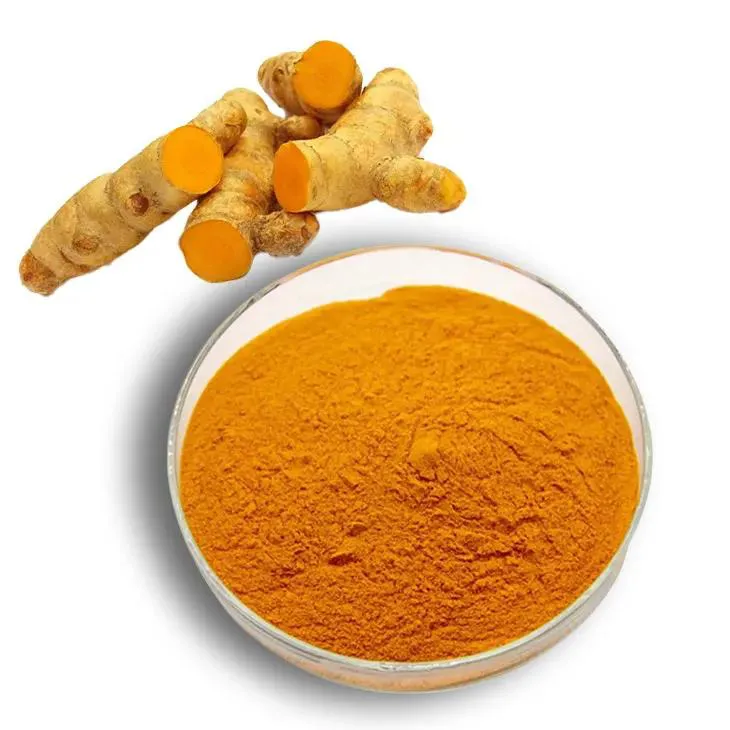
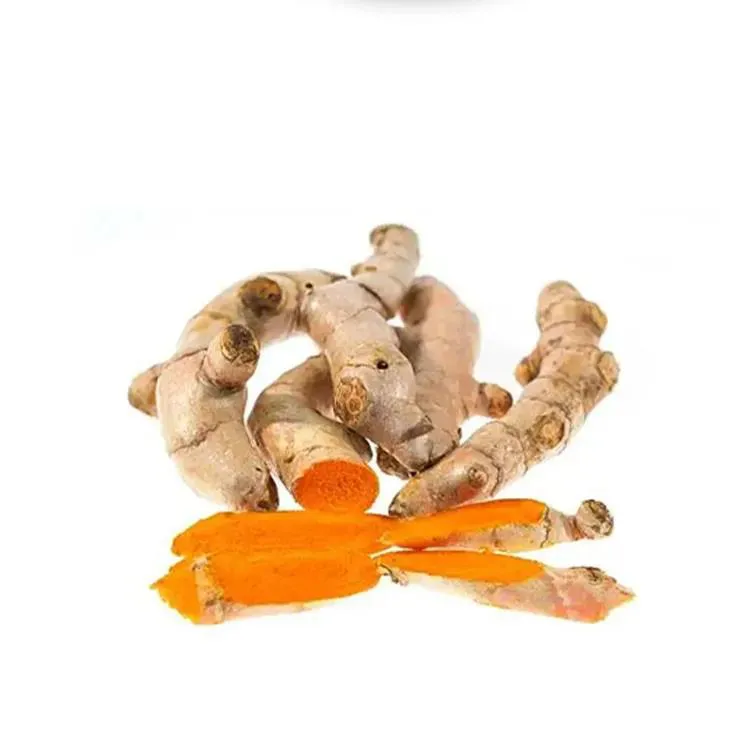
What Is Turmeric Extract?
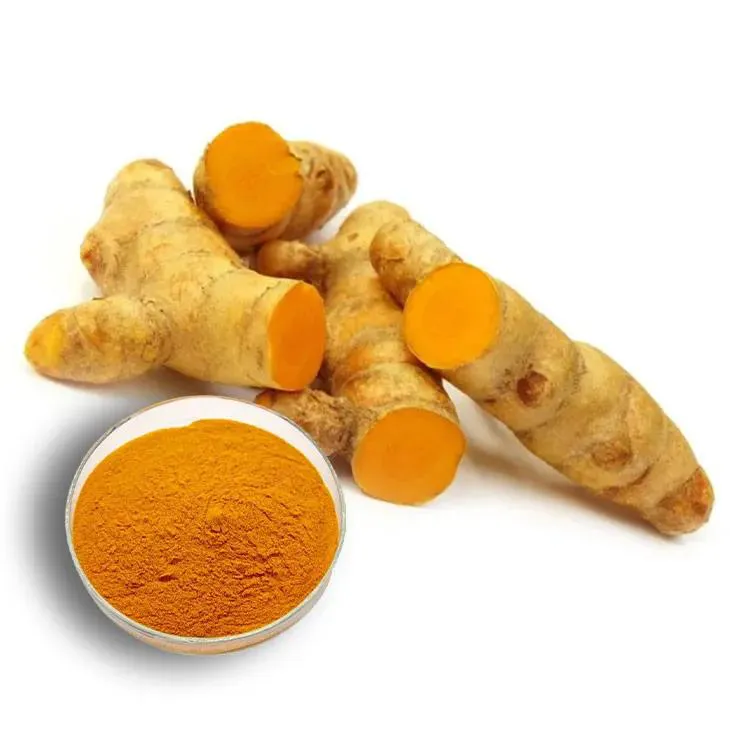
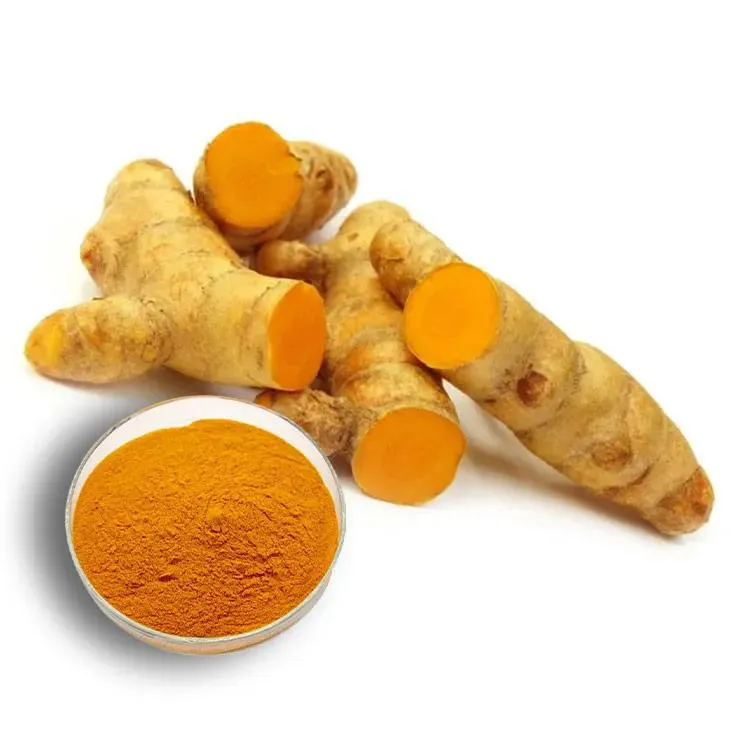
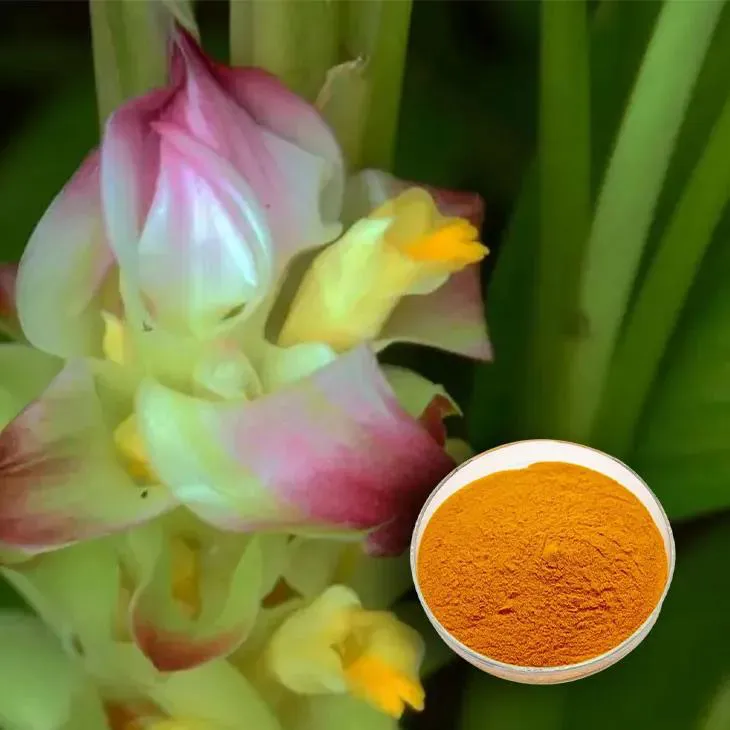
Turmeric extract is a concentrated preparation derived from the rhizomes of Curcuma longa, a perennial herb in the Zingiberaceae (ginger) family. Native to South and Southeast Asia, turmeric has been used for over 4,000 years in traditional medicine, culinary practices, and textile dyeing.
Modern turmeric extract is valued primarily for its Curcuminoid content — a group of three naturally occurring polyphenolic compounds:
Curcuminoid Approximate Proportion in Total Curcuminoids Key Characteristics Curcumin (diferuloylmethane) ~77% Primary active; most studied; responsible for golden-yellow color Demethoxycurcumin ~17% Moderate bioavailability; complementary anti-inflammatory activity Bisdemethoxycurcumin ~6% Most lipophilic; contributes to overall antioxidant capacity
Beyond curcuminoids, turmeric extract also contains turmerones (ar-turmerone, α-turmerone, β-turmerone) — volatile sesquiterpenes that contribute to the characteristic aroma and have demonstrated independent biological activity in preclinical research.
Turmeric Extract vs. Turmeric Powder
Parameter Turmeric Powder Turmeric Extract (Standardized) Turmeric Oleoresin Curcuminoid content 2-5% 95% (standardized) 10-30% (with essential oils) Form Ground rhizome Fine yellow-orange powder Viscous dark orange liquid Extraction method Mechanical grinding only Solvent extraction + purification Supercritical CO₂ or solvent extraction Primary use Culinary, traditional supplements Dietary supplements, cosmetics, pharmaceuticals Food coloring, flavoring, softgel fills Bioavailability Low (requires black pepper/fat) Enhanced via formulation technologies Moderate (oil-soluble matrix aids absorption) Shelf life 12-18 months 24-36 months (properly stored) 12-24 months
Extraction Methods for Turmeric Extract
Solvent Extraction (Industry Standard)
The most widely used commercial method for Curcumin Extraction:
Raw material preparation — Dried turmeric rhizomes are milled to 40-80 mesh particle size
Solvent selection — Ethanol, acetone, or ethyl acetate are most common; ethanol is preferred for food-grade applications
Extraction — Solid-to-liquid ratio of 1:8 to 1:12, temperature 50-70°C, extraction time 2-4 hours per cycle
Filtration and concentration — Extract is filtered, and solvent is recovered via vacuum evaporation
Crystallization and drying — Curcuminoids crystallize upon cooling; spray drying or vacuum drying produces the final powder
Yield: Typically 3-5% curcuminoid yield from raw dried rhizomes using conventional solvent extraction.
Supercritical CO₂ Extraction (Premium Grade)
Supercritical CO₂ extraction produces turmeric oleoresin with a broader spectrum of compounds:
Advantages: Solvent-free residue, preserves volatile turmerones, food-grade process
Operating conditions: 30-40 MPa pressure, 40-60°C temperature
Yield: 5-10% oleoresin yield (containing 10-30% curcuminoids plus essential oils)
Best for: Premium supplement brands, clean-label food applications, cosmetic formulations
Enzyme-Assisted Extraction (Emerging)
Cell wall-degrading enzymes (cellulase, pectinase) pre-treat the raw material before solvent extraction:
Benefits: 15-25% improvement in curcuminoid yield, reduced solvent consumption, lower extraction temperature (40-50°C)
Enzyme types: Cellulase (breaks cellulose), pectinase (degrades pectin matrix), hemicellulase (hemicellulose degradation)
Process integration: 1-2 hour enzyme incubation at pH 4.5-5.5, followed by standard solvent extraction
Standardization Grades and Specifications
Common Curcumin Standardization Levels
Grade Curcuminoid Content Typical Use Appearance Curcumin 95% ≥95% total curcuminoids (HPLC) Dietary supplements, research, pharmaceutical intermediates Bright yellow-orange crystalline powder Curcumin 50% 45-55% curcuminoids Mid-range supplements, food coloring Orange-yellow powder Turmeric Extract 10:1 ~5-10% curcuminoids (10:1 concentration ratio) General wellness supplements, herbal blends Yellow-brown powder Turmeric Oleoresin 10-30% curcuminoids + essential oils Food flavoring, softgel fills, topical formulations Dark orange viscous liquid
Quality Specification Sheet (Curcumin 95%)
Parameter Specification Test Method Curcuminoid content (total) ≥95% HPLC (USP/EP) Individual curcuminoids Curcumin ≥70%, Demethoxycurcumin ≥15%, Bisdemethoxycurcumin ≥10% HPLC Loss on drying ≤2.0% USP <731> Ash content ≤1.0% USP <281> Heavy metals Pb ≤1.0 ppm, As ≤1.0 ppm, Cd ≤0.5 ppm, Hg ≤0.1 ppm ICP-MS Pesticide residues Compliant with EU/USP limits GC-MS/LC-MS Microbial limits TPC <1,000 CFU/g, Yeast/Mold <100 CFU/g, E. coli/Salmonella: Negative USP <61>, <62> Solvent residues Ethanol <5,000 ppm; Acetone <5,000 ppm; Ethyl acetate <5,000 ppm GC (USP <467>) Particle size 95% through 80 mesh (or custom) Sieve analysis Bulk density 0.3-0.5 g/mL USP <616>
Tetrahydrocurcumin (THC) — Hydrogenated Derivative
Tetrahydrocurcumin is produced by catalytic hydrogenation of curcumin, converting the conjugated double bonds to single bonds:
Property Curcumin Tetrahydrocurcumin Color Bright yellow-orange White to pale yellow Stability Moderate (light/heat sensitive) Superior (stable under normal conditions) Bioavailability Low (enhanced via formulation) Higher intrinsic bioavailability Solubility Lipophilic Moderately lipophilic Applications General supplements, cosmetics Premium supplements, colorless formulations Price premium Baseline 2-3x curcumin 95%
THC is particularly valuable for applications where the yellow color of curcumin is undesirable, such as clear beverages or light-colored cosmetic formulations.
Bioavailability Enhancement Technologies
Curcumin's poor oral bioavailability is well-documented — it has low aqueous solubility, rapid metabolism, and fast systemic elimination. Several technologies have been developed to address this challenge:
Comparison of Bioavailability Enhancement Approaches
Technology Mechanism Bioavailability Improvement Key Considerations Piperine (BioPerine®) Inhibits glucuronidation in liver/intestine Up to 2,000% (AUC increase) Well-studied; may affect drug metabolism Phytosome (curcumin-phospholipid complex) Forms lipophilic complex for enhanced membrane permeability 20-30x vs. unformulated Premium ingredient; patented technology Micellar/Nanoemulsion curcumin Surfactant-based solubilization creates sub-micron particles 10-20x vs. unformulated Water-dispersible; suitable for beverages Liposomal curcumin Phospholipid vesicle encapsulation 5-10x vs. unformulated Higher cost; excellent stability profile Cyclodextrin complexation Hydrophobic cavity inclusion complex 8-12x vs. unformulated GRAS-listed carriers; clean-label compatible Turmeric essential oil co-extraction Native turmerones enhance curcumin absorption 7-10x vs. curcumin alone Uses full-spectrum turmeric components
Formulation Recommendations by Application
Application Recommended Format Rationale Hard-shell capsules Curcumin 95% + piperine, or phytosome complex Cost-effective; proven efficacy Softgels Curcumin oleoresin or liposomal curcumin in oil base Oil-soluble format leverages curcumin's lipophilic nature Gummies Micellar curcumin or water-soluble curcumin powder Water-dispersible; no color bleed Beverages Nanoemulsion curcumin Clear or uniformly colored; no sedimentation Topical creams Curcumin 95% in oil phase, or THC for colorless formulations Lipophilic; penetrates stratum corneum effectively Tablets Curcumin 95% with disintegrant and bioavailability enhancer Compatible with standard tablet compression
Key Applications and Market Segments
Dietary Supplements
Turmeric/curcumin supplements represent the largest market segment, driven by consumer interest in joint health, inflammation support, and general wellness:
Capsule format — Most common; typically 500-1,000 mg per serving (containing 475-950 mg curcuminoids at 95% standardization)
Softgel format — Growing segment; uses oleoresin or formulated curcumin in oil carrier
Powder blends — Curcumin combined with boswellia, ginger, black pepper for joint health formulas
Gummy format — Emerging; requires water-soluble curcumin to avoid grittiness and ensure uniform color
Cosmetic and Personal Care
Curcumin is increasingly used in cosmetic formulations for its antioxidant and skin-soothing properties:
Cosmetic Application Function Typical Usage Level Anti-aging serums Antioxidant protection, collagen support 0.1-0.5% Soothing creams Skin-calming, redness reduction 0.05-0.2% Face masks Antioxidant, brightening 0.1-1.0% Body lotions Antioxidant, skin conditioning 0.05-0.3% Hair care Scalp health, antioxidant 0.01-0.1%
Note: Curcumin's yellow color limits its use in leave-on facial products to low concentrations. Tetrahydrocurcumin (THC) is preferred for colorless formulations.
Food and Beverage
Natural colorant — E100 (curcumin) is approved as a food colorant in the EU and many other markets
Functional beverages — Golden milk lattes, turmeric shots, wellness drinks
Seasoning blends — Curry powders, spice mixes, marinades
Baked goods — Natural yellow coloring for cookies, cakes, pastries
Sourcing Considerations for B2B Buyers
Origin and Quality Factors
India is the world's largest producer of turmeric, accounting for approximately 75-80% of global production. Key growing regions include:
Andhra Pradesh — Known for high curcumin content (Eroima, Alleppey varieties)
Tamil Nadu — Erode turmeric (GI-tagged); moderate curcumin, excellent aroma
Maharashtra — Sangli turmeric; good color, moderate curcumin
Odisha — Kandhamal turmeric (GI-tagged); organic growing region
Alleppey finger turmeric is widely regarded as having the highest curcumin content (5-6.5%), while Madras turmeric has a brighter color and more balanced flavor profile.
What to Verify When Sourcing
Certificate of Analysis (CoA) — Confirm curcuminoid content by HPLC, not just UV spectrophotometry
Extraction solvent declaration — Ensure residual solvents meet pharmacopoeial limits
Heavy metal testing — Turmeric can accumulate lead and cadmium from soil; verify ICP-MS results
Adulteration screening — Synthetic curcumin and metanil yellow dye have been used as adulterants; HPLC fingerprinting can detect non-natural curcumin
Organic certification — If marketing as organic, verify valid USDA/EU organic certificate
Particle size specification — Critical for capsule filling and tablet compression; request sieve analysis
Stability data — Request accelerated stability data (40°C/75% RH for 6 months) for shelf-life claims
Red Flags in Turmeric Sourcing
Warning Sign Risk How to Verify Price significantly below market Adulteration with synthetic curcumin or fillers HPLC fingerprinting; isotope ratio analysis Bright neon-yellow color Possible synthetic dye (metanil yellow, lead chromate) HPLC; UV-Vis spectrum comparison No individual curcuminoid breakdown May not be genuine curcumin 95% Request HPLC chromatogram Missing heavy metal data Potential contamination Request ICP-MS report No solvent residue testing Residual extraction solvents Request GC analysis per USP <467>
Regulatory Status
Region Status Notes USA (FDA) GRAS for food use; dietary supplement ingredient Structure/function claims allowed under DSHEA EU (EFSA) Approved food additive E100; novel food status not applicable (traditional use) Health claims require EFSA authorization China (NHC) Approved as food ingredient and health food raw material Listed in Chinese Pharmacopoeia Japan (MHLW) Approved as food ingredient; FOSHU eligible Curcumin-containing products have FOSHU approvals Australia (TGA) Listed medicine ingredient; complementary medicine AUST L registration required for therapeutic claims
Storage and Handling
Temperature: Store at 15-25°C; avoid temperatures above 40°C
Humidity: Keep relative humidity below 60%; curcumin is hygroscopic
Light protection: Store in opaque packaging; curcumin degrades under UV/visible light
Shelf life: 24-36 months when stored properly (verify via stability testing)
Packaging: Aluminum foil bags with inner PE liner; food-grade HDPE drums for bulk quantities
Why Choose GreenSky Bio for Turmeric Extract?
GreenSky Bio specializes in premium botanical extracts with full traceability from raw material to finished extract. Our turmeric extract offerings include:
Curcumin 95% — HPLC-verified, solvent-residue tested, heavy-metal screened
Turmeric oleoresin — Supercritical CO₂ extracted, full-spectrum profile
Water-soluble curcumin — Micellar and cyclodextrin-complexed options
Tetrahydrocurcumin — For colorless formulation applications
Custom standardization — Tailored curcuminoid ratios per your specification
Every batch is supported by a comprehensive CoA, and we can arrange third-party testing upon request.
for samples, pricing, and technical documentation.
Frequently Asked Questions
What is the difference between turmeric powder and Curcumin Extract?
Turmeric powder is simply dried and ground turmeric root, containing 2-5% curcuminoids. Curcumin Extract is a concentrated preparation standardized to 95% curcuminoids through solvent extraction and purification. Extract provides a much higher dose of active compounds per gram and is preferred for therapeutic supplement formulations.
Is curcumin 95% safe for long-term use?
Curcumin has an excellent safety profile. Clinical studies have used doses up to 8 grams per day for extended periods with minimal adverse effects. The WHO/JECFA has established an acceptable daily intake (ADI) of 0-3 mg/kg body weight for curcumin as a food additive. Always consult with your regulatory team for specific market requirements.
Why is curcumin's bioavailability so low?
Curcumin has poor aqueous solubility (0.6 μg/mL at neutral pH), is rapidly metabolized in the liver and intestinal wall (glucuronidation and sulfation), and is quickly eliminated from systemic circulation. These factors combine to result in low oral bioavailability, which is why formulation technologies (piperine, phytosome, micellar) are so important.
Can curcumin be used in clear beverages?
Standard curcumin 95% is not suitable for clear beverages due to its lipophilic nature and yellow color. However, micellar curcumin and nanoemulsion curcumin formats can create stable, uniformly colored beverages. For colorless functional beverages, tetrahydrocurcumin (THC) is the preferred option.
How do I verify that curcumin is natural (not synthetic)?
Synthetic curcumin can be distinguished from natural curcumin using several methods: (1) HPLC fingerprinting — natural curcumin contains all three curcuminoids in characteristic ratios; (2) isotope ratio mass spectrometry (IRMS) — natural curcumin has a different ¹³C/¹²C ratio than petroleum-derived synthetic curcumin; (3) the presence of minor compounds (turmerones, zingiberene) indicates natural origin.
What is the global market size for turmeric/curcumin extract?
The global curcumin market was valued at approximately USD 65-70 million in 2024 and is projected to grow at a CAGR of 8-10% through 2030, driven by increasing demand in dietary supplements, cosmetics, and functional foods.
What packaging formats do you offer?
We offer curcumin extract in 1 kg aluminum foil bags (retail/small batch), 5 kg and 25 kg cardboard drums with PE inner liners (medium batch), and custom packaging per customer requirements. All packaging is light-protective and moisture-resistant.
Can you provide custom curcuminoid ratios?
| Specification Item | Description |
|---|---|
| Product Name | Curcumin Extract |
| CAS Number | 458-37-7 |
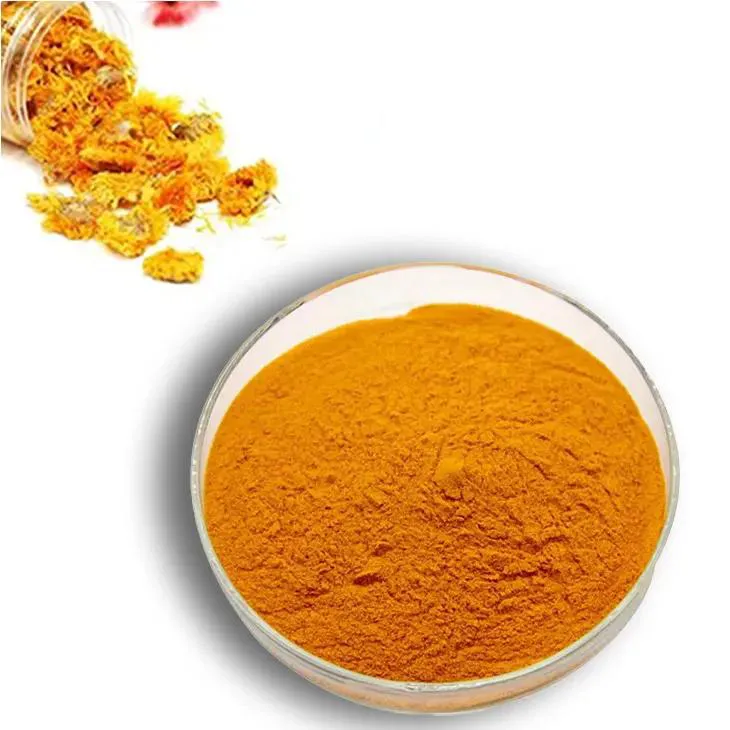
| Appearance | Bright yellow crystalline powder |
| Specification | 95% Curcuminoids |
| Form | Powder |
| Source | Extracted from the root of Curcuma longa |
| Applications | Health supplements, pharmaceuticals, food colorant, cosmetics |
| Storage Conditions | Stored in a cool, dry place, avoiding exposure to sunlight and moisture |
| Pack |