- 0086-571-85302990
- [email protected]





Grape Seed Oil
2025-12-10
Grape Seed Oil
1. Introduction
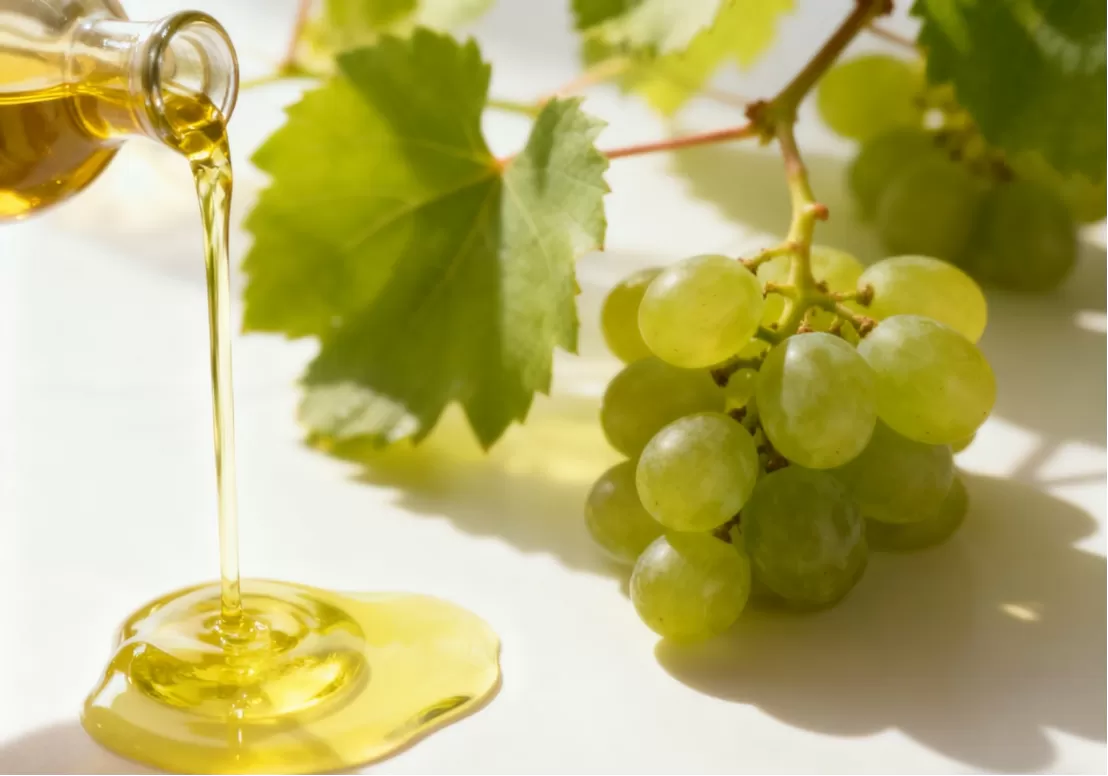
Grape Seed Oil, derived from the seeds of Vitis vinifera L., is a highly valued natural oil rich in essential fatty acids, polyphenols, and antioxidants. Known for its lightweight texture, stability, and skin-friendly profile, it is widely used in nutraceuticals, cosmetics, functional foods, and pharmaceutical formulations. With its excellent oxidation resistance and clean flavor, Grape Seed Oil has grown into a trusted ingredient for health-supporting and beauty-enhancing products.
This product is manufactured with strict quality control, ensuring purity, safety, and compliance with major international standards.
2. What Is Grape Seed Oil?
• Botanical Source
Grape Seed Oil is extracted from Vitis vinifera L., belonging to the family Vitaceae. It is obtained from the seeds of wine grapes.
• Extracted Part
Based on the COA, the seeds are used as the raw material.
3. Key Health Benefits & Mechanisms of Action
1) Antioxidant Protection & Free Radical Defense
Grape Seed Oil is rich in natural polyphenols and vitamin E, offering strong antioxidant activity. It helps protect cells from oxidative stress and supports overall wellness. Supported by research:
Cold-pressed grape seed oil demonstrates strong antioxidant capacity and efficient radical-scavenging activity due to its natural tocopherols and phenolics (Lutterodt et al., 2011; PMID: 25212146).
A comprehensive scientific review confirms that grape seed oil exerts significant antioxidant activity attributable to its bioactive lipid and polyphenol fraction (Garavaglia et al., 2016; PMID: 27559299).
Recent analytical research further validates the antioxidant potential of grape seeds oil and highlights its relevance in food, health, and cosmetic applications (Gitea et al., 2023; PMID: 36676127).
2) Cardiovascular Wellness & Healthy Lipid Metabolism
Its unsaturated fatty acids—particularly linoleic acid—help support healthy cholesterol levels, vascular flexibility, and overall cardiovascular function.
Supported by research:
A randomized controlled human study showed that replacing part of dietary fat with grape seed oil significantly reduced hs-CRP, TNF-α, and insulin resistance, demonstrating measurable metabolic and cardiovascular benefits (Irandoost et al., 2013; PMID: 23506314).
Functional food research highlights grape seed oil as a heart-healthy edible oil due to its favorable fatty acid composition and lipid-modulating effects (Martin et al., 2020; PMID: 32992712).
Additional scientific evidence confirms grape seed oil’s potential to support cardiovascular health through antioxidant and lipid-regulating pathways (Garavaglia et al., 2016; PMID: 27559299).
3) Skin Nourishment & Moisture Barrier Support
Lightweight and fast-absorbing, Grape Seed Oil is widely used for improving skin hydration, soothing irritation, and enhancing elasticity. It supports skin barrier repair and reduces environmental stress.
Supported by research:
Topical application of Vitis vinifera seed oil significantly accelerated wound closure, increased hydroxyproline content, and improved tissue regeneration in controlled models, indicating strong skin-repair and conditioning properties (Nayak et al., 2011; PMID: 21305631).
A recent phytochemical-activity evaluation further affirms grape seeds oil’s suitability for cosmetic and dermatological applications due to its antioxidant, anti-inflammatory, and skin-protective profile (Gitea et al., 2023; PMID: 36676127).
4) Anti-inflammatory Potential
Natural compounds in Grape Seed Oil demonstrate inflammation-modulating effects that help calm skin and support metabolic balance.
Supported by research:
The unsaponifiable fraction of grape seed oil significantly inhibited nitric oxide production and reduced oxidative and inflammatory responses in macrophage cell models, demonstrating clear anti-inflammatory activity (Harbeoui et al., 2019; PMID: 31368539).
Human dietary intervention trials show that grape seed oil consumption decreases systemic inflammatory markers such as hs-CRP and TNF-α, supporting its role in metabolic and inflammatory regulation (Irandoost et al., 2013; PMID: 23506314).
4. Applications of Grape seed oil
• Functional Foods & Nutraceuticals
Suitable for:
a) cardiovascular support formulas
b) antioxidant blends
c) lipid-regulating supplements
d) healthy cooking oils and edible applications
• Cosmetics & Personal Care
Ideal for:
a) skin-nourishing creams
b) anti-aging serums
c) massage oils
d) hair-conditioning treatments
• Pharmaceuticals & Therapeutic Formulations
Used in topical and ingestible formulations due to its stability, safety, and bioactive composition.
5. How to Choose a High-Quality Grape Seed Oil
• Extraction Quality
Cold-pressing and clean extraction ensure:
a) better nutrient retention
b) stable oxidative profile
c) clean flavor and color
• Safety & Purity Testing
High-quality suppliers must provide:
heavy metal analysis (As, Cd, Pb, Hg)
microbial tests (TAMC, yeast/mold, pathogens)
pesticide residue limits
solvent residue compliance
aflatoxin and PAH testing
• Certifications
Products should comply with:
GMP
ISO
COA with full test results
Allergen-free, GMO-free, additive-free status
• Stability & Quality Assurance
Ensure:
proper packaging
batch traceability
validated shelf life (typically 36 months)
6. About Us — Why Choose GreenSky Biological Technology?
With 21 years of experience in natural plant extracts, Hangzhou GreenSky Biological Technology is a trusted manufacturer supplying global food, supplement, and cosmetic brands. Established in 2004, we operate two professional factories -- a fermentation plant in Hangzhou and an extraction plant in Jiangxi — supported by a 3000+ sqm production base and a 1000 sqm fully equipped R&D center.
Our Advantages:
• Professional Expertise
Over two decades of focus on botanical extracts, delivering stable and high-grade ingredients such as Milk Thistle Extract and other functional actives.
• Reliable Quality
Strict HPLC testing, GMP-grade facilities, complete traceability, and multiple international certifications including HALAL, KOSHER, SGS, ISO, ECOCERT, BRCGS, and ISO22000.
• Flexible Customization
Support for various concentrations, purities, ratios, and particle sizes, including water-soluble forms and OEM/ODM services.
• Strong Supply Capacity
Annual output of 1000+ tons, ensuring stable and continuous supply from our Jiangxi production base and Hangzhou headquarters.
• Dedicated R&D Support
A complete laboratory system for quality testing, product development, and technical support.
7. Conclusion & Call-to-Action
Grape Seed Oil is a versatile, nutrient-rich ingredient offering antioxidant support, cardiovascular benefits, skin nourishment, and clean-label formulation compatibility. Whether used in supplements, foods, cosmetics, or therapeutic applications, high-quality Grape Seed Oil elevates product performance and consumer trust.
Looking to upgrade your product line? Discover the quality of our premium Milk Thistle Extract.
Contact us now for a FREE SAMPLE and a competitive quotation. Our expert team will guide you toward the perfect ingredient solution.
References
Lutterodt H, Slavin M, Whent M, Turner E, Yu LL. (2011). Fatty acid composition, oxidative stability, antioxidant and antiproliferative properties of selected cold-pressed grape seed oils and flours. Food Chemistry, 128(2), 391–399. PMID: 25212146
Garavaglia J, Markoski MM, Oliveira A, Marcadenti A. (2016). Grape Seed Oil Compounds: Biological and Chemical Actions for Health. Nutrition and Metabolic Insights, 9, 59–64. PMID: 27559299
Gitea MA, et al. (2023). Evaluation of the Phytochemistry–Therapeutic Activity Relationship for Grape Seeds Oil. Life (Basel), 13(1), 178. PMID: 36676127
Irandoost P, Ebrahimi-Mameghani M, Pirouzpanah S. (2013). Does grape seed oil improve inflammation and insulin resistance in overweight or obese women? International Journal of Food Sciences and Nutrition, 64(6), 706–710. PMID: 23506314
Martin ME, Grao-Cruces E, Millan-Linares MC, Montserrat-de la Paz S. (2020). Grape (Vitis vinifera L.) Seed Oil: A Functional Food from the Winemaking Industry. Foods, 9(10), 1360. PMID: 32992712
Nayak BS, Ramdath DD, Marshall JR, et al. (2011). Wound-healing properties of the oils of Vitis vinifera and Vaccinium macrocarpon. Phytotherapy Research, 25(8), 1201–1208. PMID: 21305631
Harbeoui H, Dakhlaoui S, Wannes WA, et al. (2019). Does unsaponifiable fraction of grape seed oil attenuate nitric oxide production, oxidant and cytotoxicity activities? Journal of Food Biochemistry, 43(8), e12940. PMID: 31368539
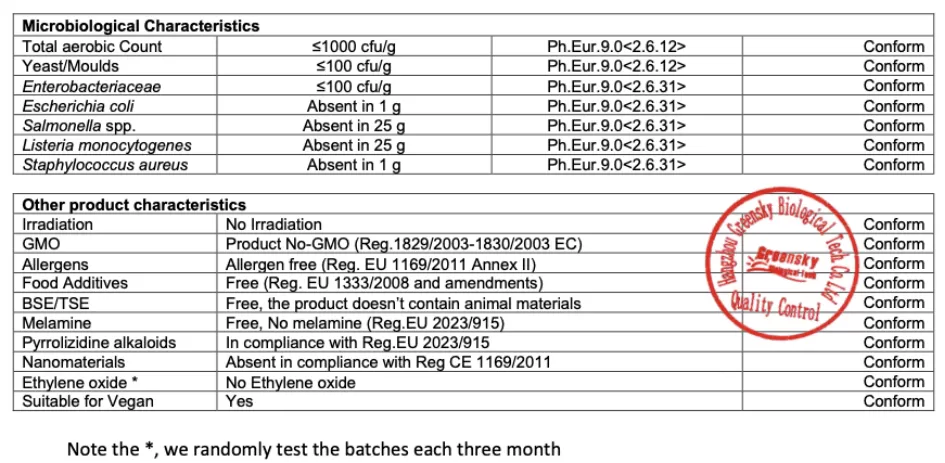
Test report
- ▶ Hesperidin
- ▶ Citrus Bioflavonoids
- ▶ Plant Extract
- ▶ lycopene
- ▶ Diosmin
- ▶ Grape seed extract
- ▶ Sea buckthorn Juice Powder
- ▶ Fruit Juice Powder
- ▶ Hops Extract
- ▶ Artichoke Extract
- ▶ Mushroom extract
- ▶ Astaxanthin
- ▶ Green Tea Extract
- ▶ Curcumin
- ▶ Horse Chestnut Extract
- ▶ Other Product
- ▶ Boswellia Serrata Extract
- ▶ Resveratrol
- ▶ Marigold Extract
- ▶ Grape Leaf Extract
- ▶ New Product
- ▶ Aminolevulinic acid
- ▶ Cranberry Extract
- ▶ Red Yeast Rice
- ▶ Red Wine Extract
- ▶ blog
-
White mustard seed extract
2025-12-10
-
Curcumin
2025-12-10
-
Clove Powder
2025-12-10
-
Andrographis Paniculata Extract Powder
2025-12-10
-
Boswellia Serrata Extract
2025-12-10
-
Quercetin
2025-12-10
-
Polygonum Cuspidatum Extract
2025-12-10
-
Beetroot juice Powder
2025-12-10
-
Cayenne Pepper Extract
2025-12-10
-
Chaga Mushroom Extract
2025-12-10