- 0086-571-85302990
- [email protected]


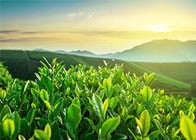


Green Tea Extract (EGCG): The Complete B2B Buyer's Guide to Sourcing Standardized Camellia sinensis
2026-10-06
Meta Title: Green Tea Extract Manufacturer | Standardized EGCG Camellia sinensis Supplier | Greensky Bio
Meta Description: Premium Green Tea Extract with standardized EGCG content for supplements, cosmetics & functional beverages. GMP-certified plant extract manufacturer. Get your quote today.
Introduction to Green Tea Extract (EGCG)
Green tea extract has become one of the most widely used botanical ingredients in the global nutraceutical, cosmetic, and functional food industries. Rich in catechins — particularly epigallocatechin gallate (EGCG) — green tea extract delivers concentrated antioxidant benefits that have been validated by thousands of peer-reviewed studies.
For B2B buyers, the key challenge in sourcing green tea extract is navigating the wide range of available standardizations, extraction methods, and quality levels. A 50% polyphenol extract differs dramatically from a 98% EGCG extract in both application and price, and not all manufacturers deliver the labeled potency. This guide provides procurement professionals with the technical knowledge needed to specify, evaluate, and procure green tea extract with confidence.
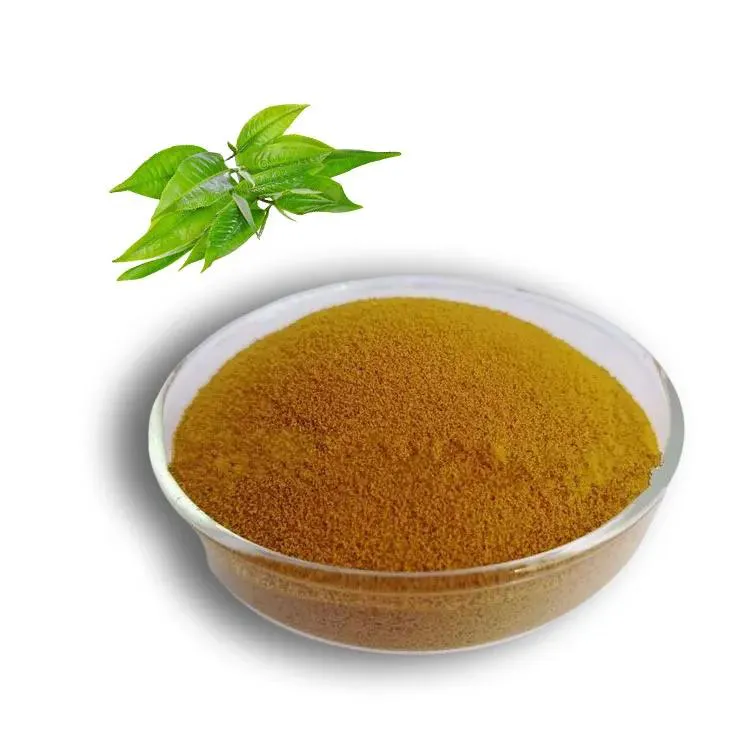
What Is Green Tea Extract?
Green tea extract is produced from the leaves of Camellia sinensis (L.) Kuntze, the same plant used to produce green tea beverages. Unlike black tea (which undergoes fermentation/oxidation), green tea leaves are rapidly heat-treated after harvesting to prevent oxidation, preserving the naturally occurring catechins.
Key Catechins in Green Tea Extract
Catechin Abbreviation Typical % of Total Catechins Key Properties Epigallocatechin gallate EGCG 50-60% Most potent antioxidant; primary marker compound Epigallocatechin EGC 10-20% Antioxidant, anti-inflammatory Epicatechin gallate ECG 5-10% Antioxidant, cardiovascular support Epicatechin EC 5-10% Antioxidant, vascular health
Total Polyphenols vs. Total Catechins vs. EGCG
Understanding the difference between these specifications is critical for accurate product formulation:
Total polyphenols: Broadest category; includes catechins, flavonoids, phenolic acids. Typical standardization: 50-98%
Total catechins: The specific group of flavan-3-ols in green tea. Typical standardization: 30-90%
EGCG: The single most abundant and bioactive catechin. Typical standardization: 20-98%
For most supplement applications, products standardized to total catechins and EGCG content are preferred, as these specifications provide more precise active compound quantification.
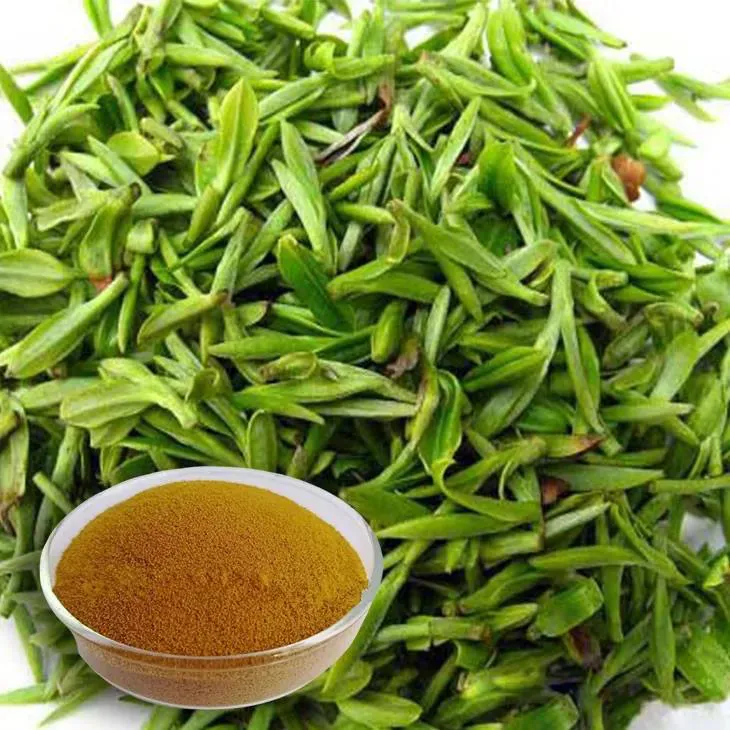
Extraction Methods for Green Tea Extract
Solvent Extraction (Ethanol/Water)
The most common commercial method uses ethanol-water mixtures to extract catechins from dried green tea leaves:
Green tea leaves are extracted with ethanol-water at controlled temperature
The extract is filtered and concentrated
Further purification may be performed to increase catechin/EGCG concentration
The concentrate is spray-dried onto a carrier to produce powder
Advantages: Cost-effective, scalable, food-grade solventsConsiderations: Residual solvent testing required; may co-extract caffeine
Decaffeinated Green Tea Extract
For caffeine-sensitive applications, manufacturers offer decaffeinated green tea extract where caffeine is removed through:
Supercritical CO₂ decaffeination: Selective removal of caffeine while preserving catechins
Water-based decaffeination: Multiple wash cycles to reduce caffeine content
Typical decaffeinated green tea extracts contain <0.5% caffeine compared to 2-4% in standard extracts.
Green Tea Extract Specifications for B2B Procurement
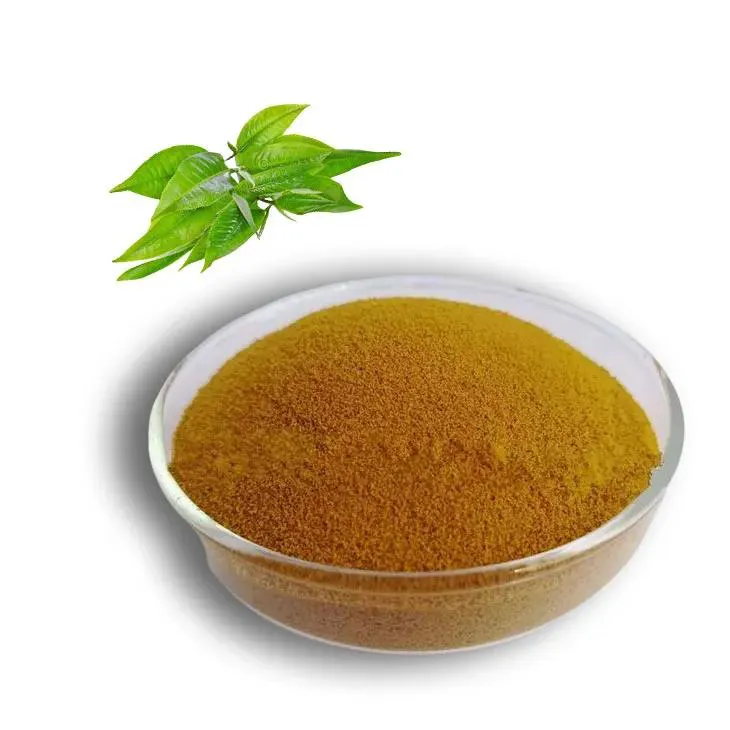
Parameter Standard Extract High-EGCG Extract Decaffeinated Extract Total Polyphenols 50-80% 80-98% 50-80% Total Catechins 30-70% 70-95% 30-70% EGCG 20-50% 50-90% 20-50% Caffeine 2-4% 1-3% <0.5% Moisture ≤5% ≤3% ≤5% Appearance Light brown to green powder Off-white to light green powder Light brown powder Solubility Water-soluble Water-soluble Water-soluble
Key Quality Parameters to Verify
Catechin profile (HPLC analysis of EGCG, EGC, ECG, EC)
Caffeine content (HPLC quantification)
Heavy metals (Pb, Cd, As, Hg) — compliant with USP/EP limits
Pesticide residues — critical for green tea due to agricultural practices
Microbiological limits — total plate count, yeast/mold, pathogens
Solvent residues (if applicable) — ethanol, ethyl acetate limits
Ash content — indicates mineral/purity levels
Applications of Green Tea Extract
Weight Management and Metabolism Support
Green tea extract is one of the most clinically studied botanical ingredients for metabolic health. EGCG, in combination with naturally occurring caffeine, has been shown to support:
Increased thermogenesis and fat oxidation
Healthy metabolic rate
Body weight management
Typical dosage: 250-500 mg of standardized green tea extract (providing 100-275 mg EGCG) per day.
Antioxidant and Cardiovascular Health Supplements
The potent antioxidant activity of green tea catechins supports:
Protection against oxidative stress
Healthy blood pressure and lipid metabolism
Endothelial function and vascular health
Cognitive Function and Focus
EGCG has demonstrated neuroprotective properties in preclinical studies, and green tea extract is increasingly incorporated into nootropic formulations alongside L-theanine (which is naturally present in green tea).
Skincare and Cosmetics
Green tea extract is used in topical formulations for:
UV protection and photodamage prevention
Anti-aging antioxidant effects
Anti-inflammatory properties for sensitive skin
Sebum regulation in acne-prone skin formulations
Functional Beverages
Standardized green tea extract powder is used in:
Ready-to-drink green tea beverages
Energy and focus drinks
Dietary supplement powdered drink mixes
Quality Control at Greensky Bio
At , every batch of green tea extract undergoes rigorous quality testing:
HPLC analysis for precise catechin profiling (EGCG, EGC, ECG, EC) and caffeine quantification
Heavy metal testing via ICP-MS for Pb, Cd, As, Hg
Pesticide residue screening via LC-MS/MS — especially important for tea-sourced ingredients
Microbiological testing following pharmacopoeia standards
Residual solvent analysis via GC (if applicable)
Our Jiangxi production facility implements GMP standards with ISO22000, BRCGS, Ecocert Organic Standard, and SGS-GMP certifications, ensuring consistent quality and regulatory compliance.
Why Choose Greensky Bio as Your Green Tea Extract Supplier?
20+ years of experience in natural plant extract R&D, production, and sales
GMP-standard production facility with advanced extraction and spray drying equipment
Independent quality laboratory with GC, HPLC, UV for comprehensive testing
International certifications: ISO22000, BRCGS, Ecocert Organic Standard, SGS-GMP
100,000-class clean area for food-grade production
Global export experience with main markets in Europe, the US, South Korea, and Russia
Annual export value of nearly $30 million (2023), demonstrating scale and reliability
How to Request a Quote
Contact our sales team with your specific requirements:
Desired specification (total polyphenols, total catechins, EGCG content)
Caffeine requirement (standard or decaffeinated)
Target application (capsules, beverages, cosmetics)
Estimated order quantity
Required certifications and documentation
We provide competitive quotations within 24 hours and complimentary samples for quality evaluation.
today to discuss your green tea extract sourcing needs.
- ▶ Hesperidin
- ▶ Citrus Bioflavonoids
- ▶ Plant Extract
- ▶ lycopene
- ▶ Diosmin
- ▶ Grape seed extract
- ▶ Sea buckthorn Juice Powder
- ▶ Fruit Juice Powder
- ▶ Hops Extract
- ▶ Artichoke Extract
- ▶ Mushroom extract
- ▶ Astaxanthin
- ▶ Green Tea Extract
- ▶ Curcumin
- ▶ Horse Chestnut Extract
- ▶ Other Product
- ▶ Boswellia Serrata Extract
- ▶ Resveratrol
- ▶ Marigold Extract
- ▶ Grape Leaf Extract
- ▶ New Product
- ▶ Aminolevulinic acid
- ▶ Cranberry Extract
- ▶ Red Yeast Rice
- ▶ Red Wine Extract
- ▶ blog
-
Coconut Water Powder
2026-10-06
-
Tongkat Ali Extract Powder
2026-10-06
-
Rose Hip Extract
2026-10-06
-
Longan Extract
2026-10-06
-
Ivy Extract
2026-10-06
-
Elderberry Extract
2026-10-06
-
Hawthorn powder
2026-10-06
-
Plantain extract
2026-10-06
-
Mulberry leaf Extract
2026-10-06
-
Cranberry Extract
2026-10-06