- 0086-571-85302990
- [email protected]






Malpighia Emarginata Extract
2026-03-25
Malpighia Emarginata Extract
1.Introduction
If you’ve been scanning ingredient labels on trendy immune supplements or clean beauty products lately, you’ve probably noticed a recurring star: acerola cherry. But here’s the thing—most people still think of it as just another source of Vitamin C. The reality? Modern science is revealing that this small tropical fruit is packing a lot more firepower than we ever gave it credit for.
Whether you’re formulating a new supplement line, sourcing for functional foods, or simply curious about what makes this ingredient tick, let’s pull back the curtain on Malpighia emarginata extract.
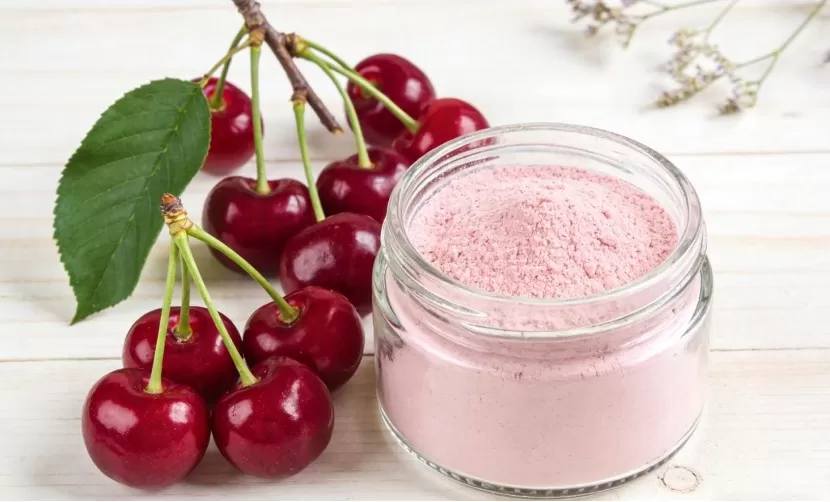
Part 1: What Exactly Is Malpighia Emarginata Extract?
Let’s start with the basics—because in the world of botanical extracts, precision matters.
Plant Profile:
u Latin Name: Malpighia emarginata D.C. (syn. Malpighia glabra L.)
u Common Name: Acerola, Barbados cherry, West Indian cherry
u Family: Malpighiaceae
u Primary Growing Regions: Northeastern Brazil is the world’s largest producer, though the plant is native to the Caribbean and Central America .
What Part of the Plant Do We Use?
This depends entirely on the application—and this is where things get interesting.
Traditionally, the fruit gets all the glory, and for good reason: it’s one of the densest natural sources of Vitamin C on the planet . But if you’ve been overlooking the leaves, you might be missing out. Recent research shows that acerola leaves are rich in phenolic compounds, flavonoids (like catechin and gallic acid), and even alkaloids . Some traditional medicine systems have used leaf teas for influenza and cholesterol management long before labs got involved .
The Active Chemistry (This Is the Nerdy Part)
When we talk about Malpighia emarginata extract in a commercial or formulation context, we’re typically referring to:
u Vitamin C (Ascorbic Acid): Naturally occurring, often ranging from 16–18% in standardized extracts, though the raw fruit can contain between 500–4500 mg/100g depending on ripeness .
u Flavonoids: Including Quercetin, myricetin, epicatechin, and rutin .
u Phenolic Acids: Such as gallic acid, syringic acid, and p-coumaric acid .
u Carotenoids: Including beta-carotene, which contributes to both color and bioactivity .
u Anthocyanins: Particularly cyanidin and pelargonidin derivatives, responsible for that vibrant red hue .
Our Standard Specifications:
We offer Malpighia emarginata extract in several forms to suit different applications:
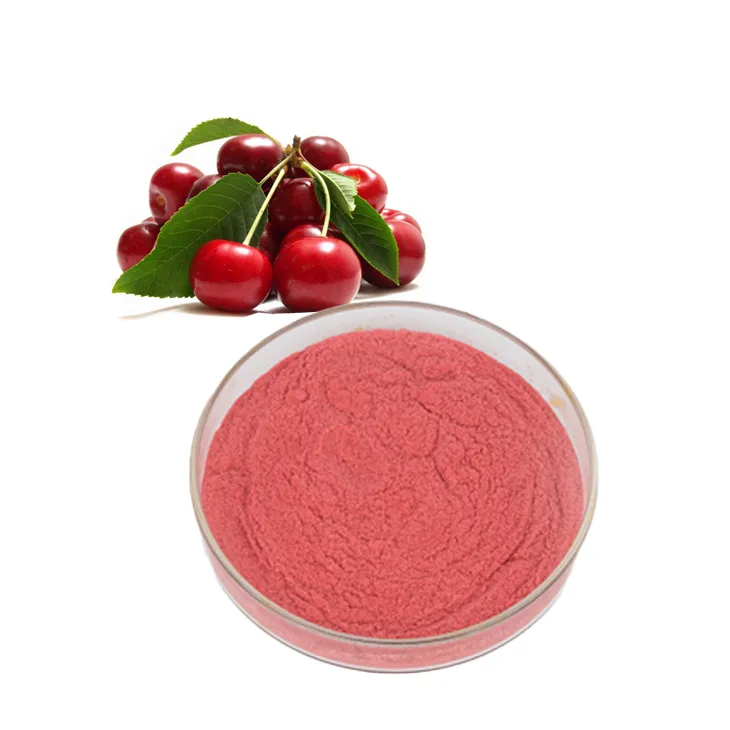
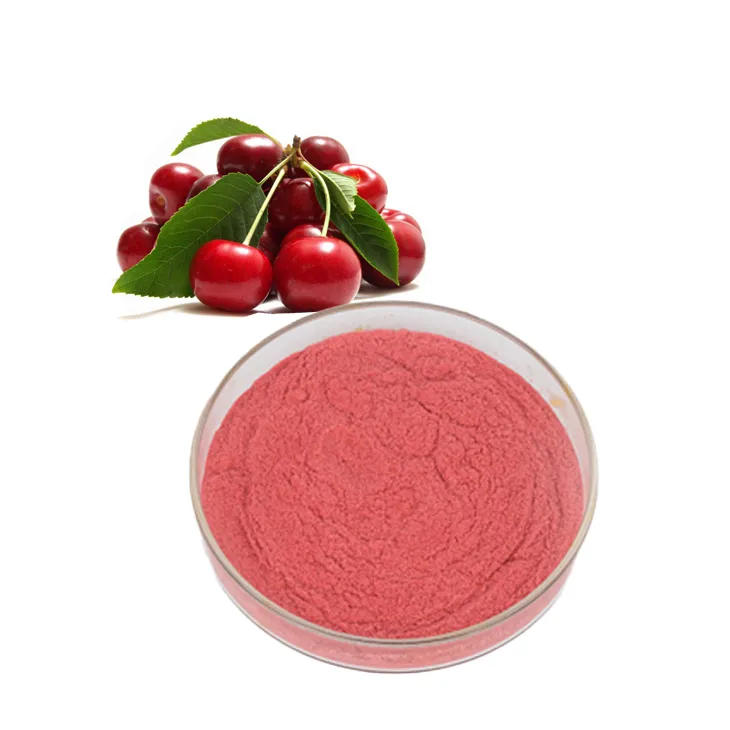
u Fruit Extract Powder: Standardized to 17% Vitamin C (HPLC), fine purple-red powder.
u Leaf Extract (4:1): Standardized to total flavonoids, ideal for cosmeceutical applications.
u Organic Acerola Powder: Spray-dried from juice concentrate, minimum 16% natural Vitamin C.
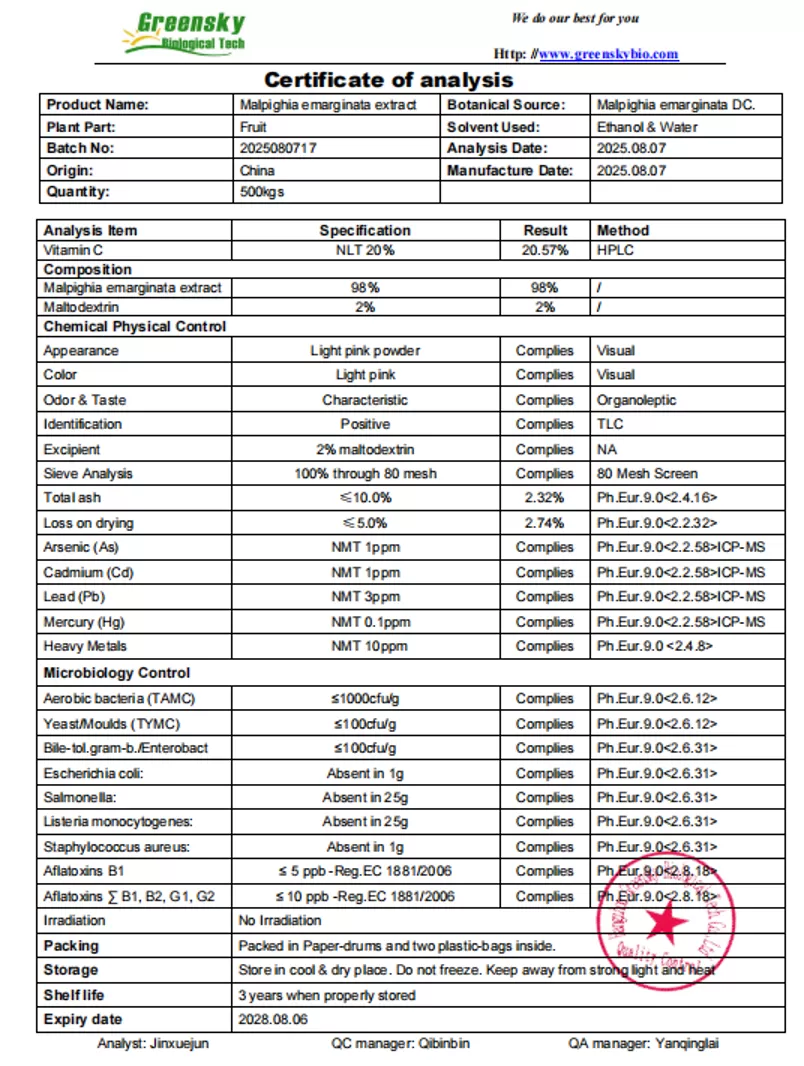
u Sample Certificate of Analysis available upon request.
Part 2: What Does the Science Actually Say? (Core Benefits & Mechanisms)
Here’s where we move beyond marketing claims and into the data. We’ve combed through recent literature so you don’t have to.
1. Potent Antioxidant Activity (Beyond Just Vitamin C)
Yes, acerola is famous for Vitamin C—but its antioxidant network is more sophisticated than a single molecule.
u The Mechanism: A 2024 study published in the Indian Journal of Natural Products and Resources analyzed ethanolic extracts of acerola leaves and found significant levels of myricetin and Quercetin. The extract demonstrated 80.77% antioxidant activity in DPPH assays, which measures free radical scavenging capacity .
u Why It Matters: This isn’t just about "general wellness." High antioxidant capacity translates to protecting skin fibroblasts from oxidative damage and preserving mitochondrial function in human cells .
2. Immune Modulation (Not Just Stimulation—Balance)
There’s a misconception that "immune support" always means "turbocharge everything." Sometimes, balance is key.
u The Mechanism: Research on aqueous leaf extracts of M. emarginata revealed an immunostimulatory profile with a twist. In Balb/c mice splenocytes, the extract promoted the production of Th2-type cytokines (IL-4, IL-6, IL-10) while reducing nitric oxide release. Translation? It promotes an anti-inflammatory immune response rather than a pro-inflammatory one .
u Clinical Relevance: This suggests acerola could be valuable for conditions where the immune system needs support without excessive inflammation.
3. Metabolic Health & Blood Sugar Regulation
This is a lesser-known application that deserves more attention.
u The Mechanism: Polyphenols extracted from acerola fruit have been shown to inhibit α-glucosidase—the enzyme responsible for breaking down carbohydrates into glucose. In ICR mice studies, acerola polyphenols significantly suppressed plasma glucose levels after both glucose and maltose administration .
u Bagasse (Waste) Potential: Even the byproducts are bioactive. Methanolic extracts from acerola bagasse (what’s left after juicing) inhibited α-amylase and α-glucosidase, with epicatechin as the major active compound. This positions acerola as a potential adjuvant in managing postprandial hyperglycemia and obesity .
4. Skin Health and Collagen Support
We know Vitamin C is required for collagen synthesis—that’s Biochemistry 101. But acerola brings additional co-factors.
u The Mechanism: Vitamin C is a cofactor for prolyl hydroxylase and lysyl hydroxylase, enzymes that stabilize the collagen triple helix. Beyond that, acerola‘s polyphenol fraction helps protect existing collagen by chelating metal ions and reducing matrix metalloproteinase (MMP) activity .
u Formulator’s Note: Because acerola provides a "complex" of bioflavonoids alongside Vitamin C, it can be more stable and bioavailable than synthetic ascorbic acid alone.
Part 3: Where Can You Use It? (Market Applications)
If you’re sourcing for commercial development, here’s where Malpighia emarginata extract fits into current market trends.
1. Dietary Supplements
u Formats: Capsules, tablets, gummies, effervescent powders.
u Positioning: "Whole food" Vitamin C, immune support, beauty-from-within, prenatal nutrition.
u Trend Alert: With consumer skepticism around synthetic vitamins at an all-time high, acerola is winning as a "nature-identical" source. NMR studies have identified 36 distinct metabolites in acerola juice concentrate, including amino acids, organic acids, and the alkaloid trigonelline—offering a nutritional complexity that isolated ascorbic acid cannot replicate .
2. Functional Foods & Beverages
u Formats: Energy bars, wellness shots, functional juices, kombucha.
u Technical Consideration: Acerola‘s natural acidity (pH 3.0–3.5) can be leveraged for both flavor and preservation. Anthocyanin content also provides natural color—though formulators should note that stability depends on processing temperatures and light exposure .
3. Cosmetics and Personal Care
u INCI Name: Malpighia Emarginata (Acerola) Fruit Extract
u Applications: Anti-aging serums, brightening creams, lip care, sunscreen boosters.
u Why It Works in Skincare: The combination of Vitamin C, carotenoids, and phenolic acids offers photoprotection, tyrosinase inhibition (fewer dark spots), and stimulation of collagen synthesis .
4. Animal Nutrition
u Emerging Application: As antibiotic-free production becomes standard in livestock, plant extracts with immunomodulatory properties are in demand. Acerola leaf extracts, with their low cytotoxicity and antioxidant activity, are candidates for natural feed additives .
Part 4: How to Choose a Quality Supplier (Red Flags & Green Lights)
Not all extracts are created equal. Here’s what separates premium material from commodity filler.
1. Demand Batch-to-Batch Consistency
Acerola is a crop, not a chemical. Vitamin C content varies dramatically with ripeness—unripe fruit can contain up to 4.5% Vitamin C, while overripe fruit drops significantly . A reputable supplier should provide HPLC or NMR data confirming active marker compounds for every batch. Recent advances in 1H-NMR spectroscopy allow for rapid (8-minute) quantification of ascorbic acid and simultaneous metabolomic profiling—this is the gold standard for authenticity verification .
2. Know Your Extraction Method
u Spray-Dried Juice Concentrate: Retains the full spectrum of water-soluble nutrients. Ideal for "whole food" positioning.
u Solvent Extraction (Ethanol/Methanol): Used to concentrate specific flavonoids or phenolic acids. Ask about residual solvents.
u CO₂ Extraction: Clean, solvent-free, and excellent for preserving heat-sensitive compounds. Our preferred method for high-end cosmeceutical grades.
3. Ask About the Source Material
Brazil dominates global acerola production, but growing conditions matter. Organic certification, sustainable farming practices, and traceability to specific regions all impact both quality and marketability.
4. Verify Through Third-Party Testing
We maintain full transparency: heavy metal testing, microbiological profiles, and pesticide residue analysis are available for all batches. If a supplier hesitates to share Certificates of Analysis—walk away.
Part 5: Why Work With Us?
We’ve been in the plant extraction game long enough to know that buying extracts isn‘t just about spec sheets—it’s about trust.
When you source Malpighia emarginata extract from us, you’re getting:
u Full Traceability: From farm to finished powder. We know exactly where our acerola is grown and when it was harvested.
u Rigorous Quality Control: Every batch is tested for marker compounds (Vitamin C by HPLC, total polyphenols by UV-Vis) and screened for contaminants.
u Customization Options: Need a specific particle size for tablet compression? A particular carrier for liquid formulations? We’ve done it.
u Technical Support: Our in-house formulation team can help troubleshoot stability, solubility, or dosage challenges.
Conclusion: Is Acerola Extract Right for Your Product Line?
Here’s the bottom line.
If you need a "me-too" Vitamin C ingredient, there are cheaper synthetic options on the market. But if you’re building a product that demands efficacy, clean-label appeal, and scientifically-backed bioactivity, Malpighia emarginata extract delivers.
From its emerging role in metabolic health to its well-established immune and skin benefits—and backed by modern analytical science that confirms what traditional medicine knew all along—acerola is proving to be far more than "just cherry flavor."
Ready to formulate with the best?
We’re here to help—whether you need technical data, pricing, or just want to bounce around ideas for your next product.
Our team typically responds within 24 hours. Samples are shipped globally.
References
1. Souza, R. C. S., et al. (2024). Phytochemical profiles and cytotoxicity evaluation of the ethanolic extract of Malpighia emarginata leaves: Potential for its therapeutic use. Indian Journal of Natural Products and Resources, 15(2), 294–301.
2. (2024). Antihyperglycemic Effect of Polyphenols from Acerola (Malpighia emarginata DC.) Fruit. CiNii Research.
3. Cerino, M. C., et al. (2023). Dynamic maceration of acerola (Malpighia emarginata DC.) fruit waste: an optimization study to recover anthocyanins. Agronomy, 13(9), 1–12.
4. Bourafai-Aziez, A., et al. (2022). Development, Validation, and Use of 1H-NMR Spectroscopy for Evaluating the Quality of Acerola-Based Food Supplements and Quantifying Ascorbic Acid. Molecules, 27(17), 5614.
5. (2019). Phytochemical analysis, nutritional profile and immunostimulatory activity of aqueous extract from Malpighia emarginata DC leaves. ScienceDirect.
6. Caetano, A. A., et al. (2015). Metanolic extract of Malpighia emarginata bagasse: phenolic compounds and inhibitory potential on digestive enzymes. Revista Brasileira de Farmacognosia.
7. Greensky Bio. (2024). Factory - wholesale plant extracts, organic acerola cherry extracts. [Citation:9]
TEST REPORT
- ▶ Hesperidin
- ▶ Citrus Bioflavonoids
- ▶ Plant Extract
- ▶ lycopene
- ▶ Diosmin
- ▶ Grape seed extract
- ▶ Sea buckthorn Juice Powder
- ▶ Fruit Juice Powder
- ▶ Hops Extract
- ▶ Artichoke Extract
- ▶ Mushroom extract
- ▶ Astaxanthin
- ▶ Green Tea Extract
- ▶ Curcumin
- ▶ Horse Chestnut Extract
- ▶ Other Product
- ▶ Boswellia Serrata Extract
- ▶ Resveratrol
- ▶ Marigold Extract
- ▶ Grape Leaf Extract
- ▶ New Product
- ▶ Aminolevulinic acid
- ▶ Cranberry Extract
- ▶ Red Yeast Rice
- ▶ Red Wine Extract
- ▶ blog
-
Thunder God Vine Extract
2026-03-25
-
Peppermint Extract Powder
2026-03-25
-
Rosemary extract
2026-03-25
-
Acerola Extract
2026-03-25
-
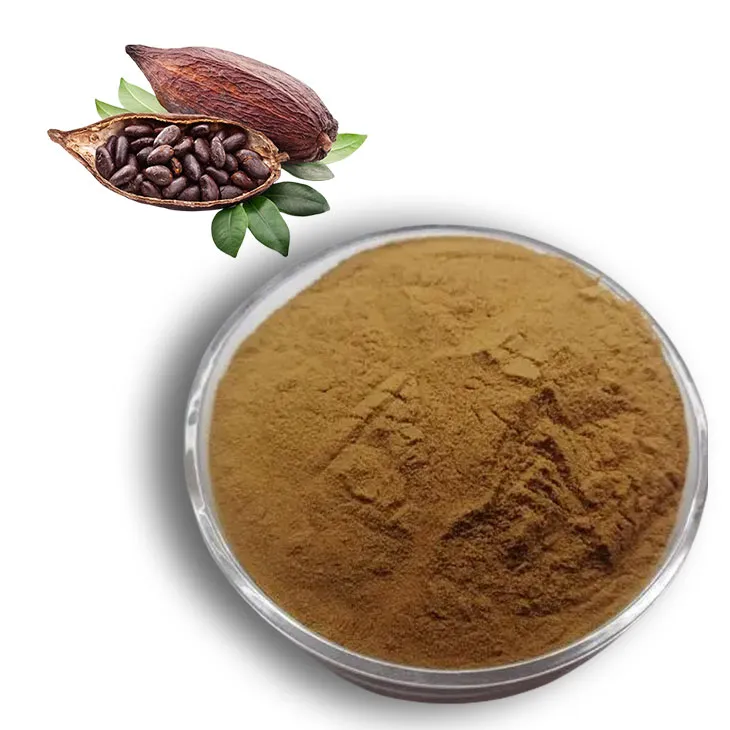
Cocoa Extract
2026-03-25
-
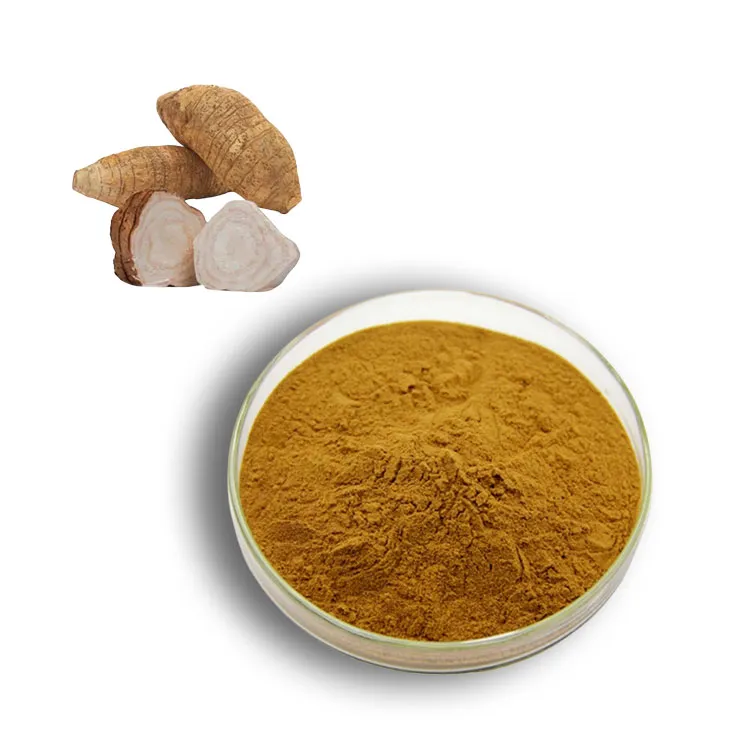
Pueraria Lobata Extract
2026-03-25
-
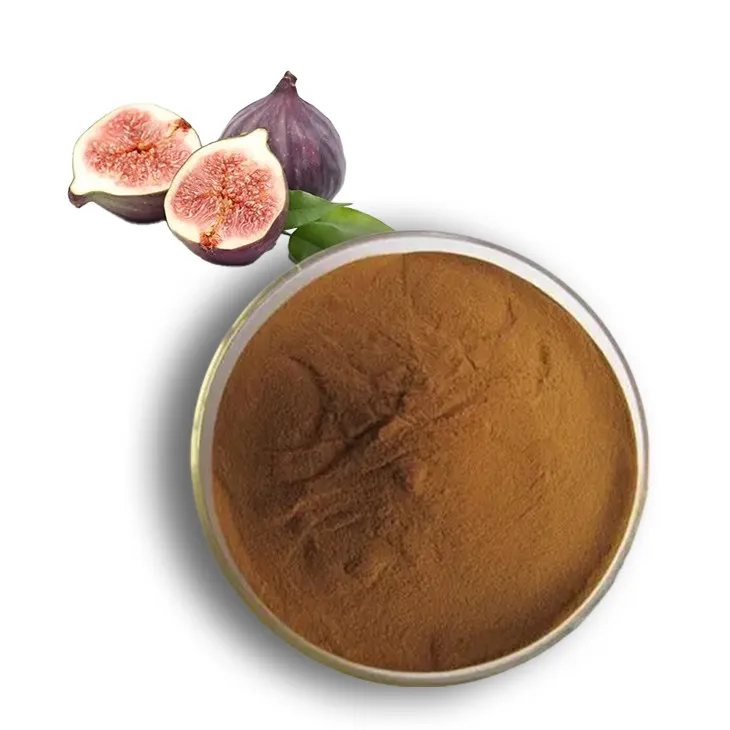
Fig Extract
2026-03-25
-
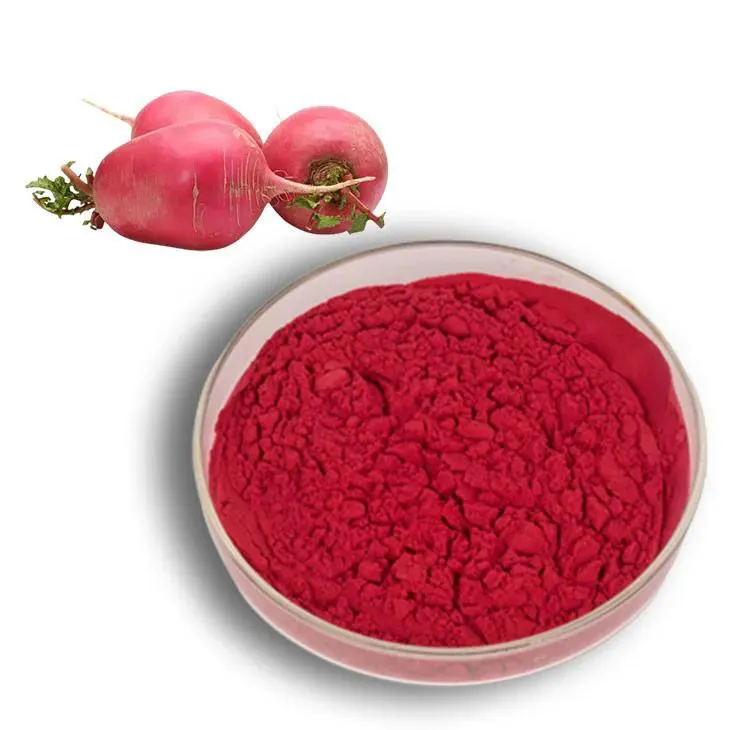
Beetroot juice Powder
2026-03-25
-
Dan Shen Root Extract/Salvia Root Extract
2026-03-25
-
Longan Extract
2026-03-25
