- 0086-571-85302990
- [email protected]






What standards does china moringa powder follow for export?
2026-08-18
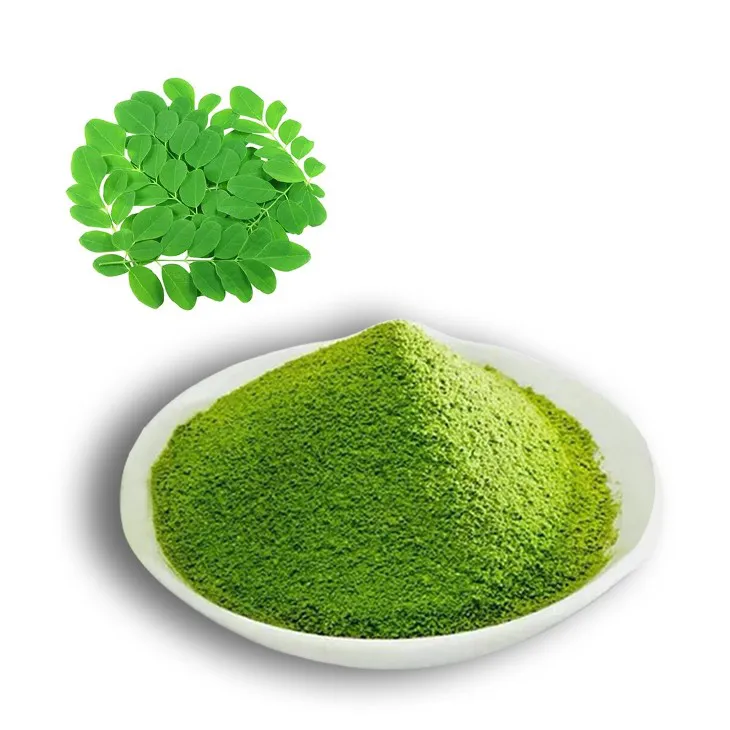
When buyers start sourcing China Moringa powder, one of the first questions they ask is what standards the product has to meet. It is a fair question. Moringa powder is a food ingredient, and any food ingredient that crosses a border is subject to several layers of regulation: the rules of the country where it is made, the rules of the country where it is sold, and the quality systems of the factory that produces it. This guide walks through the standards that China Moringa powder follows for export, so buyers know exactly what to check before placing an order.
1. The Regulatory Foundation: Export Food Production Enterprise Registration
The first standard a Chinese Moringa powder manufacturer must meet is not a product test at all. It is a factory registration. In China, any company that produces food for export must hold an Export Food Production Enterprise Registration Certificate, issued and supervised by the General Administration of Customs (GACC).
This registration is granted only after an on-site inspection of the production environment, facilities, hygiene controls, and quality management. It is the legal basis for exporting food products such as moringa powder, and it is re-inspected on a regular schedule. A factory without this registration cannot legally ship food abroad, no matter how good its product looks on paper. Buyers should ask for this certificate early in the conversation, because it filters out a large share of non-export-ready factories in one step.
2. National Food Safety Standards That Apply to Moringa Powder
Once a factory is registered for export, the product itself must comply with China's national food safety standards, known as GB standards. For moringa powder, the most relevant ones are:
- GB 2762 — maximum levels of contaminants in food, covering heavy metals such as lead, cadmium, mercury, and arsenic.
- GB 2763 — maximum residue limits for pesticides in food.
- GB 29921 — limits for pathogenic bacteria in food.
- GB 7718 — general rules for food labeling.
These standards set measurable limits, and export batches are typically tested against them before shipment. A responsible manufacturer includes these results in the Certificate of Analysis that accompanies every batch, so the numbers can be verified rather than taken on trust.
3. Factory-Level Quality Management Systems
Product standards only matter if the factory can meet them consistently, batch after batch. That is why quality management systems are a core part of export readiness. Most serious Chinese exporters operate under one or more of the following:
- ISO 22000 — food safety management system.
- ISO 9001 — quality management system.
- HACCP — hazard analysis and critical control points.
- GMP — good manufacturing practice.
These systems are audited by independent third parties, and the certificates are issued with a defined scope. Buyers should always check that the scope of a certificate actually covers moringa processing, not just the company in general. A certificate without the right scope is worth very little.
4. Voluntary Certifications That Signal Export Readiness
Beyond the mandatory requirements, many buyers look for voluntary certifications that open up specific markets. For China moringa powder, the most commonly requested ones are:
- BRCGS — a global food safety standard recognized by major retailers, especially in the UK and Europe.
- HALAL and Kosher — religious dietary certifications that expand the addressable market.
- Ecocert Organic — organic certification for buyers who need organic moringa powder.
- SGS-GMP — GMP certification verified by SGS, a widely trusted testing and certification body.
A manufacturer that holds several of these certifications at once has clearly invested in export compliance over a long period. That is a stronger signal than any single certificate on its own.
5. Meeting Destination-Market Requirements
Export standards do not stop at the Chinese border. The moringa powder must also satisfy the requirements of the destination country, and a qualified moringa powder supplier will maintain the documentation needed to support these submissions:
- United States — dietary supplement ingredients must be produced under FDA cGMP (21 CFR Part 111).
- European union — moringa preparations may fall under the Novel Food Regulation (EC) 2015/2283, and suppliers must provide safety and compositional documentation.
- Japan — pesticide residues must clear Japan's Positive List System, and full heavy-metal and microbiological panels are expected.
- South Korea — health functional food ingredients are regulated by the Ministry of Food and Drug Safety (MFDS).
Experienced exporters prepare these documents in advance rather than chasing them at the last minute. When a supplier can produce the right paperwork for your market without delay, it is a reliable sign that the factory has shipped there before.
6. Documentation Buyers Should Request
Standards are only useful if they are verifiable. When evaluating a moringa powder manufacturer, buyers should request the following documents:
- Certificate of Analysis (COA) covering moisture, protein, ash, heavy metals, pesticide residues, microbiological counts, and mesh size.
- Phytosanitary certificate for plant-derived products.
- Test reports from accredited laboratories.
- Batch records and traceability documentation.
A complete documentation package does more than satisfy customs. It protects the buyer's own reputation, because every claim made on a finished product label ultimately traces back to the raw ingredient.
7. How to Choose a Compliant China Moringa Powder Supplier
The practical question is how to turn all of this into a supplier decision. A short vetting checklist helps:
- Verify that the export food production enterprise registration is current.
- Request current certification certificates and confirm the scope covers moringa processing.
- Review a sample COA for completeness.
- Ask about the production environment, such as the class of the clean production area.
- Check whether the factory runs its own laboratory and testing equipment.
Manufacturers that can answer these questions with documentation are export-ready; those that cannot are not. A vertically integrated producer, for example, can show you the whole chain from raw leaf sourcing to finished powder, and will usually have its own in-house testing rather than relying entirely on outside labs. Hangzhou Greensky Biological Tech. Co., Ltd., for instance, operates a 100,000-class clean production area, runs an independent laboratory equipped with GC, HPLC, and UV instruments, and holds export registration plus ISO22000, BRCGS, Ecocert Organic, SGS-GMP, ISO9001, HALAL, and Kosher certifications — the kind of profile that makes destination-market submissions straightforward.
Conclusion
China moringa powder follows a clear set of standards for export: GACC export food production enterprise registration, national food safety standards, factory-level quality systems, voluntary certifications, and destination-market compliance. Buyers who understand these layers can source with confidence, and ask the right questions before they commit to a long-term supply relationship.
TAGS:
- ▶ Hesperidin
- ▶ Citrus Bioflavonoids
- ▶ Plant Extract
- ▶ lycopene
- ▶ Diosmin
- ▶ Grape seed extract
- ▶ Sea buckthorn Juice Powder
- ▶ Fruit Juice Powder
- ▶ Hops Extract
- ▶ Artichoke Extract
- ▶ Mushroom extract
- ▶ Astaxanthin
- ▶ Green Tea Extract
- ▶ Curcumin
- ▶ Horse Chestnut Extract
- ▶ Other Product
- ▶ Boswellia Serrata Extract
- ▶ Resveratrol
- ▶ Marigold Extract
- ▶ Grape Leaf Extract
- ▶ New Product
- ▶ Aminolevulinic acid
- ▶ Cranberry Extract
- ▶ Red Yeast Rice
- ▶ Red Wine Extract
- ▶ blog
-
Lion's Mane Mushroom Extract
2026-08-18
-
Citrus bioflavonoids
2026-08-18
-
Apricot Powder
2026-08-18
-
Peppermint Extract Powder
2026-08-18
-
Polygonum multiflorum extract
2026-08-18
-
Cocoa Extract
2026-08-18
-
Jujube Extract
2026-08-18
-
melatonin
2026-08-18
-
Milk Thistle Extract
2026-08-18
-
Europen Bilberry Extract
2026-08-18
