- 0086-571-85302990
- [email protected]






What payment terms do wholesale moringa powder suppliers accept?
2026-08-15
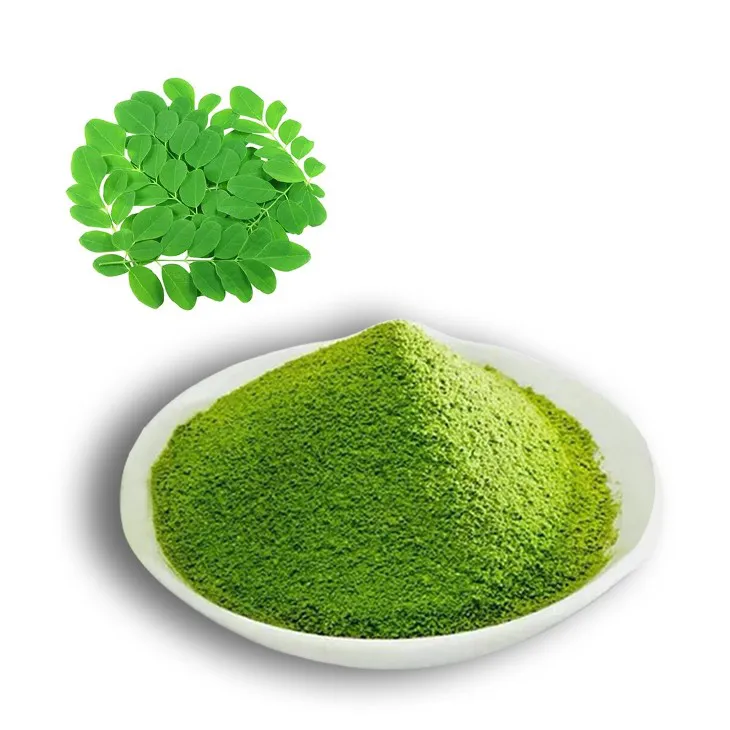
When you source Moringa powder in bulk for the first time, one of the first questions you will ask a supplier is: what payment terms do you accept? It is a fair question, and it deserves a straight answer. Payment terms sit at the center of every wholesale transaction because they decide who carries the risk between the moment an order is placed and the moment the goods arrive at your warehouse. Understanding the payment terms that wholesale moringa powder suppliers commonly accept helps you negotiate with confidence, protect your cash flow, and avoid the mistakes that catch many first-time importers.
The payment terms you will most often see in Moringa powder trade
Across the plant extract and botanical ingredient industry, a handful of payment methods dominate. Each one balances risk differently between buyer and supplier, and most suppliers will explain their standard terms clearly before you place an order.
T/T (Telegraphic Transfer or wire transfer)
T/T is the most widely used payment method in wholesale Moringa powder transactions. In a typical arrangement, the buyer pays a deposit, commonly around 30 percent, when the order is confirmed, and the remaining balance is paid against the shipping documents, usually before the goods are released at the destination port. This structure gives the supplier the confidence to start production while protecting the buyer from paying the full amount before anything has been shipped. For most mid-sized orders, a T/T split of deposit plus balance is the industry norm.
Letter of Credit (L/C)
For larger orders, many suppliers accept a Letter of Credit, especially an L/C at sight. Under an L/C, the buyer's bank promises to pay the supplier once the required documents are presented, and the supplier's bank verifies that those documents match the terms of the credit. Because a bank acts as the intermediary, an L/C offers strong protection for both sides. It involves more paperwork and slightly higher bank fees than a T/T, but it is the standard choice for high-value first transactions where neither party has built trust yet.
D/P (Documents against Payment)
Under D/P, the shipping documents are released to the buyer only after payment is made. The buyer does not receive the bill of lading, and therefore cannot take delivery of the goods, until the payment has been settled. This method is less common than T/T or L/C but is sometimes offered to buyers with an established relationship.
D/A (Documents against Acceptance)
With D/A, the buyer accepts a draft and receives the documents, agreeing to pay at a later date. This gives the buyer time to sell the goods before the payment falls due, but it carries more risk for the supplier, so it is usually reserved for long-term, trusted customers.
Open account terms
For repeat buyers with a solid payment history, some suppliers extend open account terms, where payment is made after delivery, for example 30 or 60 days from the invoice date. This is the most buyer-friendly arrangement and the least common for first orders. It is a privilege earned over time, not something a new buyer should expect.
How payment terms change with order size and relationship
Payment terms are not fixed. They evolve as the relationship between buyer and supplier matures, and they scale with the value of the order.
- Samples: paid samples are usually settled by PayPal, credit card, or a small T/T transfer. This is the fastest and simplest way to evaluate quality before committing to a bulk order.
- First bulk order: expect a deposit plus balance against shipping documents, or an L/C for larger values. This protects both parties while you build trust.
- Repeat orders: after a few successful transactions, suppliers become more flexible. D/P, D/A, and eventually open account terms become realistic options.
The key is to start conservatively and let the payment terms become more favorable as your order history grows. A supplier that is willing to grow with you is usually a good sign.
What a reliable wholesale moringa powder supplier accepts
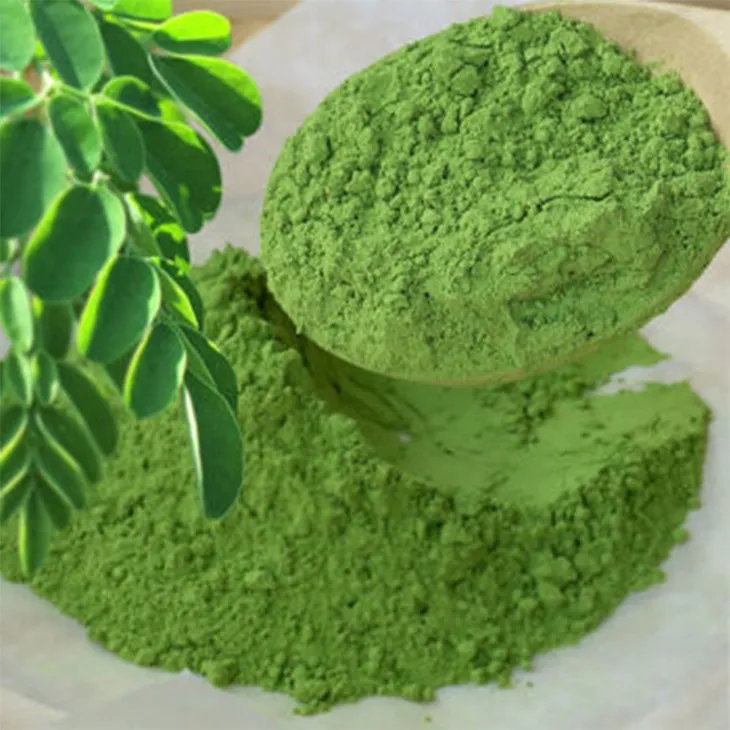
At Greensky, a professional moringa powder manufacturer and supplier with more than twenty years of experience in botanical ingredients, we keep our payment policy simple and transparent. For new customers, we typically work with a T/T deposit plus balance against the shipping documents, and we are happy to discuss an L/C for larger orders. For customers we have served for years, we can offer more flexible arrangements based on the order history.
We are also glad to answer any questions about our terms before you commit. As a vertically integrated company with our own production facilities, a 100,000-class clean production area, and an independent laboratory equipped with GC, HPLC, and UV instruments, we can supply consistent moringa powder with full documentation, including batch-specific certificates of analysis. Our certifications, including ISO22000, BRCGS, HALAL, and Kosher, are part of the reason buyers across Europe, the United States, South Korea, and Russia have trusted us since 2004. You can review our moringa powder supplier product page to see the specifications we publish, and our sales team will confirm the exact terms for your order in the proforma invoice.

Red flags to watch for when negotiating payment terms
Knowing what reliable suppliers accept also means knowing what to avoid. A few warning signs should end the conversation quickly:
- Pressure to pay 100 percent in advance to a personal account. Legitimate companies collect payment into a registered company account, and they rarely ask for full prepayment on a first order.
- Refusal to share the factory address, company registration, or production details. A real manufacturer should be able to describe its own facility.
- A generic certificate of analysis that is not linked to a specific batch. Batch-specific documentation is the foundation of a safe transaction.
- Vague answers about who actually produces the goods. If a supplier cannot clearly explain its production process, the risk is yours to carry.
How to structure a safe first order
A well-structured first order protects you no matter which payment terms you agree on. Follow these steps and you will dramatically reduce the risk of a bad deal.
- Request a paid sample first. Evaluate the color, odour, taste, and particle size against your reference standard before you commit to a container.
- Verify the supplier. Check the company registration, factory address, and certifications, and confirm the scope of each certificate matches the product you are buying.
- Agree on a clear proforma invoice. The PI should state the Incoterms, currency, validity, payment terms, lead time, and the full documentation pack you will receive.
- Consider a third-party inspection. For a first order, an independent pre-shipment inspection by a recognized agency gives you an objective record of quality before payment is released.
- Keep the documentation. File the COA, bill of lading, certificate of origin, and inspection report against the lot number for traceability and future audits.
Final thoughts
The payment terms that wholesale moringa powder suppliers accept are not a mystery. T/T with a deposit and balance, L/C for larger orders, and more flexible terms for repeat customers cover the vast majority of transactions. What matters most is choosing a supplier you can verify, agreeing on terms that are written down clearly, and structuring your first order so that payment is only released against proper documentation. Do that, and the payment terms become a small part of a smooth, long-term sourcing relationship.
- ▶ Hesperidin
- ▶ Citrus Bioflavonoids
- ▶ Plant Extract
- ▶ lycopene
- ▶ Diosmin
- ▶ Grape seed extract
- ▶ Sea buckthorn Juice Powder
- ▶ Fruit Juice Powder
- ▶ Hops Extract
- ▶ Artichoke Extract
- ▶ Mushroom extract
- ▶ Astaxanthin
- ▶ Green Tea Extract
- ▶ Curcumin
- ▶ Horse Chestnut Extract
- ▶ Other Product
- ▶ Boswellia Serrata Extract
- ▶ Resveratrol
- ▶ Marigold Extract
- ▶ Grape Leaf Extract
- ▶ New Product
- ▶ Aminolevulinic acid
- ▶ Cranberry Extract
- ▶ Red Yeast Rice
- ▶ Red Wine Extract
- ▶ blog
-
Tinospora cordifolia extract
2026-08-15
-
Tormentil Extract
2026-08-15
-
Plantain extract
2026-08-15
-
Clove Powder
2026-08-15
-
Wheat Germ Extract
2026-08-15
-
Diosmin
2026-08-15
-
Buckthorn bark extract
2026-08-15
-
Kelp Extract Powder
2026-08-15
-
Curcuma Longa Extract/Turmeric extract
2026-08-15
-
Quercetin
2026-08-15
