- 0086-571-85302990
- [email protected]





Tamarindus Indica Extract
2026-03-25
Tamarindus Indica Extract
1.Introduction
If you’ve ever enjoyed the sweet-and-sour tang of tamarind in your favorite Asian dish or sipped on a refreshing aguas frescas on a hot day, you’ve already met Tamarindus indica. But beyond its culinary charm, this tropical fruit has been making serious waves in the nutraceutical and cosmetic industries. Modern science is now catching up to what traditional healers have known for centuries: tamarind extract is a powerhouse of bioactive compounds with real therapeutic potential.
Whether you’re a formulation scientist, a procurement specialist, or just someone curious about natural ingredients, this guide walks you through everything that matters about Tamarindus indica extract—from its composition and clinically-studied benefits to how to source it responsibly.
Part 1: What Exactly Is Tamarindus indica Extract?
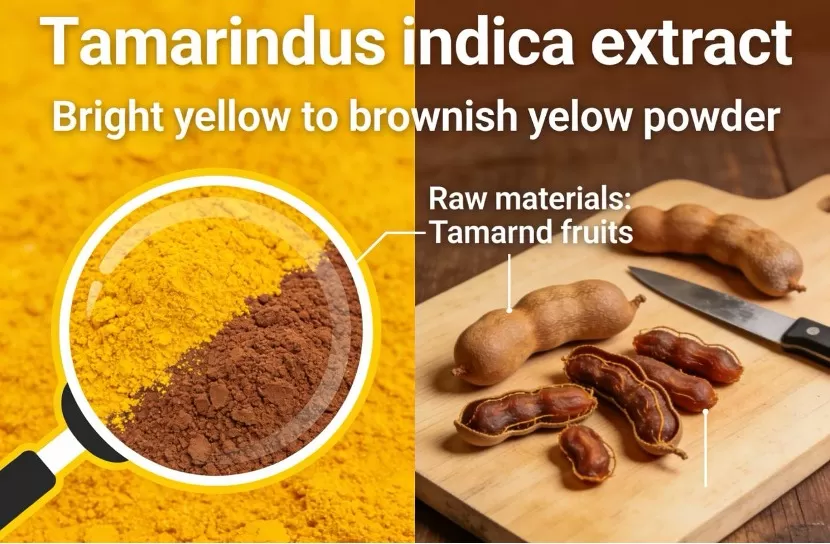
Let’s start with the basics. Tamarindus indica L., belonging to the Fabaceae family, is a long-lived tropical tree native to Africa but now cultivated extensively across India, Southeast Asia, Mexico, and the Caribbean. Virtually every part of the tree has been used traditionally, but when we talk about the extract in commercial applications, we’re usually referring to concentrated bioactive fractions from the fruit pulp, seeds, or leaves .
l Latin Name: Tamarindus indica L.
l Common Source: India, Thailand, Mexico, Sudan
l Plant Parts Used: Fruit pulp (most common), seeds, leaves, bark
Key Active Components
The therapeutic value of tamarind extract lies in its rich phytochemical profile:
l Polyphenols: Including proanthocyanidins, catechins, and ferulic acid
l Flavonoids: Such as apigenin, luteolin, and naringenin
l Organic Acids: Tartaric acid (responsible for the sour taste), citric acid, malic acid
l Polysaccharides: Especially from the seeds—tamarind seed polysaccharide (TSP) is a valuable functional ingredient
l Tannins: Contributing to antioxidant and antimicrobial activity
Part 2: Therapeutic Benefits—What Does the Science Say?
This is where things get exciting. While traditional use provides a strong foundation, peer-reviewed research published over the past decade has validated several key pharmacological activities. Here’s what the evidence shows.
1. Antioxidant and Cellular Protection
Tamarind extract is a potent free radical scavenger, thanks to its high polyphenolic content. Research has demonstrated significant dose-dependent antioxidant activity through multiple mechanisms, including superoxide dismutase (SOD) and catalase (CAT) modulation . By neutralizing reactive oxygen species, it helps protect cells from oxidative stress—a root cause of aging and many chronic diseases.
2. Anti-Inflammatory and Immunomodulatory Effects
Chronic inflammation is at the heart of everything from joint pain to metabolic syndrome. Studies on human neutrophils show that tamarind fruit pulp extract inhibits key inflammatory pathways, including the production of reactive oxygen species and the activity of enzymes like elastase . It suppresses the activation of pro-inflammatory cytokines without being toxic to healthy cells—exactly what you want in a functional ingredient.
3. Cardiometabolic Support
This is arguably the most compelling area of recent research. A 2025 double-blind, randomized trial involving people living with HIV and elevated triglycerides found that daily consumption of tamarind juice (standardized to polyphenols) significantly reduced triglyceride levels by 17.3% and improved systolic blood pressure . The 30% fruit pulp juice group showed a mean triglyceride reduction of nearly 40 mg/dL over four weeks.
Animal studies corroborate these findings. In streptozotocin-induced diabetic rats, aqueous tamarind leaf extract not only lowered blood glucose (from 19.8 to 7.94 mmol/L) but also improved lipid profiles—reducing total cholesterol, LDL, and triglycerides while boosting HDL .
4. Antidiabetic Mechanisms
Beyond glycemic control, tamarind extract modulates carbohydrate digestion. In vitro studies demonstrate significant inhibition of α-amylase (up to 62.15%) and α-glucosidase (up to 67.35%) at 30 mg/mL concentrations, suggesting it can help blunt post-meal blood sugar spikes .
5. Neuroprotective and Mood Support
Here’s a fascinating emerging area. Using network pharmacology, researchers identified that tamarind extract interacts with multiple targets involved in dopaminergic and serotonergic signaling—pathways central to mood regulation . In chronic unpredictable mild stress (CUMS) mouse models, the extract reduced immobility time in forced swim tests (a standard measure of antidepressant-like effects), increased brain-derived neurotrophic factor (BDNF), and lowered cortisol levels. The IC50 on SH-Sy5Y neuronal cells was 573.99 µg/mL, indicating a strong safety margin.
6. Antimicrobial Activity
The phenolic compounds in tamarind have shown inhibitory effects against various bacterial strains, making it a candidate for natural preservative systems and oral care formulations .
Part 3: Where Is Tamarind Extract Used?
Because of its multifunctional profile, Tamarindus indica extract has found its way into multiple industries. Here’s how different sectors are leveraging it.
Dietary Supplements & Functional Foods
l Formats: Capsules, tablets, gummies, powders
l Applications: Blood sugar management formulas, weight management supplements, cardiovascular health blends, antioxidant support
l Why it works: The combination of enzyme inhibition and lipid-modulating effects makes it ideal for metabolic health products.
Functional Beverages
l Formats: Ready-to-drink teas, wellness shots, sports drinks
l Applications: Natural flavoring agent (the tartaric acid provides a clean sour note), functional ingredient in "better-for-you" sodas
l Trend: With the rise of gut-health and low-sugar drinks, tamarind offers both flavor and function.
Cosmetics & Personal Care
l Formats: Serums, creams, masks, cleansers
l Applications: Anti-aging formulations (antioxidant protection), skin brightening products, hair care (tamarind seed polysaccharide is an excellent film-forming agent)
l Formulator note: Tamarind extract is stable across a range of pH levels and integrates well into water-based systems.
Animal Nutrition
l Applications: Natural feed additive for livestock and companion animals
l Benefits: Supports gut health, provides antioxidant protection, may reduce reliance on antibiotic growth promoters
Food Preservation
l Mechanism: Antimicrobial activity against spoilage organisms
l Application: Clean-label preservative in sauces, marinades, and packaged foods
Part 4: How to Choose a Quality Supplier—What Actually Matters
Not all tamarind extracts are created equal. If you’re sourcing for commercial production, here’s what you need to look for—and what we do differently.
1. Traceable Sourcing
We source our raw tamarind from established growing regions in India and Thailand, where the fruit is harvested at peak ripeness. We maintain direct relationships with farmers and collection centers, ensuring full supply chain visibility.
2. Clean Extraction Technology
We use food-grade ethanol and water extraction—no residual solvents like hexane or acetone. Our process is designed to preserve the delicate polyphenols and organic acids that drive efficacy. For customers requiring organic certification, we offer certified organic batches.
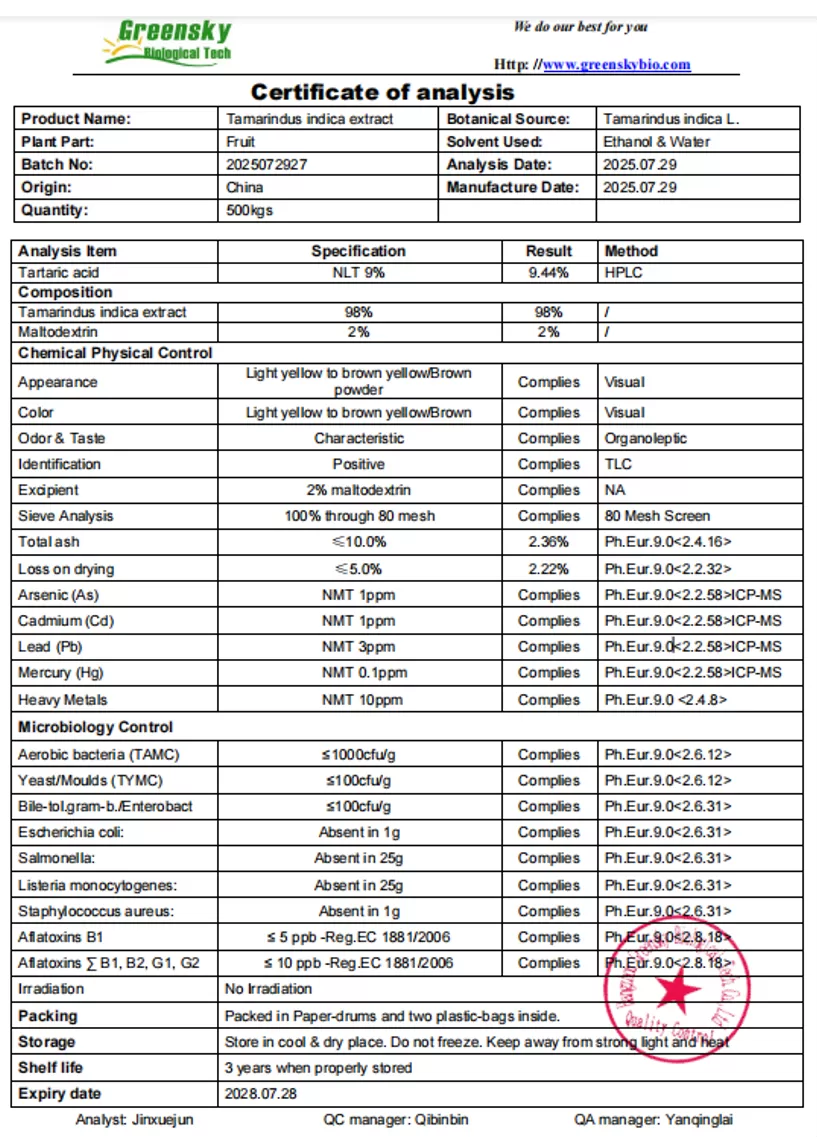
3. Rigorous Analytical Testing
Every batch is tested for:
l Identity: HPLC fingerprint matching
l Purity: Heavy metals (Pb, As, Cd, Hg), pesticides, and solvent residues
l Potency: Quantified polyphenols and tartaric acid
l Safety: Microbial limits, aflatoxins
We provide a full Certificate of Analysis (COA) with every shipment. If you need third-party lab verification, we’re happy to arrange it.
4. Customization Capabilities
Need a specific particle size? Want to adjust the potency for a liquid formulation? We offer customization services, including:
l Blending with carriers (maltodextrin, rice flour)
l Particle size reduction
l Custom packaging (from 1 kg bags to 25 kg drums)
5. Regulatory Support
We provide full documentation to support your regulatory filings, including:
l Technical data sheets (TDS)
l Safety data sheets (SDS)
l Allergen statements
l Non-GMO and kosher certifications (available upon request)
Part 5: Why Work With Us?
We’re not just a supplier—we’re a partner in your product development. With over a decade of experience in botanical extracts, our team understands the nuances of formulation, regulatory compliance, and market trends.
Here’s what sets us apart:
l In-House R&D: We continuously explore new applications and synergistic blends
l Stable Supply Chain: Multi-region sourcing ensures consistent availability even during seasonal fluctuations
l Technical Support: Our chemists and formulation specialists are available to answer your questions
l Small Minimums, Scalable Volumes: Whether you need 5 kg for R&D or 5 metric tons for commercial production, we’ve got you covered
Final Thoughts: A Versatile Ingredient with Growing Evidence
From traditional Ayurvedic medicine to peer-reviewed clinical trials, Tamarindus indica extract has proven its versatility. Whether you're formulating for metabolic health, developing a natural cosmetic line, or looking for a clean-label functional ingredient, tamarind offers a compelling combination of science-backed benefits and consumer-friendly positioning.
We’d love to support your next project.
References
1. Rodríguez-Amado J, Pérez RR, Escalona-Arranz JC, et al. Standardization of the quality control parameters of the Tamarindus indica L. soft extract. Rev Cubana Plant Med. 2012;17(1):108-114.
2. Kathirvel B, AlSalhi MS, Ha H, Nguyen-Thi T. Anti-inflammatory, anti-diabetic, and biocompatibility properties of aqueous extract of Tamarindus indica L. fruit coat analyses by in-vitro and in-vivo approaches. Environ Res. 2024;251:118606.
3. Martins CM, Ferro DM, de Brito ES, Ferreira SRS. Industrial relevance of Tamarindus indica L. by-products as source of valuable active metabolites. Innov Food Sci Emerg Technol. 2020;66:102518.
4. Kiyimba T, Kigozi F, Bamuwamye M, et al. Effect of tamarind (Tamarindus indica L.) on the cardiometabolic health of patients living with HIV and elevated triglyceride levels: a dose-response double-blind, randomized exploratory trial. Food Funct. 2025;16(11):4343-4355.
5. Beere V, Choudhary K, Bisht P, Rai A, Kumar N. Prediction of molecular targets for antidepressant potential of hydroalcoholic extract of Tamarindus indica using network pharmacology approach and evaluating its efficacy in Chronic Unpredictable Mild Stress model in mice. 3 Biotech. 2024;14(10):237.
6. BOC Sciences. Tamarindus, ext. (CAS 84961-62-6) Product Specification.
7. Modulation of human neutrophil oxidative metabolism and degranulation by extract of Tamarindus indica L. fruit pulp. INFONA.
8. Antidiabetic, Antidyslipidemic, Hepatoprotective Effects and Histopathological Analysis of Aqueous Extract of Tamarindus Indica (Fabaceae) on Streptozotocin Induced Diabetic Rats. J Complement Altern Med Res. 2025;26(4):10-20.
TEST REPORT
- ▶ Hesperidin
- ▶ Citrus Bioflavonoids
- ▶ Plant Extract
- ▶ lycopene
- ▶ Diosmin
- ▶ Grape seed extract
- ▶ Sea buckthorn Juice Powder
- ▶ Fruit Juice Powder
- ▶ Hops Extract
- ▶ Artichoke Extract
- ▶ Mushroom extract
- ▶ Astaxanthin
- ▶ Green Tea Extract
- ▶ Curcumin
- ▶ Horse Chestnut Extract
- ▶ Other Product
- ▶ Boswellia Serrata Extract
- ▶ Resveratrol
- ▶ Marigold Extract
- ▶ Grape Leaf Extract
- ▶ New Product
- ▶ Aminolevulinic acid
- ▶ Cranberry Extract
- ▶ Red Yeast Rice
- ▶ Red Wine Extract
- ▶ blog
-
Beetroot juice Powder
2026-03-25
-
Jujube Extract
2026-03-25
-
Nattokinase
2026-03-25
-
Tongkat Ali Extract
2026-03-25
-
Avocado Extract Powder
2026-03-25
-
Troxerutin
2026-03-25
-
American Ginseng Root Extract
2026-03-25
-
Hesperidin
2026-03-25
-
Diosmin
2026-03-25
-
Tongkat Ali Extract Powder
2026-03-25