- 0086-571-85302990
- [email protected]






Lavandula Angustifolia Extract
2026-03-16
Lavandula Angustifolia Extract
1.Introduction
Few For centuries, lavender has been treasured for its calming fragrance and versatility—from Roman bathhouses to English herb gardens. Today, modern science is uncovering just how powerful Lavandula angustifolia extract really is, with applications spanning dietary supplements, functional foods, cosmetics, and even animal nutrition. Whether you're a formulator, procurement specialist, or R&D professional, this guide walks you through everything you need to know about this remarkable botanical ingredient.
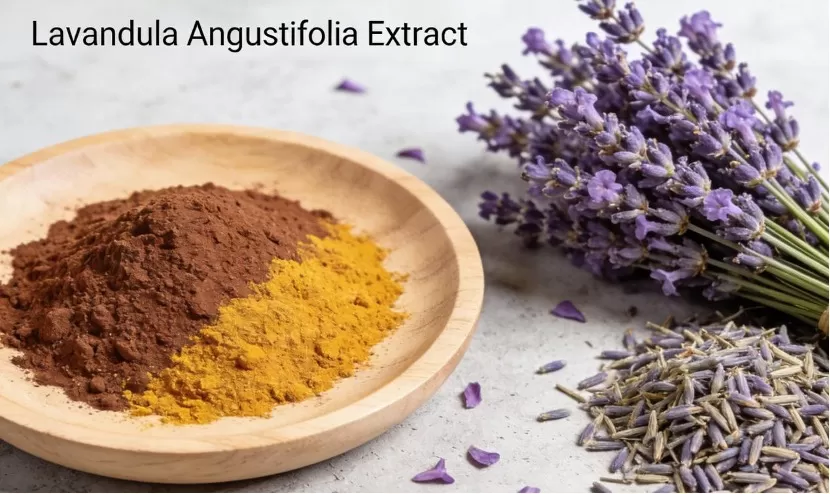
Part 1: What Is Lavandula angustifolia Extract?
Let's start with the basics. Lavandula angustifolia Mill. —commonly known as true lavender or English lavender—belongs to the Lamiaceae family and is native to the Mediterranean region . Unlike its hybrid relatives (like Lavandin), L. angustifolia is prized for its sweeter, more delicate profile and higher concentration of beneficial compounds.
Extraction source: The extract is typically derived from the flowering tops and leaves, though recent research suggests that leaves and even roots contain valuable bioactive compounds worth exploring .
Key active constituents:
Lavender Extract contains a complex mixture of both volatile and non-volatile compounds. The primary players include:
l Linalool (20–45%) – contributes to the characteristic floral aroma and calming effects
l Linalyl acetate (25–50%) – offers sedative and anti-inflammatory properties
l Polyphenols (flavonoids, phenolic acids, coumarins) – responsible for antioxidant activity
l Terpinen-4-ol, lavandulyl acetate, and β-caryophyllene – add antimicrobial and analgesic benefits
Common specifications:
At Xi'an Pioneer Herb (or your company name here), we offer Lavandula angustifolia extract in multiple formats to suit different applications:
l Ratio extracts: 4:1, 10:1, 20:1 (concentrated from whole plant)
l HPLC standardized extracts: e.g., 2–5% phenolic compounds, or customized based on your target marker compounds
l Organic and conventional options available
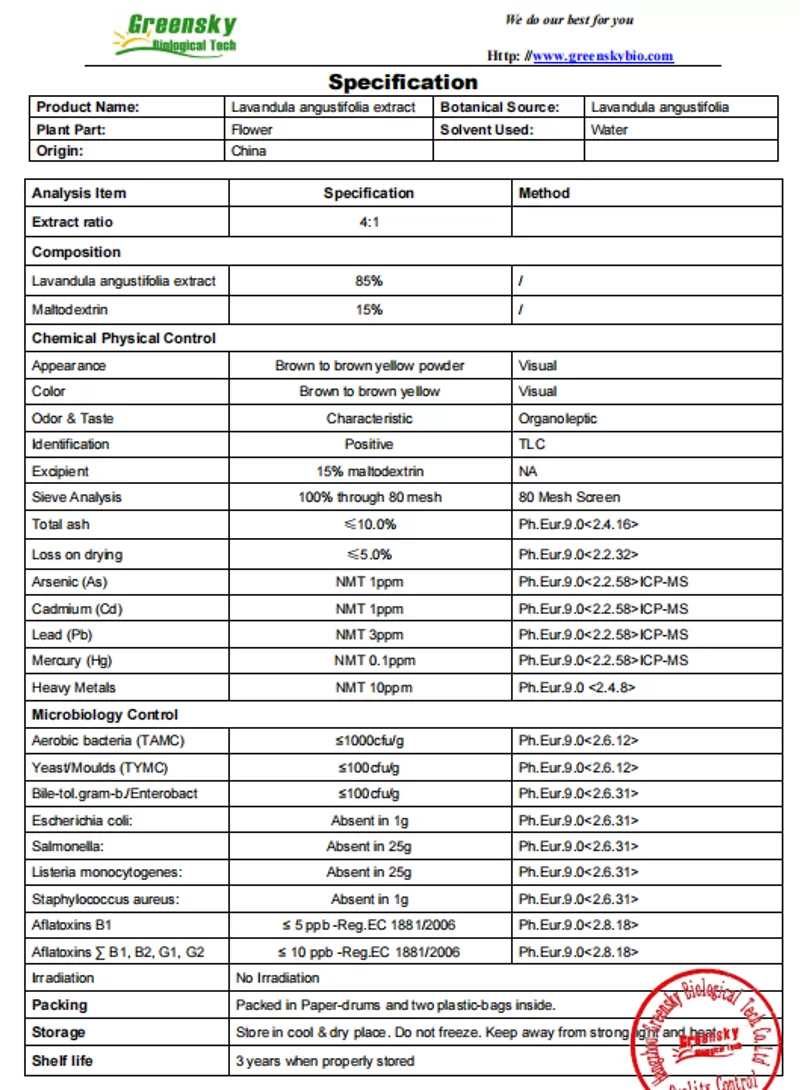
Quality you can trust: Every batch comes with a Certificate of Analysis (COA) covering:
l Physical characteristics (appearance, particle size, solubility)
l Chemical profile (HPLC/UV quantification of key markers)
l Microbiological testing (total plate count, yeast/mold, pathogens)
l Heavy metals and residual solvents (meeting pharmacopeial standards)
Part 2: Core Benefits and Mechanisms of Action
This is where science gets exciting. Over the past decade, researchers have moved beyond essential oils to investigate the full spectrum of lavender's bioactive potential .
1. Anxiolytic and Mood-Supporting Effects
Lavender's reputation for promoting calm isn't just folklore. Clinical studies—particularly those using Silexan (a patented lavender oil preparation)—have demonstrated significant reductions in anxiety scores comparable to conventional medications . The proposed mechanism involves modulation of voltage-dependent calcium channels and inhibition of serotonin reuptake, similar to how some prescription anxiolytics work—but without the sedative side effects .
2. Antimicrobial Activity
Both essential oil and aqueous extracts of L. angustifolia show broad-spectrum antimicrobial effects. Research conducted on lavender cultivated in Poland found that extracts at just 0.32% concentration significantly reduced bacterial cell viability and inhibited mold development . Key susceptible strains include Staphylococcus aureus, E. coli, and Candida albicans . This makes Lavender Extract a valuable natural preservative or topical antimicrobial ingredient.
3. Antioxidant and Anti-Aging
Lavender is rich in polyphenols that scavenge free radicals and reduce oxidative stress. A 2022 study reported that aqueous extracts contained 67.97 mg GAE/g of total phenolics, with strong DPPH radical scavenging activity . By neutralizing reactive oxygen species, Lavender Extract helps protect skin cells from premature aging and supports overall cellular health .
4. Anti-Inflammatory and Analgesic Properties
Compounds like linalool and linalyl acetate inhibit pro-inflammatory cytokines (such as COX-2 and TNF-α), reducing inflammation at the molecular level . This explains lavender's traditional use for soothing minor skin irritations, muscle tension, and joint discomfort. Emerging research even points to potential benefits in acute lung injury and neuroinflammation models .
Part 3: Where Is Lavender Extract Used?
One of the things I love about this ingredient is its versatility. Here's how different industries are putting lavender extract to work:
Dietary Supplements & Functional Foods
l Capsules/tablets for stress relief, sleep support, and mild anxiety
l Liquid tinctures and water-soluble drops
l Functional beverages – think calming teas, wellness shots, or nighttime elixirs
l Food preservation – antifungal activity against bread spoilage organisms has been documented
Cosmetics & Personal Care
l Skincare: Anti-aging serums, soothing creams, facial toners (thanks to antioxidant and anti-inflammatory effects)
l Hair care: Scalp-soothing shampoos and conditioning treatments
l Fragrance: Natural perfumery and aromatherapy products
l Topical applications: Balms for minor cuts, burns, or insect bites (antiseptic + wound-healing)
Animal Nutrition & Health
Lavender extract is gaining traction as a natural feed additive, supporting gut health and reducing stress in livestock. The whole-plant utilization approach—including by-products from essential oil distillation—aligns with sustainable agriculture goals .
Emerging Applications
l Antibacterial coatings for medical devices or food packaging
l Natural pesticides and crop protection
l Oral care (mouth rinses, toothpastes) leveraging antimicrobial effects
Part 4: How to Choose a High-Quality Lavender Extract
With the lavender market projected to grow significantly—and adulteration becoming more common—knowing how to evaluate suppliers is critical . Here's what we recommend looking for:
1. Transparent Sourcing and Traceability
Authentic L. angustifolia should not be diluted or replaced with Lavandin (a higher-yielding hybrid with more camphor and a harsher profile). Ask about cultivation practices and supply chain visibility. Ideally, your supplier should have direct relationships with growers or their own cultivation bases .
2. Verified Analytical Data
Don't just take their word for it. Reputable suppliers provide third-party or in-house COAs with:
l Chromatographic fingerprints (GC-MS for volatiles, HPLC for non-volatiles)
l Quantification of major markers (linalool, linalyl acetate, total polyphenols)
l Proof of meeting ISO 3515:2002 standards for lavender oil (applicable if using oil-based extracts)
3. Clean Extraction Methods
Look for solvent-free or green extraction technologies (supercritical CO₂, enzyme-assisted, or aqueous extraction) that preserve bioactivity without leaving harmful residues . For water-soluble extracts, ensure residual solvents (if used) are below pharmacopeial limits.
4. Customization Capabilities
Every formulation is different. The best suppliers will work with you to customize:
l Solubility (water-dispersible, oil-soluble, or powder forms)
l Standardization to your target compounds
l Particle size and bulk density for your manufacturing process
5. Regulatory Compliance
Depending on your market and application, you may need:
l Organic certification (USDA, EU)
l Kosher/Halal certifications
l Food-grade or pharmaceutical-grade documentation
l GRAS status for food applications
Part 5: About Us—Your Trusted Partner in Botanical Extracts
At Greensky , we've been at the forefront of plant-based ingredient innovation for over 22 years. Our Lavandula angustifolia extract reflects our commitment to quality, transparency, and customer partnership.
Why work with us?
u Integrated supply chain: We operate our own GAP-compliant lavender cultivation bases, ensuring consistent quality and full traceability from seed to shipment .
u Advanced analytical capabilities: Our in-house R&D centers (certified to ISO9001 and HACCP standards) perform rigorous testing on every batch—because you deserve ingredients you can trust .
u Flexible customization: Need a specific ratio? A particular solubility profile? A custom blend? Our technical team is here to collaborate.
u Global compliance: We meet international standards including FDA registration, Halal, Kosher, and ISO certifications .
We're not just selling ingredients; we're building long-term partnerships with formulators, manufacturers, and brands who care about quality as much as we do.
Part 6: Conclusion & Call to Action
Lavandula angustifolia extract is far more than a pleasant fragrance—it's a scientifically validated ingredient with proven benefits for mood, skin health, antimicrobial protection, and beyond. As consumer demand for clean-label, plant-based solutions continues to rise, having a reliable, high-quality lavender extract in your toolkit is a competitive advantage.
We'd love to support your next project.
Email us for:
l Free samples for R&D testing
l Detailed specifications and COAs
l Current pricing and availability
l Technical support and formulation guidance
Our team is standing by to help you find the perfect lavender solution for your application.
References
1. Betlej, I., Andres, B., Cebulak, T., et al. (2023). Antimicrobial Properties and Assessment of the Content of Bioactive Compounds Lavandula angustifolia Mill. Cultivated in Southern Poland. Multidisciplinary Digital Publishing Institute.
2. Jiang, B., et al. (2025). Lavender: phytochemistry, pharmacology, cross-disciplinary applications, and clinical efficacy. Phytomedicine.
3. Patil, H., & Waghmare, J. (2024). Lavender Oil: A Comprehensive Review of Composition and Applications. Asian Journal of Research in Chemistry, 377–386.
4. (2025). Traceability, authentication, and quality control of food-grade lavender essential oil: A comprehensive review. ScienceDirect.
5. Shaikh, F., Harde, M., & Mallya, R. (2025). Lavender Oil: A Versatile Natural Therapeutic – Extraction, Composition, Applications, and Innovative Formulation Strategies. The Natural Products Journal, 15.
6. SLIMANI, C., SQALLI, H., RAIS, C., et al. (2022). Chemical composition and evaluation of biological effects of essential oil and aqueous extract of Lavandula angustifolia L. Notulae Scientia Biologicae, 14(1), 11172.
7. Patil, H., & Waghmare, J. (2024). Lavender Oil: A Comprehensive Review of Composition and Applications. Asian Journal of Research in Chemistry, 17(6).
8. ISO 3515:2002. Essential oil of lavender (Lavandula angustifolia Mill.). International Organization for Standardization.
9. Various authors. (2023–2025). Additional composition and application studies as cited in text.
TEST REPORT
- ▶ Hesperidin
- ▶ Citrus Bioflavonoids
- ▶ Plant Extract
- ▶ lycopene
- ▶ Diosmin
- ▶ Grape seed extract
- ▶ Sea buckthorn Juice Powder
- ▶ Fruit Juice Powder
- ▶ Hops Extract
- ▶ Artichoke Extract
- ▶ Mushroom extract
- ▶ Astaxanthin
- ▶ Green Tea Extract
- ▶ Curcumin
- ▶ Horse Chestnut Extract
- ▶ Other Product
- ▶ Boswellia Serrata Extract
- ▶ Resveratrol
- ▶ Marigold Extract
- ▶ Grape Leaf Extract
- ▶ New Product
- ▶ Aminolevulinic acid
- ▶ Cranberry Extract
- ▶ Red Yeast Rice
- ▶ Red Wine Extract
- ▶ blog
-
Cayenne Pepper Extract
2026-03-16
-
Pomegranate Extract
2026-03-16
-
Milk Thistle Extract
2026-03-16
-
Phosphatidylserine
2026-03-16
-
Oat Straw Extract Powder
2026-03-16
-
Cassia Seed Extract
2026-03-16
-
Propolis Extract Powder
2026-03-16
-
Passionflower Extract
2026-03-16
-
Yam Extract
2026-03-16
-
Kupilu Extract
2026-03-16
