- 0086-571-85302990
- [email protected]






What are the benefits of hops for hair growth?
2026-08-14
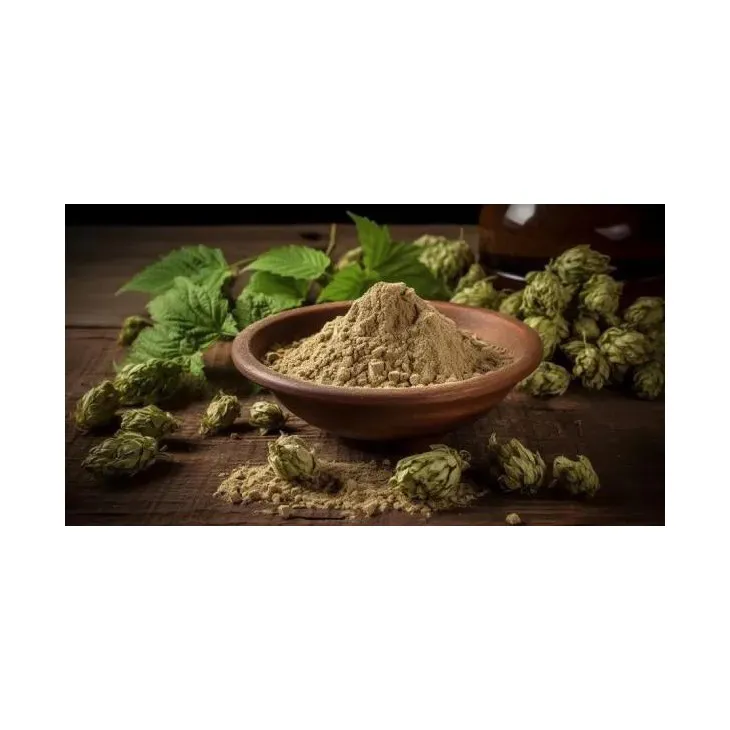
Most people know hops as the plant that gives beer its bitter edge, but this climbing vine has quietly become one of the more interesting botanicals in natural hair care. Formulators and supplement brands are taking a closer look at hops extract because the same compounds that protect the plant also appear to support the scalp and hair follicles in several distinct ways. This article breaks down what the science says about the benefits of hops for hair growth and how the ingredient fits into real products.
A quick look at the plant behind the trend
Hops, known botanically as Humulus lupulus, is a perennial climbing plant in the Cannabaceae family. The parts used are the cone-shaped flowers, called strobiles, which contain a dense mix of prenylated flavonoids, bitter acids, and essential oils. For centuries these flowers were used in traditional medicine to calm the nerves, ease inflammation, and soothe irritated skin. Modern research has shifted attention to the same compounds for their antioxidant, anti-inflammatory, and hormone-balancing activity, which is why hops now shows up in scalp serums, calming shampoos, and hair tonics.
How hops may support hair growth
The potential of hops for hair growth rests on several overlapping mechanisms rather than a single active ingredient. Here is what researchers have observed.
Helps limit DHT, a key driver of hair loss
One of the most studied compounds in hops is xanthohumol, a prenylated flavonoid that acts as a natural 5-alpha-reductase inhibitor. This enzyme converts testosterone into dihydrotestosterone (DHT), and excess DHT is one of the main causes of follicular miniaturization in androgenetic alopecia, the most common form of hair thinning. By interfering with that conversion, xanthohumol helps keep DHT levels in check, which is why hops is frequently described as a botanical DHT blocker in hair care formulations.
Shields follicles from oxidative stress
Hair follicles are sensitive to oxidative damage. Free radicals can impair dermal papilla cells, the cells that regulate the growth cycle, and chronic oxidative stress is linked to premature follicle shrinkage. Hops carries a set of potent antioxidants, including humulone and lupulone, that help neutralize free radicals and reduce lipid peroxidation in skin tissue. For the scalp, that translates into a more protective environment for the follicle.
Calms scalp inflammation
Inflammation is an often-overlooked contributor to hair thinning. Conditions such as seborrheic dermatitis and an irritated, itchy scalp create an environment where follicles struggle to stay in the growth phase. Hops Extract has shown anti-inflammatory activity, helping to reduce markers such as TNF-alpha and IL-6 while soothing irritated skin. Some research also points to humulone modulating the NF-kB pathway, a central player in inflammatory skin disorders, though more human studies are still needed to confirm its role in treating scalp conditions directly.
Supports scalp circulation
Healthy hair growth depends on a steady supply of oxygen and nutrients reaching the follicle. The flavonoid 8-prenylnaringenin found in hops promotes vasodilation by supporting nitric oxide production, which improves microcirculation in the scalp. Better blood flow helps keep follicles nourished during the anagen, or active growth, phase.
Balances the scalp microbiome and fights dandruff
A healthy scalp microbiome is part of the foundation for healthy hair. Compounds such as lupulone and myrcene in hops exhibit antimicrobial activity that can help keep Malassezia, the yeast most often linked to dandruff and scalp irritation, in balance. This makes hops a useful addition to anti-dandruff rinses and scalp-balancing formulas.
Supports collagen for stronger hair structure
Hops is also rich in Quercetin and kaempferol, two flavonoids that stimulate collagen production and help protect the dermal structure. Collagen gives the hair its anchor within the skin, so maintaining its integrity supports stronger, more resilient strands.
The key active compounds in hops
The benefits of Hops Extract come from a portfolio of naturally occurring compounds working together:
- Xanthohumol - the prenylated flavonoid best known for inhibiting 5-alpha-reductase and supporting healthy hormone balance.
- Humulone and lupulone - bitter acids with antioxidant and antimicrobial activity that protect follicles and calm the scalp.
- 8-Prenylnaringenin - a phytoestrogen that supports scalp circulation and helps balance hormone-related hair concerns.
- Quercetin and kaempferol - flavonoids that fight oxidative stress and support collagen synthesis.
- Myrcene - a soothing terpene with calming and antimicrobial effects.
How Hops Extract is used in hair care products
For formulators, hops extract is a versatile ingredient. It appears in scalp tonics and leave-in mists, calming shampoos, anti-dandruff rinses, and hair growth serums, particularly in products aimed at inflammation-related or hormone-related hair concerns. When selecting a raw material, it is worth looking for extracts standardized to a meaningful level of xanthohumol, since that is the compound behind most of the DHT-related benefits. A reliable supplier should be able to provide specification sheets, certificates of analysis, and stability data so the ingredient can be used with confidence.
Sourcing quality hops extract
Because the quality of the finished product depends heavily on the raw material, choosing the right supplier matters. Greensky, a plant extract manufacturer with more than 20 years of experience, produces hops extract and a broad catalog of botanical ingredients under strict quality control. Its production facilities include a 100,000-class clean area, an independent laboratory equipped with HPLC, GC, and UV analysis, and certifications such as ISO22000, BRCGS, HALAL, and Kosher. For brands and formulators, that means consistent batches, documented purity, and the export documentation needed for global regulatory submissions.
Safety considerations
Hops is generally well tolerated when used topically in moderation, but a few points are worth keeping in mind. Because hops contains phytoestrogens such as 8-prenylnaringenin, it should be avoided during pregnancy, while breastfeeding, or by anyone managing hormone-sensitive conditions. People allergic to plants in the Cannabaceae family, such as cannabis or hemp, may also react to hops. Ingested hops is mildly sedating and can enhance the effects of central nervous system depressants. As with any new ingredient, it is sensible to patch test first and stop use if irritation appears.
The bottom line on hops for hair growth
The benefits of hops for hair growth rest on a solid foundation of plant chemistry. By helping to limit DHT, shielding follicles from oxidative stress, calming inflammation, supporting circulation, and balancing the scalp microbiome, hops extract addresses several of the factors that contribute to thinning hair at once. For formulators looking to build a science-backed hair care line, it is an ingredient worth serious consideration, and sourcing it from an experienced manufacturer ensures the quality behind the claim.
- ▶ Hesperidin
- ▶ Citrus Bioflavonoids
- ▶ Plant Extract
- ▶ lycopene
- ▶ Diosmin
- ▶ Grape seed extract
- ▶ Sea buckthorn Juice Powder
- ▶ Fruit Juice Powder
- ▶ Hops Extract
- ▶ Artichoke Extract
- ▶ Mushroom extract
- ▶ Astaxanthin
- ▶ Green Tea Extract
- ▶ Curcumin
- ▶ Horse Chestnut Extract
- ▶ Other Product
- ▶ Boswellia Serrata Extract
- ▶ Resveratrol
- ▶ Marigold Extract
- ▶ Grape Leaf Extract
- ▶ New Product
- ▶ Aminolevulinic acid
- ▶ Cranberry Extract
- ▶ Red Yeast Rice
- ▶ Red Wine Extract
- ▶ blog
-
Rhodiola Rosea Extract
2026-08-14
-
Lion's Mane Mushroom Extract
2026-08-14
-
Cassia Seed Extract
2026-08-14
-
Carrageenan Extract Powder
2026-08-14
-
Aguaje Extract
2026-08-14
-
Troxerutin
2026-08-14
-
Liposomal NMN
2026-08-14
-
Sophora Japonica Flower Extract
2026-08-14
-
Acai Berry Extract
2026-08-14
-
Kelp Extract Powder
2026-08-14
