- 0086-571-85302990
- [email protected]






How do I evaluate the reliability of a moringa powder supplier?
2026-08-15
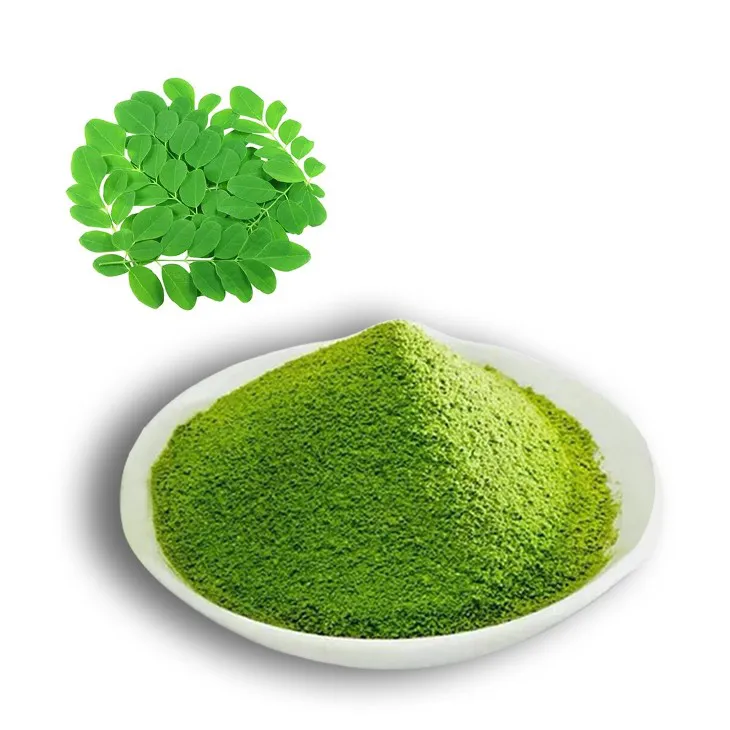
Moringa powder has become one of the most sought-after botanical ingredients in the supplement, functional food, and personal care industries. As demand has grown, so has the number of suppliers claiming to offer premium moringa leaf powder. For a brand owner, importer, or formulator, choosing the wrong partner can mean contaminated batches, inconsistent quality, failed inspections, and damaged customer trust. This guide walks through a practical framework for evaluating the reliability of a moringa powder supplier before you commit to a purchase order.
What Makes a Moringa powder Supplier Reliable?
Reliability is not a single quality but the sum of several factors: whether the company actually manufactures the product, how it controls quality, what documentation it can provide, and how it handles commercial risk. The most practical way to evaluate a candidate is to run it through a structured checklist covering credentials, certifications, lab testing, product quality, production capability, documentation, and payment terms. A supplier that passes most of these checks is far more likely to deliver consistent results than one that looks good on paper alone.
Check 1: Verify the Company's Credentials and Track Record
Start by confirming who you are actually dealing with. Ask directly whether the company owns its production facility or simply resells powder sourced from other factories. A genuine manufacturer can usually describe its own washing, drying, milling, and sieving processes in detail; a trader often cannot. The physical address of the production plant should be disclosed, not just a registered office.
Track record matters too. A supplier that has operated for a decade or more and exports to regulated markets has had to survive repeated audits and customer inspections. Vertical integration is another strong signal: when a company controls sourcing, processing, and quality testing under one roof, it can respond faster to issues and maintain more consistent quality batch after batch.
Greensky, for example, is a Hangzhou-based manufacturer founded in 2004 with more than 20 years of experience producing active botanical ingredients. The company operates several wholly-owned subsidiaries covering production, R&D, and warehousing, and in 2023 its export value reached nearly 30 million US dollars, with main markets in Europe, the United States, South Korea, and Russia.
Check 2: Confirm Certifications Match Your Target Market
Certifications are scope-specific. A certificate that covers one product line does not automatically cover moringa leaf powder, so always ask for current certificates and check that the scope explicitly includes leaf powder processing. Depending on your destination market, relevant certifications include ISO22000, BRCGS, SGS-GMP, ISO9001, HALAL, and Kosher. If you plan to market the product as organic, the certificate must be issued by a recognized body and its scope must match the specific product you are buying.
Check 3: Request Batch-Specific Lab Reports (COA)
A Certificate of Analysis (COA) is the primary evidence of quality, and a reliable supplier provides one for each batch rather than a generic document. The COA should be issued by an accredited laboratory, carry a report number and batch code, and match the batch you are actually buying. At minimum it should cover:
- Moisture content, typically below 8% for leaf powder
- Total ash and acid-insoluble ash
- Microbial panel: total plate count, yeast and mould, E. coli, Salmonella
- Heavy metals: lead, arsenic, mercury, cadmium
- Pesticide residues
- Particle size and mesh specification
- Sensory parameters: colour, odour, taste
If a supplier says "lab-tested" but cannot produce the certificate when asked, treat the claim as unverified. This is one of the most commonly abused claims in the botanical ingredients industry.
Check 4: Evaluate the Powder Itself
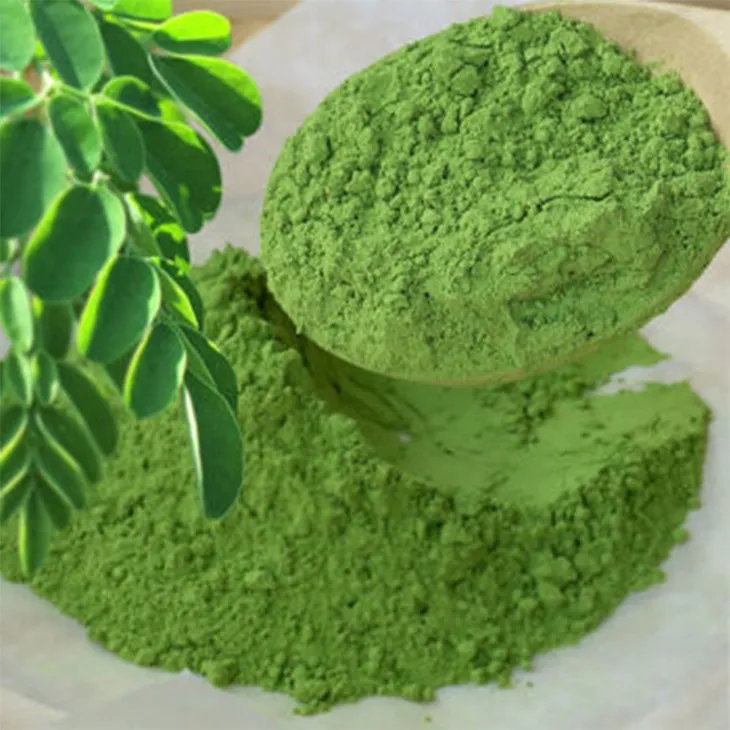
Before committing to a bulk order, request a sample and evaluate it with your own eyes and nose. High-quality moringa leaf powder is bright green; dull, olive, or brown tones suggest heat damage, sun-drying, or long storage. Fresh moringa has a mild earthy, grassy aroma, while a musty or sour smell points to moisture problems and almost no smell at all suggests very old stock. The powder should be fine and disperse reasonably when stirred into water, and for a pure leaf product the ingredient list should contain a single item: Moringa oleifera leaf powder.
Check 5: Assess Production and Quality Control Capabilities
A reliable supplier can describe its production environment and testing equipment in concrete terms. Look for a clean production area that meets food-grade requirements, an in-house laboratory equipped with instruments such as GC, HPLC, and UV for routine testing, and documented processing steps covering washing, drying, milling, sieving, and packaging. Suppliers that rely entirely on third-party testing with no in-house capability are harder to hold accountable when problems arise.
Check 6: Review Traceability and Export Documentation
Reliability extends to the paperwork that accompanies a shipment. A professional supplier provides a complete documentation pack, including the commercial invoice, packing list, certificate of origin, phytosanitary certificate where required, and the batch COA. Traceability back to the raw material source and production batch is essential for audits and for meeting regulatory requirements in your market. If a supplier cannot explain where the leaves come from and how the batch was produced, its quality control likely stops at the shipping stage.
Check 7: Review Commercial Terms and Payment Safety
Even a high-quality product becomes a problem if the commercial terms are risky. For a first order, use a clear Incoterm with a named port, avoid paying 100% in advance, and structure payment as a deposit with the balance released against shipping documents. Confirm that the quality clause references the agreed COA specification and spells out the rejection and replacement procedure. For large first orders, a third-party pre-shipment inspection is a worthwhile investment that protects both parties.
Red Flags to Watch Out For
- Refusal to disclose the factory address or company registration details
- Generic COAs that are not linked to a specific batch
- Pressure for full payment in advance, especially to a personal account
- Vague or inconsistent answers about who actually manufactures the product
- Quotes far below market rates without a clear reason
- Unwillingness to allow a factory audit or third-party inspection
Frequently Asked Questions
What is the most important document to request from a Moringa powder supplier?
The batch-specific Certificate of Analysis from an accredited laboratory, matched to the lot you are actually buying. It is the single strongest piece of evidence that the powder meets your specification.
Should I pay 100% in advance on a first order?
No. Use payment milestones tied to shipping documents, such as a deposit followed by the balance against the bill of lading and COA. Full prepayment removes your leverage if quality issues appear later.
How can I tell whether a supplier is really a manufacturer?
Ask for the factory address, request a video tour or audit, and ask detailed questions about the drying and milling process. A genuine moringa powder manufacturer can answer these questions in specific, technical detail.
Is a single certificate enough to trust a supplier?
No. Company identity, food safety certification, and lot-level testing must all match your specific product and shipment. Each element verifies a different part of the supply chain.
Final Thoughts
Evaluating the reliability of a moringa powder supplier comes down to verification rather than trust. Run every candidate through the same checklist covering credentials, certifications, lab reports, product quality, production capability, documentation, and payment terms. A supplier that can provide batch-specific COAs, current certifications, and transparent documentation is far more likely to deliver consistent quality over the long term.
For buyers sourcing from China, working with an experienced China Moringa powder producer such as Greensky — with its vertically integrated production, in-house laboratory, and export experience across Europe, the United States, South Korea, and Russia — is a practical way to reduce sourcing risk and build a dependable supply chain.
- ▶ Hesperidin
- ▶ Citrus Bioflavonoids
- ▶ Plant Extract
- ▶ lycopene
- ▶ Diosmin
- ▶ Grape seed extract
- ▶ Sea buckthorn Juice Powder
- ▶ Fruit Juice Powder
- ▶ Hops Extract
- ▶ Artichoke Extract
- ▶ Mushroom extract
- ▶ Astaxanthin
- ▶ Green Tea Extract
- ▶ Curcumin
- ▶ Horse Chestnut Extract
- ▶ Other Product
- ▶ Boswellia Serrata Extract
- ▶ Resveratrol
- ▶ Marigold Extract
- ▶ Grape Leaf Extract
- ▶ New Product
- ▶ Aminolevulinic acid
- ▶ Cranberry Extract
- ▶ Red Yeast Rice
- ▶ Red Wine Extract
- ▶ blog
-
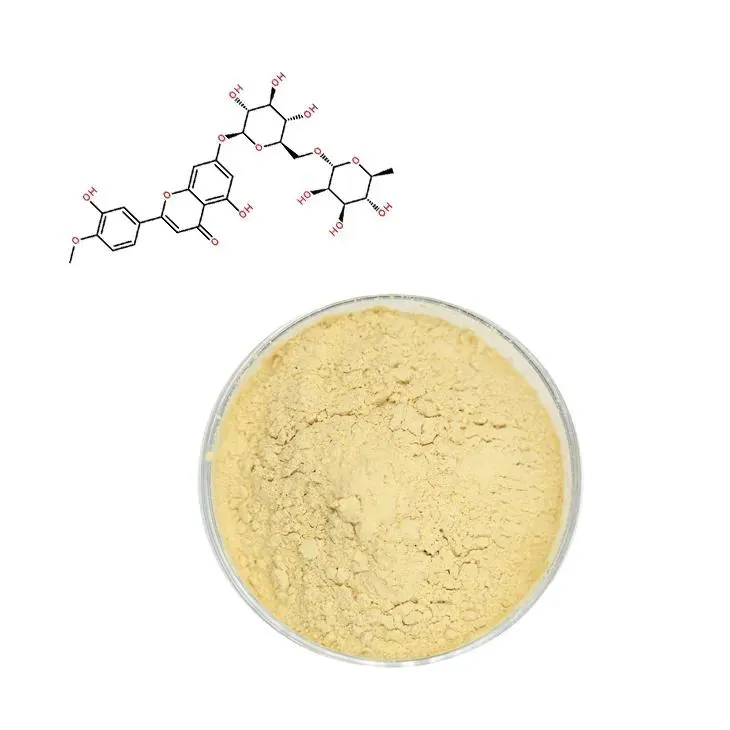
Diosmin
2026-08-15
-
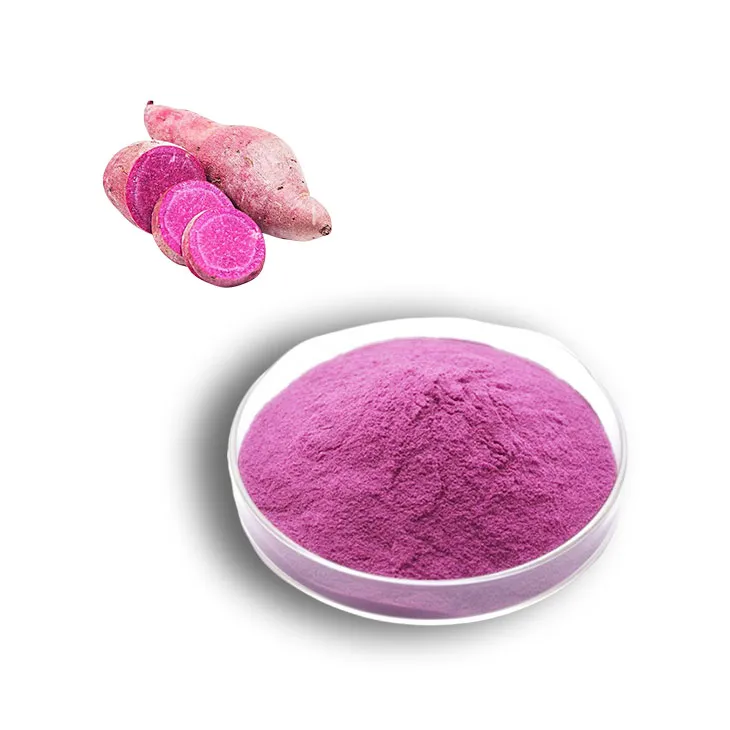
Purple Sweet Potato Extract
2026-08-15
-
Epimedium extract powder
2026-08-15
-
Sophora Japonica Flower Extract
2026-08-15
-
Red Vine Extract
2026-08-15
-
Ginger Extract
2026-08-15
-
Lavender Extract
2026-08-15
-
Camu Camu Extract
2026-08-15
-
Tongkat Ali Extract Powder
2026-08-15
-
Black Pepper Extract
2026-08-15
