- 0086-571-85302990
- [email protected]






How do I audit a hops extract factory?
2026-08-18
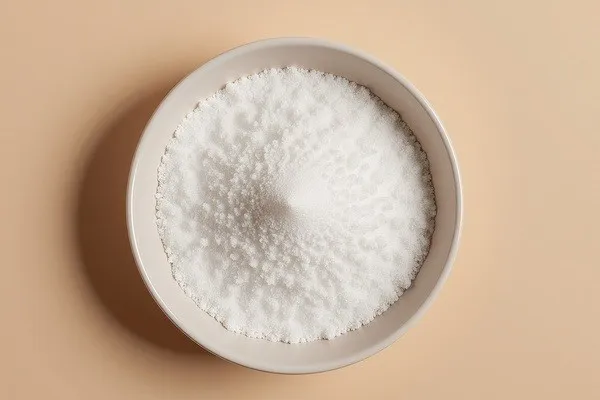
If your brand formulates sleep-aid capsules, calming teas, or functional beverages, you likely rely on Hops Extract as a core ingredient. It has long been valued for its hops extract benefits such as a soothing, sedative effect that supports restful sleep, together with mild antimicrobial and anti-inflammatory properties. But an extract is only as good as the plant material it started from and the process that produced it. One mislabeled batch, one slip in solvent control, or one missed microbial test can quietly travel all the way from the factory floor to your finished bottle.
That is why a proper audit matters so much. This walkthrough gives you a practical, room-by-room checklist for evaluating a hops extract factory, whether you are onboarding a new supplier or re-qualifying a long-standing one. Done well, the audit tells you two things: whether the facility is technically capable, and whether it has the discipline to repeat that performance batch after batch.
1. Build your spec sheet before you arrive
An audit only makes sense against a clear target. Before you book anything, write down exactly what your finished product needs. For Hops Extract this usually means the active marker or markers you care about — often the alpha and beta acids, or the polyphenol xanthohumol when you want the stronger antioxidant angle — as well as your limits for solvent residues, heavy metals, pesticides, and microbes. Decide who holds the standard (your own spec, the local pharmacopoeia, or an industry norm) so every test result has something to be measured against.
This one step keeps the whole audit honest. A factory that knows your targets can show you evidence; one that only talks in vague terms like "high quality" has nothing concrete for you to verify.
2. Read the paperwork first
Begin in the office, not on the floor. Ask for the certificate file and read it slowly, because certifications are the first filter. For food-grade botanical extracts you want to see systems such as ISO 22000 for food safety, GMP certification for production hygiene, and ideally HALAL and Kosher if your market needs them. These are not decorations — each one represents a third party that has already opened the same doors you are about to open.
Then look for three documents specifically:
- A specification sheet for each hops product, with agreed assay ranges rather than single lucky numbers.
- A Certificate of Analysis (COA) for each batch, listing active content, residual solvent, heavy metals, pesticide screening, and microbiology.
- Batch and traceability records that connect every lot of finished powder back to the specific hops cones that went into it.
A trustworthy producer keeps these on file and shares them without hesitation. If a supplier hesitates over a COA or cannot explain how a batch can be traced, treat that as a serious warning sign regardless of how impressive the factory looks.
3. Walk the production floor with your eyes open
This is the part you actually flew for. As you are led through the facility, resist the urge to look only where you are told to look. Good facilities expect you to notice things; the layout is designed for you to follow the material flow without crossing paths of raw and finished product.
Watch for the extraction itself. Hops is a plant material with delicate volatile components, so the equipment tells a story: multi-functional extraction tanks, low-temperature concentrators that protect heat-sensitive compounds, and spray-drying or vacuum-drying systems that turn the liquid extract into a stable powder. Clean, well-segregated production lines and a food-grade, dust-controlled area are non-negotiable. If the floor is unkempt or raw materials sit beside finished goods, the process discipline you are auditing is unlikely to be any better.
Ask where the hops comes from and whether the raw material is screened before it enters production. Plenty of problems — pesticide residue, mold, adulteration — are best caught at intake, not after hours of extraction have already spent money and energy on defective input.
4. Spend time inside the laboratory
The most honest signal about a factory is how seriously it treats its own testing. Look for an independent on-site laboratory equipped for the work Hops Extract demands: high-performance liquid chromatography (HPLC) for quantifying the active markers, gas chromatography (GC) for solvent and volatiles, and UV-based methods for quick colorimetric checks. Ask what the lab measures on raw material, in-process, and on the finished batch, and whether results are released before product ships.
Then ask the harder question: who double-checks the checker? In-house labs are a strong sign, but independent verification from a recognized third-party laboratory adds real confidence that the COA you receive actually reflects what is in the drum.
5. Check batch-to-batch consistency
Botanical extracts are naturally variable. Hop plants shift with soil, weather, and harvest year, so the same field rarely yields an identical product twice. The skill is in standardizing it. A capable factory blends lots, adjusts concentration, and holds finished batches back for testing so that every shipment lands inside your agreed range rather than somewhere loosely nearby.
Ask to see assay history across several batches, not just one perfect number on a single COA. If the spread is wide and the factory shrugs, your formulas will pay for that variability later.
6. Finish with samples and a small order
Every audit ends with verification you control. Take samples, send one to your own or an independent laboratory, and compare its numbers against the supplier's COA. Then place a small order and watch how the factory behaves under a real deadline — how it communicates, how it packages, how it handles queries. A facility that is responsive during a low-stakes trial is the one you can trust when the order is big and the schedule is tight.
What you are really testing for the whole way through is repeatability. A supplier that can show you certifications, controlled facilities, a capable laboratory, and consistent batch records on the day of the audit — and then confirm it in your own third-party testing — is a supplier you can build a product around. When you are ready to shortlist candidates for wholesale hops extract, a facility that has already passed this kind of scrutiny is exactly the kind of partner worth a conversation.
TAGS:
- ▶ Hesperidin
- ▶ Citrus Bioflavonoids
- ▶ Plant Extract
- ▶ lycopene
- ▶ Diosmin
- ▶ Grape seed extract
- ▶ Sea buckthorn Juice Powder
- ▶ Fruit Juice Powder
- ▶ Hops Extract
- ▶ Artichoke Extract
- ▶ Mushroom extract
- ▶ Astaxanthin
- ▶ Green Tea Extract
- ▶ Curcumin
- ▶ Horse Chestnut Extract
- ▶ Other Product
- ▶ Boswellia Serrata Extract
- ▶ Resveratrol
- ▶ Marigold Extract
- ▶ Grape Leaf Extract
- ▶ New Product
- ▶ Aminolevulinic acid
- ▶ Cranberry Extract
- ▶ Red Yeast Rice
- ▶ Red Wine Extract
- ▶ blog
-
Wheat Germ Extract
2026-08-18
-
Oyster Mushroom Extract Powder
2026-08-18
-
Tongkat Ali Extract Powder
2026-08-18
-
Ginger Extract
2026-08-18
-
Moringa powder
2026-08-18
-
Red Wine Extract
2026-08-18
-
Lily extract
2026-08-18
-
Phyllanthus Emblica Extract
2026-08-18
-
Sugarcane Extract
2026-08-18
-
Senna Leaf Extract
2026-08-18
